


The Ghost in Your Pocket: Why Bureaucrats Sweat Bluetooth While Real Digital Demons Lurk
POLICY WIRE — Washington D.C. — You’ve been hacked. Or maybe your grandmother has. It probably wasn’t a rogue operator stealthily siphoning data from your perpetually-on Bluetooth headphones. No,...

POLICY WIRE — Washington D.C. — You’ve been hacked. Or maybe your grandmother has. It probably wasn’t a rogue operator stealthily siphoning data from your perpetually-on Bluetooth headphones. No, chances are it was a glib text message, a too-good-to-be-true email, or that dodgy website selling miracle cures. Phishing scams, identity theft, forgotten digital breadcrumbs—these are the banalities of modern cyber peril. They aren’t sexy; they don’t inspire Hollywood thrillers. But they’re the everyday dragons actually breathing fire onto your bank account, your credit score, your entire digital life.
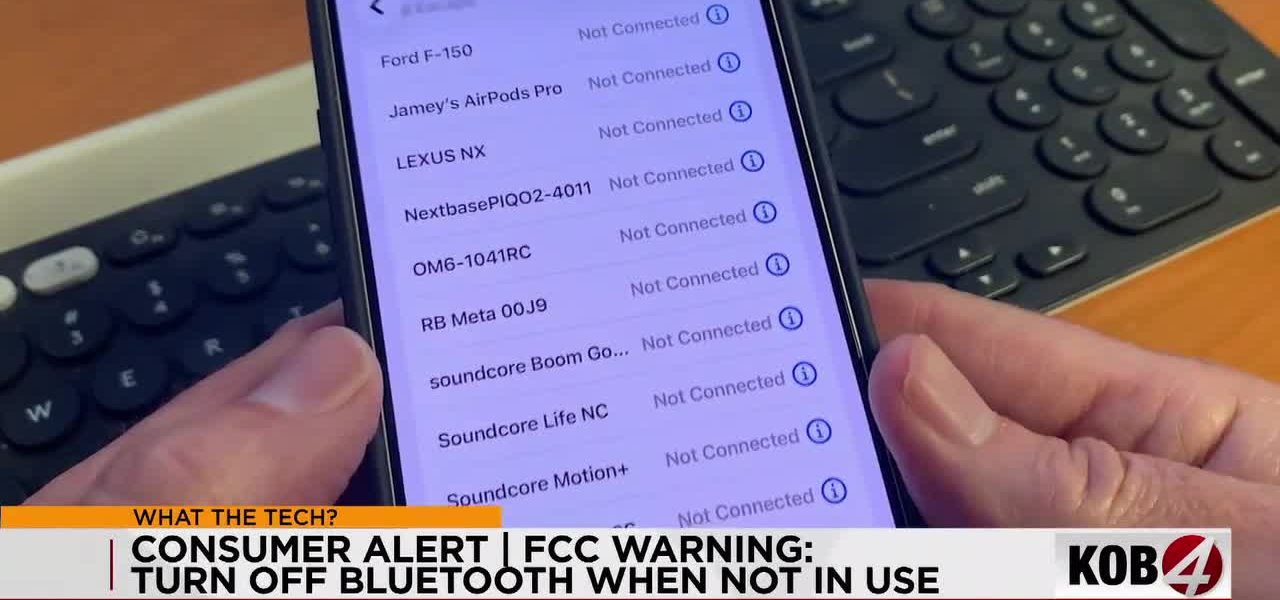
And then there’s the Federal Communications Commission. The nation’s top communications watchdog recently chimed in with a cautionary whisper, advising citizens to, get this, switch off their Bluetooth when not actively using it. Why? Because, they reckon, your privacy might be ‘at risk.’ The implication hangs heavy in the air: your innocuous wireless earbud connection is a gaping maw for hackers. It’s a statement so self-evident, so technically plausible yet statistically insignificant, it almost feels like a parody.
“We’ve got a responsibility to inform the public of every potential vulnerability,” explained FCC Commissioner Geoffrey Starks in a press briefing that probably got more yawns than headlines. “Even if it’s a low probability, maintaining good digital hygiene starts with simple practices. Turning off an unused broadcast signal? That’s just common sense, isn’t it?” Common sense, perhaps. A priority? That’s where the eyebrows start to raise.
Because while the FCC deliberates the etiquette of wireless protocols, the digital underworld thrives on far less sophisticated, far more impactful tactics. Social engineering isn’t some abstract threat confined to dark web forums. It’s the constant, irritating hum of scam calls, text messages posing as your bank, or emails demanding you reset your ‘compromised’ password. According to the Verizon 2023 Data Breach Investigations Report, human error and social engineering are implicated in a staggering 74% of all breaches. Forget Bluetooth exploits; your own impulsiveness, your moment of inattention, is the true adversary.
Dr. Aisha Khan, a leading cybersecurity ethicist based in Karachi, Pakistan, doesn’t mince words. “The Bluetooth advisory, for much of the world, borders on quaint,” she mused in a video conference from her university office. “In regions like South Asia, where digital literacy varies wildly and state-backed surveillance or poorly secured government databases pose far more substantial threats to personal data, a warning about Bluetooth feels like advising against jaywalking when there’s a typhoon raging. It’s not wrong, per se, but it demonstrates a disconnect from the realities on the ground—the digital realities, that’s. People are more concerned with their national ID card data or biometric information falling into the wrong hands, rather than a rogue blue-sniffer finding their Spotify playlist.”
📄 POLICY WIRE WHITEPAPER PUBLISHED: PAKISTAN'S NATIONAL SECURITY POLICY PRIORITIES
👉 READ BY CLICKING HEREAnd it’s this disproportionate focus that often baffles observers. You might get a notification if someone tries to connect to your Bluetooth, sure. But how often do you get a notification before your mother-in-law clicks a link in a phishing email, giving away access to a shared photo album?
Consider the broader landscape: You signed into Netflix on a hotel smart TV on holiday — and forgot to log out. Anyone who checks in after could, at the very least, tinker with your recommendations. But perhaps worse, you synced your phone with a rental car’s infotainment system. Those systems often squirrel away your call logs, contacts, — and navigation history, sometimes for months. It’s digital breadcrumbing on a grand scale, much more intrusive than a Bluetooth pings from an unknown device.
What This Means
The FCC’s Bluetooth advisory, while technically sound, acts more like a security blanket for bureaucrats than a shield for the populace. Politically, it’s low-hanging fruit—a visible ‘action’ on cybersecurity that costs little, sparks no major industry backlash, and satisfies a general public craving for simple fixes. But it risks lulling people into a false sense of security, distracting them from the true, persistent threats lurking in their inboxes and social media feeds. Economically, this misdirection has subtle but significant repercussions. The cybersecurity industry is forced to continually chase the next sensationalized vulnerability, rather than robustly educating and equipping the public against the insidious, yet common, forms of digital fraud that account for billions in losses annually. It’s akin to an overzealous police force issuing warnings about petty littering while neglecting a rampant syndicate operating in broad daylight. The net effect is a citizenry poorly prepared for genuine dangers, continually chasing global digital challenges with antiquated advice. Because let’s be honest: while Bluetooth ‘attacks’ are hypothetical boogeymen, losing your entire digital identity because of a cleverly worded text message is tragically, empirically, very real.