


Flesh-and-Blood Assets: The Pelicans’ Cold Calculation of Generational Talent
POLICY WIRE — New Orleans, USA — It’s not about the game anymore, not truly. It’s about market cap, asset management, — and the brutal calculus of projected revenue against present-day...

POLICY WIRE — New Orleans, USA — It’s not about the game anymore, not truly. It’s about market cap, asset management, — and the brutal calculus of projected revenue against present-day liabilities. This isn’t Wall Street; it’s professional basketball, specifically the murky waters surrounding the New Orleans Pelicans, who seem intent on reminding everyone that even ‘generational talent’ is just another commodity on the block.
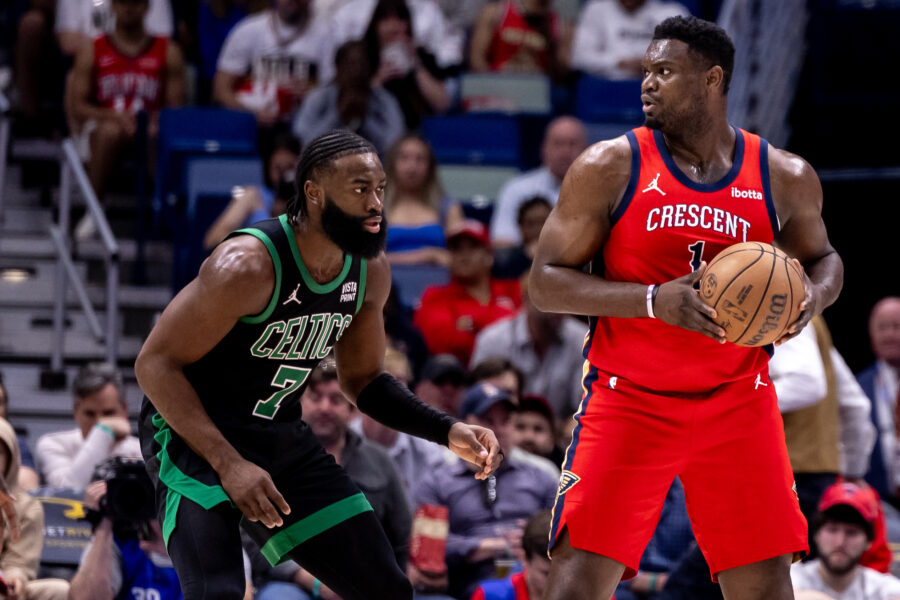
After a season that failed to ignite fan hopes (again, because this has become a familiar tune in the Big Easy), whispers—no, screams—from various well-placed sources suggest a seismic shift. The Pelicans are reportedly eyeing Boston Celtics star Jaylen Brown. And, get this, they’re not exactly slamming the door shut on packaging Zion Williamson to make that deal happen. An NBA insider, Brandon ‘Scoop B’ Robinson, spilled the beans. You see, the club might
Because, really, when you peel back the layers of soaring dunks and shoe deals, you find the underlying truth: this whole enterprise is about transactions. These are young men, yes. But to the owners, to the front office—they’re walking, breathing, highly volatile assets. Zion, with his incredible athleticism — and frustrating availability, is the poster child for this paradox. His value, much like a tech stock, experiences wild fluctuations based on performance and, more acutely, his physical uptime. LeBron James’s situation in Los Angeles, for instance, hints at a similar commodification of individual loyalty and branding in a transient league.
General Manager David Griffin, often tasked with threading this financial needle, hasn’t publicly addressed these particular rumors. But one can imagine the corporate-speak he’d employ. “Look, we’re committed to winning,” Griffin might’ve said, perhaps in a closed-door investor call. “And if achieving that means re-evaluating our core strategic investments, then we won’t hesitate. It’s not personal; it’s just prudent fiscal management in a highly competitive market.” You get it—the relentless pursuit of competitive advantage, cloaked in management jargon. Every franchise operates with one eye on the salary cap, another on draft picks, and a third—if they had one—on ticket and merchandise sales.
This retooling goes beyond the headline-grabbing names. The Pelicans are also reportedly hawking a few rotation players—Jordan Poole, Jordan Hawkins, and Kevon Looney—to anyone who’ll bite. These aren’t even long-term considerations, they’re simply inventory to be moved. It’s like a dealership clearing out last year’s models before the new fleet arrives. But what truly highlights this mercenary approach is who’s considered ‘untouchable.’ Not the guy who sold a million jerseys, but two prospects, Jeremiah Fears and Derik Queen, whose potential upside is apparently so pure, so untainted by the current squad’s malaise, that they’re locked away like Fort Knox gold. Their rapid development has given the front office enough confidence to view them as long-term franchise pillars—insulating them from the impending trade winds, for now.
And this constant churn, this relentless trading of flesh — and blood, isn’t unique to American sports. Globally, labor markets often mirror this brutal efficiency. Take the migrant worker communities often found in South Asia, particularly in nations like Pakistan or India. Their value is largely assessed by their capacity for output, their physical endurance, — and their cost-effectiveness. A construction laborer in Karachi or a seasonal farmhand in Punjab, like a pro athlete, is an asset to be managed, his career trajectory often dictated by external market forces rather than personal agency. They, too, face a short window of optimal performance, after which their ‘market value’ plummets.
📄 POLICY WIRE WHITEPAPER PUBLISHED: PAKISTAN'S NATIONAL SECURITY POLICY PRIORITIES
👉 READ BY CLICKING HERE“It’s the new reality,” opined a seasoned league agent, who asked to remain nameless to protect his diverse portfolio of athletic assets. “Gone are the days of sentimental attachments. Every draft pick is a calculated risk. Every contract, an investment. And every single player? A fluctuating asset in a portfolio. If your stock isn’t performing, or if there’s a better growth opportunity elsewhere, you make the trade. It’s the cost of doing business, even if that business involves incredible young men leaping twenty feet in the air.” The average NBA career, per league statistics, clocks in at a surprisingly short 4.5 years. That’s not a lot of time to turn an asset into a legacy, let alone a championship.
But the public still buys the romance. We buy the narrative of loyalty, of a chosen few achieving greatness against impossible odds. The organizations themselves, however, are far more pragmatic. They’re running a business—a colossal one, at that—and sentimentality doesn’t pay the bills or, more
What This Means
The Pelicans’ maneuverings, whether they materialize into a Zion trade or not, expose the raw mechanics of talent acquisition and retention in professional sports. It’s a high-stakes commodities market where human potential is the most volatile asset. The economic implications are multifaceted: investor confidence in the franchise (do they see smart management or perpetual rebuilds?), fan engagement (can loyalty withstand constant upheaval?), and the evolving brand equity of individual athletes who are increasingly seen as freelancers in a corporate ecosystem. This isn’t merely about basketball. It’s a microcosm of global market dynamics, where perceived value trumps history, and immediate returns often overshadow long-term commitment. It signals a league increasingly favoring nimble, opportunistic asset management over the development of stable, legacy-defining cores. For every star cemented in a city’s folklore, countless others are just—trade bait.
It’s a tough pill for purists, but it’s how the modern game works. Every single move, every public leak, every denial, it’s all part of the theatre—designed to manipulate perceptions, test the waters, and ultimately, get the best return on investment. Welcome to the show.