


Silent Hum of Recovery: Japan’s Routine Storms Mask Deeper Infrastructure Questions
POLICY WIRE — Tokyo, Japan — The rhythmic whir of generators, not the howl of the wind, often becomes the true soundtrack of a storm’s immediate aftermath in Japan. It’s a subtle yet pervasive...

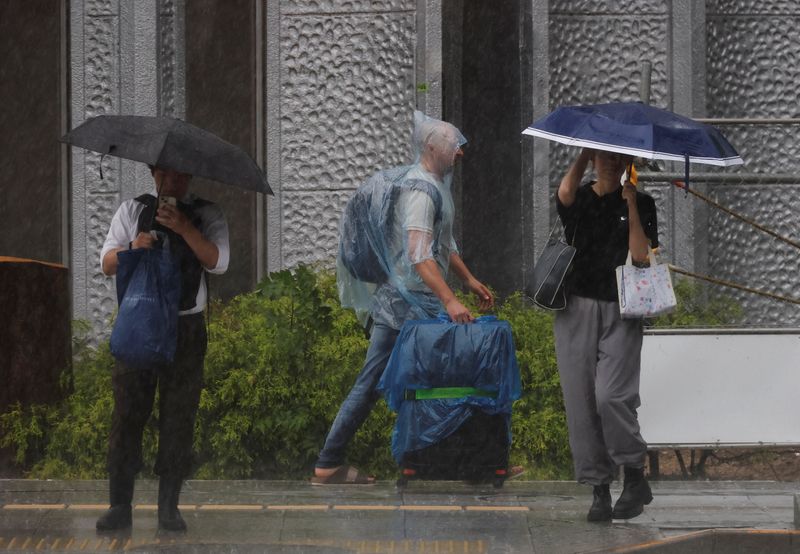
POLICY WIRE — Tokyo, Japan — The rhythmic whir of generators, not the howl of the wind, often becomes the true soundtrack of a storm’s immediate aftermath in Japan. It’s a subtle yet pervasive sign of the nation’s unshakeable efficiency, even when Mother Nature throws a temper tantrum. For residents across swathes of the archipelago, yesterday saw a return to that familiar, temporary dissonance as Tropical Storm Jangmi whipped through, leaving a trail of blackouts that, while quickly addressed, pose a familiar and nagging policy question: How much strain can even the best systems truly bear?
It wasn’t a record-breaker—not by a long shot. Jangmi packed winds of about 108 kilometers per hour, fairly modest by regional standards. But its passage still managed to pull the plug on some 60,000 households, mostly in Kyushu — and Shikoku. The disruption, for many, lasted mere hours, testament to a rapid response infrastructure that would make most nations blush. But this seamless recovery often glosses over the underlying tension between increasing weather volatility and the sheer cost of perpetual vigilance.
Contrast this with regions like Pakistan, where the annual monsoon season often cripples entire provinces, leaving millions without power for days, even weeks, and where floodwaters claim hundreds of lives and livelihoods. Their systems, often strained by older infrastructure, rapid urbanization, and scarce resources—well, they don’t have the luxury of merely flicking a switch back on. Their battles with climate change are brutal, undeniable. Japan, by comparison, projects an image of near-invincibility against natural forces, though that veneer occasionally cracks, revealing the Herculean efforts involved in maintaining it.
“We train tirelessly for these events,” stated Japanese Infrastructure Minister, Hiroshi Tanaka, in a public briefing. “Our emergency protocols are robust. But every year, we face new challenges—and sometimes, you know, nature simply outmatches our projections, no matter how precise our forecasts.” And he’s got a point. Utility companies, while swift, face escalating repair costs. According to a 2022 study from the Osaka University’s Disaster Management Research Center, localized grid failures from climate events in coastal Japanese prefectures have surged by 15% in the last decade alone, forcing operators to constantly re-evaluate maintenance schedules and investment priorities. You can almost hear the sighs of engineers.
Because while the lights might come back on in a flash for many in Tokyo or Osaka, the impact trickles down—hitting smaller businesses, disrupting travel plans, and creating ripples in daily life. This isn’t just about a downed power line; it’s about the relentless, grinding pressure of climate change testing the resilience of a nation built on precision. Even in this high-tech society, the age-old battle against the elements is far from won. They’re managing it, no question. But how long can the world’s most resilient infrastructure keep up with Mother Nature’s increasingly bad mood? (It’s not looking good, if you ask some meteorologists.)
But the government isn’t just patching things up; they’re constantly innovating. Tokyo Electric Power Company’s (TEPCO) chief grid operations officer, Kenji Nakamura, told Policy Wire, “We’re seeing increased investment in smart grid technology and distributed energy systems, aimed at making our networks more decentralized and less vulnerable to single points of failure.” It’s a necessary pivot, an evolution of thinking required as these ‘routine’ storms get a little less routine.
What This Means
The swift recovery from Tropical Storm Jangmi isn’t merely a testament to Japanese efficiency; it’s a policy blueprint for how advanced nations grapple with increasing climate volatility. Politically, the administration faces continuous pressure to ensure rapid responses maintain public trust, diverting significant resources annually to disaster preparedness and infrastructure hardening. Economically, while direct damages might appear contained, the cumulative effect of constant readiness, infrastructure upgrades, and potential supply chain disruptions (even if minimal in this case, think global shipping or local logistics) represents a formidable long-term cost.
The implicit lesson for developing nations, particularly those like Pakistan, is sobering. Japan’s budget allows for sophisticated radar systems, early warning, — and hardened infrastructure. That’s a luxury few can afford. Policy implications suggest a growing divergence in climate resilience capacities globally, potentially exacerbating economic disparities between states. And that, really, is the rub. Because a typhoon in the Pacific, even one as comparatively mild as Jangmi, carries a geopolitical weight far heavier than its wind speeds suggest, highlighting global infrastructure vulnerabilities. You know? Just look at a place like Albuquerque, where cracks in infrastructure expose wider societal problems.