
Rubble and Ration Books: Luhansk’s Fuel Squeeze Hints at Kremlin’s Slipping Grip
POLICY WIRE — Donetsk, Ukraine — Forget the grand pronouncements of ‘liberation’ and ‘integration.’ The raw, grinding truth of occupation often trickles down to something far...

POLICY WIRE — Donetsk, Ukraine — Forget the grand pronouncements of ‘liberation’ and ‘integration.’ The raw, grinding truth of occupation often trickles down to something far more mundane, yet utterly debilitating: how much gas you can pump into your beat-up Lada. In Russian-controlled Luhansk, they’ve started rationing fuel, cutting off the everyday lifeline for ordinary folks and signaling—to anyone paying attention—that the Kremlin’s grip, even in territories it claims to have assimilated, isn’t quite as firm as advertised.
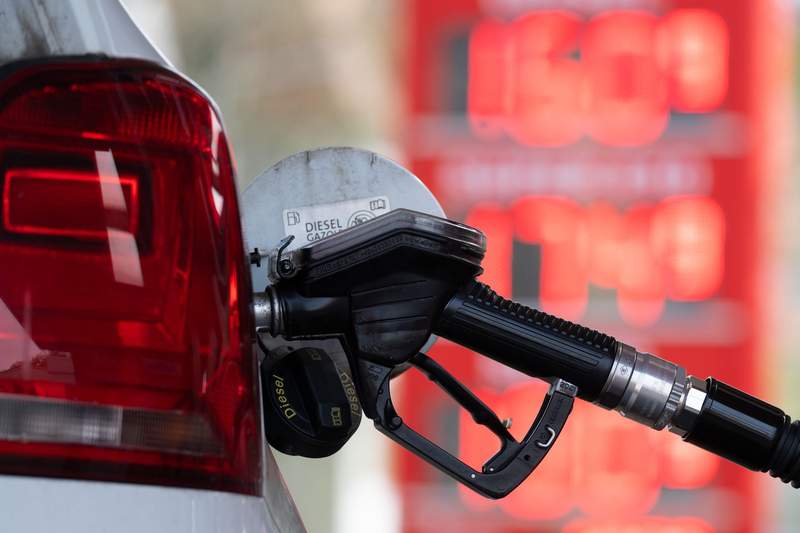
It’s not bombs or rockets sparking this particular panic; it’s the quiet erosion of supply lines, a chronic cough in the logistical arteries that keeps an economy sputtering along. The ‘authorities’ — Moscow’s hand-picked proxies — have slapped limits on how much petrol and diesel private citizens can buy. You’re now lucky to fill up with 20 liters (that’s about five gallons) of the good stuff. Maybe even less for the cheaper, lower-octane varieties. It’s a pinch felt right in the gut, folks. And because every single driver in a place like Luhansk often doubles as an unofficial supply chain manager—getting food, meds, or even just family around—these limits bite deep.
The official line? Pure bureaucratic balm. “Temporary preventative measures to ensure stable supply,” said Leonid Pasechnik, the head of the so-called Luhansk People’s Republic. He framed it as managing demand, not facing a dearth. “We’re just being proactive,” he claimed in a recent press statement (a well-worn phrase in regimes hoping nobody asks too many questions). But residents aren’t buying it—they’re just not buying much fuel. Because everyone knows this isn’t about stability; it’s about scarcity. Pure and simple.
This localized fuel squeeze isn’t just a regional headache, though. It’s a microcosmic symptom of larger, global energy dislocations that have far-reaching tendrils. The economic fallout from the Ukraine conflict has been especially hard on countries far from the front lines, particularly those in the Global South, like Pakistan. Pakistan, for instance, grapples constantly with balancing its energy needs against fluctuating global oil prices and strained supply chains, a reality often exacerbated by disruptions originating halfway across the world. When major energy players—like Russia—are under sanction and redirecting flows, everyone feels it. But sometimes, it hits the most vulnerable hardest. Like the civilians caught in occupied zones, or developing nations who can’t just absorb another price shock. And because, let’s be honest, Russia’s industrial capabilities have taken a noticeable hit under Western sanctions, the ripple effect isn’t just theoretical; it’s economic pain on the streets.
“These rationing policies are clear evidence that Moscow’s logistical umbilical cord to these territories isn’t nearly as robust as they’d have us believe,” noted Dr. Kateryna Zarembo, an expert at the New Europe Center, speaking from Kyiv. “It tells you more about their own domestic supply struggles and their over-stretched military apparatus than it does about any local energy fluctuations. You don’t ration when things are going smoothly.” She’s got a point. You just don’t.
📄 POLICY WIRE WHITEPAPER PUBLISHED: PAKISTAN'S NATIONAL SECURITY POLICY PRIORITIES
👉 READ BY CLICKING HEREThe International Energy Agency (IEA) reported that Russia’s crude and product export revenues reportedly fell by $1.5 billion month-on-month to $11.7 billion in March 2024. That’s a significant chunk of change, representing a concrete financial consequence. And you know, money talks, or in this case, doesn’t buy enough gasoline for Luhansk.
What This Means
The fuel rationing in Luhansk isn’t just about inconveniencing drivers; it’s a canary in the coal mine for Russian occupation policy. Politically, it broadcasts a distinct message of instability — and struggling control. It’s hard to project competence — and legitimacy when basic necessities are rationed. For residents, it breeds resentment and cynicism, perhaps quietly undermining whatever meager support Moscow might have hoped to cultivate. It makes daily life a continuous struggle for survival—something Moscow has consistently failed to alleviate, despite its narratives of stability.
Economically, this translates into inflated black-market prices, increased operational costs for the few remaining businesses, and a further de-industrialization of the region. Local production grinds to a halt. Small farmers, already battling wartime conditions, find their harvest prospects dimmed. It’s a creeping paralysis. it spotlights Russia’s own internal logistical woes — and the strain sanctions are putting on its domestic supply lines. They’re struggling to sustain their own war effort *and* meet civilian needs in occupied zones. That’s a problem that goes way beyond Luhansk’s petrol stations.