
Haaland’s March: Primary Win Sets Stage for a Different Kind of Frontier
POLICY WIRE — Albuquerque, New Mexico — They call it the Land of Enchantment, a tagline that usually conjures up sunsets and saguaros. But in New Mexico, particularly after last night’s primary...

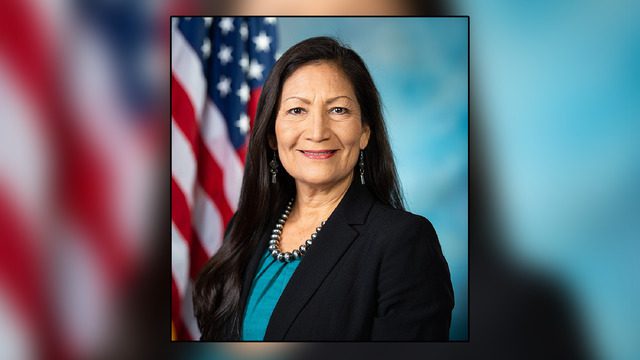
POLICY WIRE — Albuquerque, New Mexico — They call it the Land of Enchantment, a tagline that usually conjures up sunsets and saguaros. But in New Mexico, particularly after last night’s primary dust-up, enchantment feels more like a thinly veiled truce between deep-seated historical currents and modern political ambition. Deb Haaland, a figure whose very presence in national politics rewrote the script for Indigenous representation, is now on a clearer path to challenge for the state’s top job, trouncing her opponent in the Democratic gubernatorial primary with a commanding 78% of the vote. It wasn’t a contest, not really. It was a coronation.
Her swift primary victory over Bernalillo County District Attorney Sam Bregman wasn’t a shocker for anyone paying attention. Haaland, fresh from her stint as U.S. Secretary of the Interior—the first Native American to hold that cabinet post, a fact that can’t be understated—carries a national profile and an inherent political weight her state-level opponent just couldn’t match. This isn’t simply about a familiar name on a ballot; it’s about the continued, if sometimes bumpy, journey of a state grappling with its identity, its resources, and who gets to speak for them.
New Mexico, remember, is where America’s nuclear age kicked off, but it’s also home to vast swathes of land where ancient traditions run deep. Approximately 12.4% of New Mexico’s population identifies as Native American, the highest percentage of any U.S. state, according to the U.S. Census Bureau. It’s a place where resource extraction, often a flashpoint for Indigenous communities, clashes with environmental preservation, and where the echoes of broken treaties still resonate in everyday life. Her primary win isn’t merely a Democratic intra-party squabble; it’s a further realignment of political power that began generations ago. You see the same struggles, albeit through a different cultural lens, playing out in remote corners of Balochistan, for instance, where local communities eye their lands’ mineral wealth with both hope and apprehension, wary of the central authority’s grip.
“New Mexico’s spirit, our resilience—it’s what drives us,” Haaland told supporters during an online address, her voice calm but resolute. “This isn’t just about winning an election; it’s about making sure every voice, especially those historically unheard, gets a seat at the table. We’ve got work to do.” It’s the kind of soundbite you’d expect, yes, but also one that carries a specific resonance for her base, both within the state’s tribal communities and its broader progressive wing.
But the general election will be a tougher nut to crack. She’s staring down a potentially crowded Republican field, featuring candidates like Gregg Hull, Doug Turner, or Duke Rodriguez. They’re all, naturally, already lining up to paint her as too progressive, too D.C., too far removed from the pragmatic bread-and-butter issues New Mexicans purportedly care about. Take Duke Rodriguez, a pharmaceutical executive — and likely Republican contender. He recently observed, with characteristic corporate candor, “Folks around here want jobs that stick, not just talk about renewable energy from people who’ve spent too much time in Washington think tanks. They’re not looking for academic debates; they’re looking for paychecks.” He’s not wrong about the desire for stable employment, but it misses the evolving aspirations of a significant chunk of the electorate.
📄 POLICY WIRE WHITEPAPER PUBLISHED: PAKISTAN'S NATIONAL SECURITY POLICY PRIORITIES
👉 READ BY CLICKING HEREBecause the real battle isn’t just about ideology; it’s about optics, about perceived authenticity, and about who can convince voters they understand the local landscape better. Haaland knows the terrain—literally and figuratively. Her heritage isn’t just a political advantage; it’s an intimate connection to the land itself, a concept many New Mexicans, Indigenous and otherwise, inherently grasp. And for some, particularly in an era of deepening concerns about climate and sovereignty, that connection matters a great deal.
What This Means
Haaland’s projected march to the gubernatorial general election in New Mexico signals a significant, if not entirely unexpected, shift in the state’s political calculus. Economically, her win could accelerate a transition away from traditional fossil fuel industries—a major economic driver for the state—towards a more robust renewable energy sector. We’ve seen similar, complex shifts elsewhere, requiring careful navigation between job retention and long-term sustainability. Her tenure at Interior gave her unparalleled insight into federal land management and resource policy, experience that could both benefit and antagonize New Mexico’s entrenched interests. It’s a classic tug-of-war. Will she be seen as a champion of a new green economy or as an enemy of existing livelihoods? Her political instincts, honed in D.C., will face their sternest test back home.
Politically, it reinforces the growing power of Indigenous voices in American governance. Her potential governorship isn’t just symbolic; it establishes a precedent, creating a pathway for other minority groups to aspire to executive leadership, forcing both parties to rethink their outreach strategies. But it’s also a stark reminder that even in states with diverse populations, power remains concentrated, making such breakthroughs notable rather than routine. New Mexico’s internal struggles, whether it’s over healthcare access or resource management, aren’t unique, but Haaland brings a unique perspective to them. The coming months won’t just be about policy debates; they’ll be a masterclass in identity politics intersecting with hard economic realities, played out on a high-desert stage.