

Gridiron Allegiance: When Childhood Dreams Collide with Professional Pragmatism
POLICY WIRE — Boston, Massachusetts — The digital ether, that boundless canvas of contemporary celebrity, has once again been painted with the bittersweet hues of commerce overriding sentiment. It...

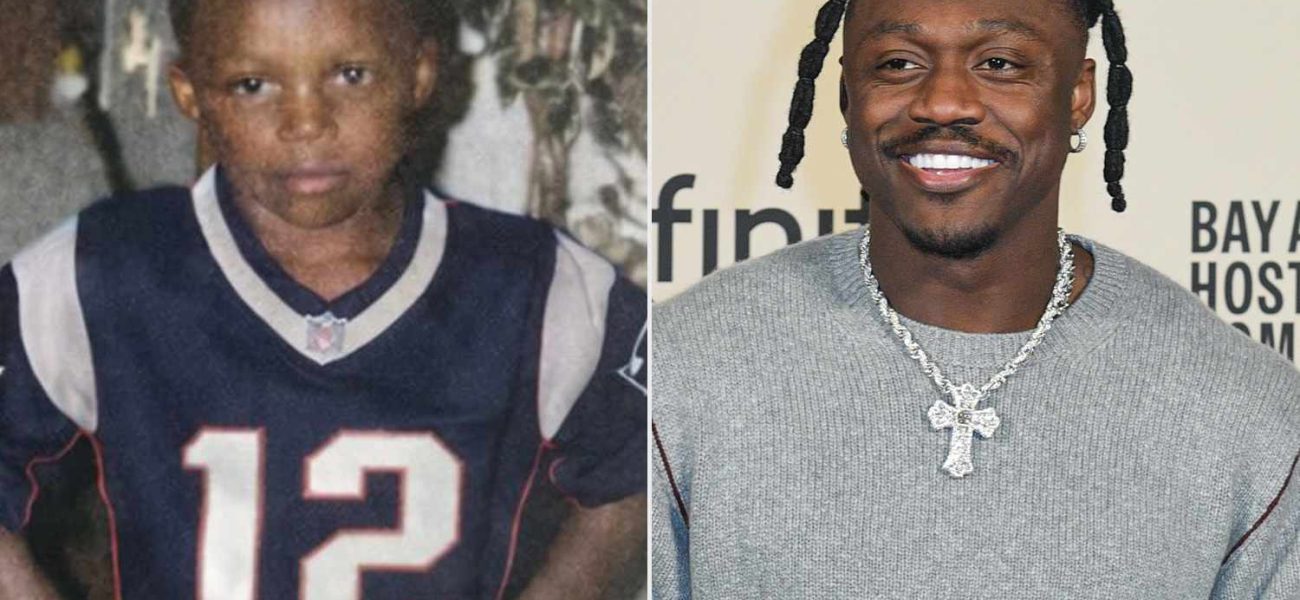
POLICY WIRE — Boston, Massachusetts — The digital ether, that boundless canvas of contemporary celebrity, has once again been painted with the bittersweet hues of commerce overriding sentiment. It wasn’t a leaked dossier or a surprise fiscal report that stirred the currents this week, but a decidedly analog pair of childhood photographs. These were offered up by wide receiver A.J. Brown, freshly minted as a New England Patriot after four seasons etching his name into Philadelphia lore. They depicted a much younger Brown, sporting the iconic No. 12 jersey of former Patriots’ demigod, Tom Brady. A nostalgic tableau, yes, but one that unwittingly — or perhaps strategically — underscored the mercenary heart of professional sports.
Philadelphia, a city that prizes its athletes with the ferocity of a protective elder, suddenly found itself grappling with a fresh betrayal, however commercially motivated. The trade, finalized by the Eagles on June 1st, didn’t just relocate a star player; it yanked a significant emotional investment from a dedicated fanbase. The social media ripples were immediate, a blend of aggrieved loyalty — and wistful acknowledgment. Even Tom Brady himself, now a venerable elder statesman of the sport, chimed in with a clutch of heart emojis on Brown’s Instagram post. It was a digital blessing from the prophet, an anointing of the successor, that only deepened the sting for Eagles faithful.
But the true complexity lay not in the image’s immediate charm, but in what it revealed about player mobility and fan psychology in the hyper-capitalized arena of modern athletics. Athletes, once seen as steadfast emblems of their cities, are now—let’s be real—high-value, temporary assets. “The romantic notion of loyalty, in today’s landscape, often comes second to the calculus of contracts and market value,” observed Dr. Aris Choudhury, an economist specializing in labor markets, during a recent Policy Wire roundtable. “Fans invest emotion; franchises invest capital. The divergence creates inevitable friction, which is only exacerbated by the immediacy of platforms like Instagram.”
And Brown wasn’t just posting wistful childhood memories. No, not entirely. He quickly pivoted, dropping a sponsored post for a moving company. The subtlety of a childhood dream juxtaposed with the blatant capitalism of an ‘official statement’ for Angi moving services—it’s peak 21st-century athleticism. This isn’t merely playing a game; it’s a career, a brand, an intricate dance between personal aspiration and corporate endorsement. The lines blur, often imperceptibly.
Then there was the pre-trade drama: whispers of a rift between Brown and his Eagles quarterback, Jalen Hurts, reportedly triggered by Hurts’ noticeable absence from Brown’s May 18th wedding. Hurts, ever the cool customer, downplayed it all. “Nothing’s changed” regarding their friendship, he told media on May 28th, adding he’s “very happy for him, and his wife and his family.” A tidy sentiment, of course, but it felt a little too neat, a little too rehearsed. A bit of public relations triage before the final surgical cut.
📄 POLICY WIRE WHITEPAPER PUBLISHED: PAKISTAN'S NATIONAL SECURITY POLICY PRIORITIES
👉 READ BY CLICKING HEREConsider the broader implications. In an era where globalization has fostered a complex web of cultural exchange, even a phenomenon like American football has seeped into unexpected corners of the world. In bustling markets from Karachi to Jakarta, the NFL — and its star players — are not unknowns. This migration of athletic talent, driven by billions, reflects broader global labor shifts. Just as a software engineer might relocate from Islamabad to Silicon Valley for opportunity, athletes navigate an increasingly transient career landscape, their loyalty ultimately tethered to their economic best interest. This can sometimes feel jarring in cultures that place a particularly high value on collective identity and enduring community ties, where individual mobility, especially across professional loyalties, can be viewed through a different lens. Loyalty, they often hold, is earned over generations, not seasons.
Indeed, a recent study by Statista showed that while the average salary for an NFL player approached $2.7 million in 2023, their career longevity averages a mere 3.3 years. That’s a high-stakes, short-term game. It’s why Brown and others don’t just play; they cultivate a personal brand, independent of their uniform’s current color. You don’t put all your eggs in one municipal basket.
What This Means
This episode is far more than mere sports page fodder. It’s a microcosm of the modern professional athlete’s dilemma: a struggle between personal ambition, the often-ephemeral nature of team allegiance, and the relentless machinery of commercial enterprise. For franchises, it highlights the cold calculus of asset management, balancing on-field performance with salary cap implications. For fans, it’s a harsh lesson in the true nature of professional sports – entertainment and commerce, meticulously interwoven. The emotional capital invested by a fan, so fiercely guarded, is ultimately subject to market forces far beyond their control. This transaction further cements the reality that athletes, like any commodity, can be moved to maximize return on investment, leaving behind a loyal—if occasionally heartbroken—consumer base. It’s a testament to the ever-present churn in today’s sports, a relentless march driven by both economic opportunity and the ceaseless pursuit of victory. You don’t get much more American than that.