


Baghdad’s Illusion: Iran-Backed Militia Pledges Weapons Handover, Or a New Gambit?
POLICY WIRE — Baghdad, Iraq — In the bewildering theatre of Middle Eastern power plays, nothing is ever quite as it seems. Least of all when a formidable, Iran-backed militia — for years a de facto...

POLICY WIRE — Baghdad, Iraq — In the bewildering theatre of Middle Eastern power plays, nothing is ever quite as it seems. Least of all when a formidable, Iran-backed militia — for years a de facto state within a state, accountable mostly to revolutionary cadres in Qom—suddenly declares its intent to disarm and hand over its formidable arsenal to the very government it has, at times, openly defied. It’s an announcement that hangs in Baghdad’s choking summer air like a desert mirage: too convenient, too neat, too sudden.
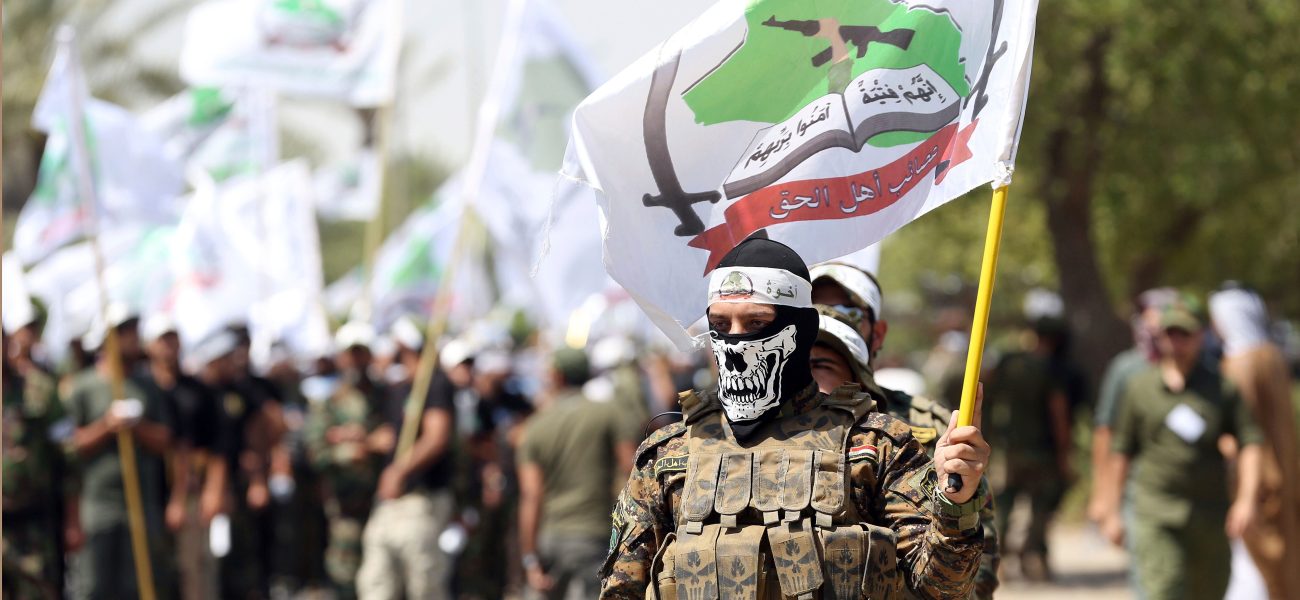
This week, the Nujaba Movement, a potent faction within Iraq’s sprawling Popular Mobilization Forces (PMF), or Hashd al-Shaabi, released a statement that would sound almost reasonable in any other nation. They’d transition, they said, into a purely political — and social organization. Their weapons, accumulated through years of bloody fighting against ISIS and, arguably, maintained as a counterweight to perceived American influence, would become state property. But in Iraq, ‘handing over weapons’ often means rebranding, repositioning, or perhaps just moving the armouries underground. It’s a calculated move—and one that’s got everyone, from Washington to Tehran, scratching their heads, or pretending not to be.
For Baghdad, long striving for a modicum of sovereign control over its own borders and its various, often contradictory, security forces, the statement was met with a practiced, public optimism. “This is a significant, if belated, step toward asserting full state sovereignty over all armed factions,” Iraqi National Security Advisor Qasim Al-Musawi reportedly told private donors in a closed-door briefing earlier this month. “We expect other groups to follow suit. The time for parallel armies is over.” And you almost want to believe him. Because a unified command structure, a true monopoly on force by the legitimate state—that’s the dream Iraq’s technocrats keep chasing.
But veteran regional watchers, folks who’ve seen this script play out in different theatres, aren’t quite buying the fairy tale. And it’s not hard to see why. These aren’t some weekend warriors with rusty rifles; these are well-funded, ideologically charged units. The Nujaba Movement, for instance, operates with an estimated fighting strength of around 10,000 to 15,000, according to a 2021 report by the Washington Institute for Near East Policy—numbers that rival or surpass some divisions of the regular Iraqi army. You don’t just dissolve that kind of organizational muscle on a whim, or simply because Baghdad asked nicely.
What this signals, more likely, is a nuanced recalibration orchestrated from higher up—probably by their benefactors in Tehran. Iran, dealing with its own domestic pressures and a complicated dance with international powers, may be pushing its proxies to adopt a more ‘statesmanlike’ facade. It doesn’t mean less influence; it means a different kind of influence. A subtler one, perhaps. It’s about moving from overt military flexing to covert political and economic maneuvering—something Iran has always excelled at.
But the real shift isn’t about disarming. It’s about rebranding power. Consider the larger Muslim world, too, grappling with the interplay of state fragility — and non-state actors. In Pakistan, for instance, a state battling extremist groups on its own soil, the notion of an external power bankrolling and dictating the terms for local militias is a deeply familiar and destabilizing dynamic. Every assertion of ‘state control’ in such a landscape, however genuine, immediately raises questions about who’s truly pulling the strings, and if the stated intention is merely a tactical retreat in a much longer game.
📄 POLICY WIRE WHITEPAPER PUBLISHED: PAKISTAN'S NATIONAL SECURITY POLICY PRIORITIES
👉 READ BY CLICKING HEREBut hey, if it pacifies international critics and makes Baghdad look like it’s finally grown a spine, why not play along? The weapons, you see, might get stored away. The fighters? They won’t disappear; they’ll just change uniforms. Or become ‘political operatives.’ Or, you know, just quietly retain their loyalty to Ayatollah Khamenei rather than Iraq’s parliamentary speaker. It’s an age-old trick.
What This Means
Politically, this announced ‘handover’ is less about disarmament and more about the ongoing, shape-shifting contest for authority in Iraq. If genuinely enacted and broadly followed by other factions, it could nominally strengthen Prime Minister Mohammed Shia’ al-Sudani’s government, giving Baghdad a public win in its struggle for institutional legitimacy. For Iraq’s neighbors and the wider region, however, this could signal a subtle, rather than substantive, shift in Iran’s regional strategy. They aren’t relinquishing their sway; they’re just changing their approach to projecting it. It’s a strategic withdrawal from overt confrontation in favor of a deeper penetration of political and economic structures. Think soft power, but with very hard-edged history behind it.
Economically, if Iraq can present a more unified, stable security landscape, it theoretically enhances its attractiveness for foreign investment—something the nation desperately needs to rebuild its dilapidated infrastructure and diversify away from oil. But investment thrives on certainty, and the lingering questions about who truly controls Iraq’s myriad armed elements—even if they’re nominally ‘disarmed’—will continue to dog investor confidence. “Tehran’s influence operates on many levels, and disarming a militia won’t dismantle the networks of patronage and power that have been decades in the making,” warns Dr. Elena Petrova, a political economy lecturer at the London School of Economics, observing the region’s complex dynamics. Because for all the public posturing, the fundamental question remains: does Baghdad now dictate to these groups, or have the groups, under Tehran’s guidance, merely shifted their tactics to better dictate to Baghdad? It’s a subtle but significant distinction.