


Europe’s Relentless Summer Creep: As Paris Simmers, Complacency Becomes a Costly Luxury
POLICY WIRE — Paris, France — Another spring, another broken record. That’s the bitter refrain echoing across Europe, where the continent’s cherished seasons seem to be, well, melting into one long,...

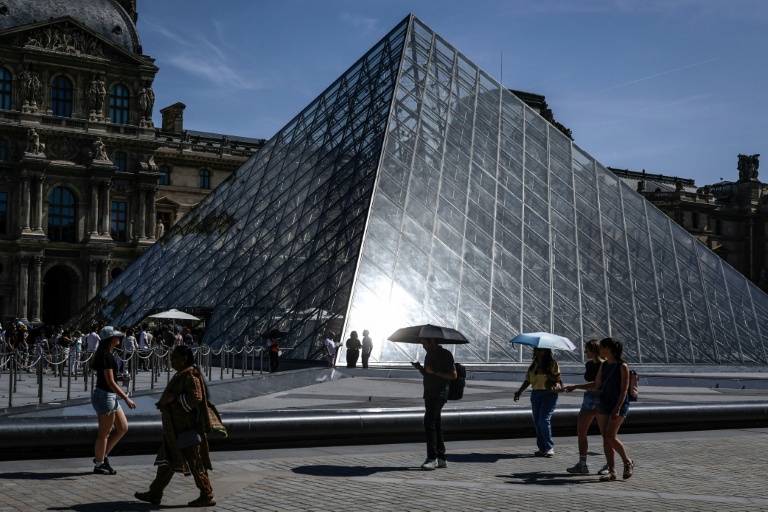
POLICY WIRE — Paris, France — Another spring, another broken record. That’s the bitter refrain echoing across Europe, where the continent’s cherished seasons seem to be, well, melting into one long, oppressive heat event. This isn’t just about France sweltering; it’s about a pattern, a quiet — but deadly serious — declaration that things aren’t returning to any version of ‘normal’ we once knew. Forget your picturesque Parisian spring; this year, it’s been a dress rehearsal for August in July, not exactly an advertisement for croissants on sun-drenched terraces.
It’s a peculiar kind of denial, isn’t it? The data, crisp — and unequivocal, paints a grim picture. Météo-France, the national meteorological service, just confirmed what many already felt through their pores: this past spring was France’s hottest on record. And it wasn’t some outlier. This came hot on the heels — excuse the pun — of a similar declaration from across the Channel, where England had already registered its warmest spring in recorded history. It’s like watching two pieces of a meticulously crafted porcelain vase shatter, one after the other. But instead of collecting the fragments, we’re mostly just watching the shards accumulate.
“We’ve moved beyond discussions of probability; we’re in an era of certainty, yet policy still often lags behind the physics,” observed Cécile Dubois, France’s Special Envoy for Climate Action, her voice tinged with an exasperated weariness that’s becoming all too common among those who actually pay attention. “Every record isn’t just a number; it’s a direct consequence, a forced recalculation of everything from our agricultural output to our public health strategies.” But recalculations, sadly, are often reactive, not preventative.
Because the real problem, it seems, isn’t just the heat; it’s the collective shrug, the almost pathological tendency to treat these markers as isolated events, rather than symptoms of a systemic failure. We’re excellent at emergency response; not so great at avoiding the emergency in the first place. This escalating warmth isn’t confined to temperate Europe. No, it’s a global narrative, writ large — and often in far more catastrophic terms across regions like South Asia. Pakistan, for instance, has weathered a barrage of extreme weather events, from devastating floods that displaced millions — contributing to an estimated $30 billion in damages in 2022, according to the UN Development Programme — to brutal heatwaves. Their experience serves as a stark reminder of what happens when the climate dice roll wrong, over — and over. Their problems today are our problems tomorrow, maybe sooner than we think.
But back to France. Its wine growers, for one, aren’t just contemplating earlier harvests; they’re grappling with an entirely shifted terroir. Ski resorts? They’re watching snow lines recede with an almost poetic sadness, their entire economic model thawing before their very eyes. These aren’t abstract environmental concerns; they’re immediate, tangible threats to livelihoods and cultural cornerstones. And who shoulders the burden? Often, it’s the most vulnerable—the elderly in poorly insulated city apartments, the agricultural workers baking in fields under an unyielding sun.
📄 POLICY WIRE WHITEPAPER PUBLISHED: PAKISTAN'S NATIONAL SECURITY POLICY PRIORITIES
👉 READ BY CLICKING HERE“The world is running out of options for gradual change,” asserted Dr. Asif Ali Khan, a senior climate scientist based in Islamabad, during a recent virtual conference, his tone devoid of pleasantries. “Developed nations, often shielded by their resources, are now experiencing the acute symptoms that have ravaged the global south for decades. There’s no hiding place left, not even in charming European capitals. And when wealthy nations struggle, the cascading effects — economic instability, migratory pressures, food insecurity — don’t stop at their borders. We’ve seen that movie already.”
That movie, by the way, has a sequel every year. And the ratings aren’t looking good.
What This Means
Politically, these mounting temperature records — both in Europe and globally — are making the high-wire act of climate policy even more precarious. Leaders face increased pressure from an increasingly climate-conscious public, especially younger generations, who aren’t buying the ‘business as usual’ line anymore. But then there’s the economic reality: shifting away from fossil fuels, insulating homes, retrofitting infrastructure — it all costs serious money, and that’s a tough sell when economies are already strained. The tension creates a sort of policy paralysis, where governments know what they *should* do, but struggle with how to fund and implement it without sparking backlash. The rising demand for energy for air conditioning alone is creating significant strain on European grids, forcing uncomfortable conversations about energy security and — ironically — potentially increasing reliance on the very fossil fuels they aim to shed. This isn’t just about French farmers losing crops; it’s about potentially volatile geopolitics and economic realignment, where nations that fail to adapt risk becoming increasingly unstable, making a mockery of global pledges to address climate challenges collectively. And who’s really prepared for that?