

Iran’s Silent Siege: Hunger, History, and the Crumbling Façade of Resilience
POLICY WIRE — Tehran, Iran — Forget the ballistic missiles, the bombastic rhetoric. Ignore the synchronized gun-handling drills meant to bolster national pride. Look past the engineered spectacle of...

POLICY WIRE — Tehran, Iran — Forget the ballistic missiles, the bombastic rhetoric. Ignore the synchronized gun-handling drills meant to bolster national pride. Look past the engineered spectacle of mass marriages staged under the shadow of a strategic missile launchpad. Iran’s real battle isn’t raging against some external foe with jets and tanks; it’s being fought — and increasingly lost — in the desolate aisles of half-empty supermarkets, in the grim calculus families make each morning just to put a meager meal on the table. This isn’t a war of armies, but a grinding, insidious conflict waged on household budgets, shattering the quiet dignity of everyday life.
It’s an economic siege, make no mistake. And the numbers, when they finally trickle out, paint a picture of despair most haven’t seen since global conflagrations reduced economies to rubble. The official line from the Iranian Central Bank? A staggering 77.2% year-on-year inflation rate for May. For anyone keeping score, that’s a level of price hikes not recorded since 1942, when Iran found itself caught between invading British and Soviet forces, leading to widespread famine and hyperinflation. But those were wartime conditions with foreign boots on soil. Today, it’s a homegrown crisis, nurtured by decades of mismanagement and amplified by a relentless blockade targeting the Islamic Republic’s lifeblood: its oil exports.
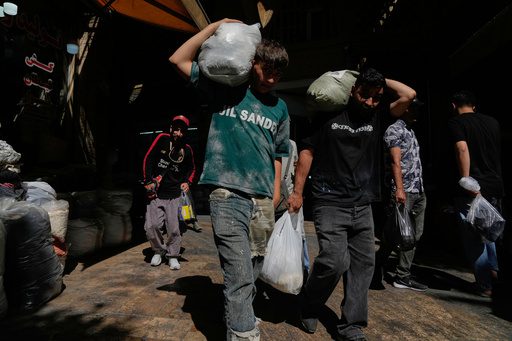
Walk through Tehran’s bustling — but increasingly threadbare — Grand Bazaar, and you don’t need an economist to tell you what’s happening. The rial, which once traded at a manageable 32,000 to the U.S. dollar in 2015, now buys over 1.7 million for that same greenback. That’s not just a drop; it’s a financial freefall. Things like medicine, a taxi ride, even a packet of cigarettes? Their prices jumped a soul-crushing 113.8% over the past year. Who could plan for that? Who could even survive it?
“I don’t have any doubt that if (there’s no formal peace deal in place)… most probably, we’re going to see something like January by the end of summer because of the economic and social situations,” analyst Mohsen Jalilvand observed recently. He’s talking, of course, about the widespread, often violent, protests that have shaken the regime in recent years. But he’s probably understating it; the January crackdown, according to activist groups, claimed more than 7,000 lives. Yet, the pressure mounts daily. How many more empty stomachs does it take for a powder keg to explode? It’s not a matter of ‘if’ but ‘when’ for many disillusioned Iranians.
The hardline clerics in power seem to be offering little more than stoic resolve, or perhaps, outright denial. President Masoud Pezeshkian, whose own position can’t be easy, simply laid out the grim truth with a touch of fatalism back in May. “We will definitely have higher prices,” he stated. “We’re fighting and we must accept this hardship.” Fine words for a leadership that’s rarely felt the sharp edge of hardship, but cold comfort for those choosing between rent and bread (a choice too many can’t even make anymore).
📄 POLICY WIRE WHITEPAPER PUBLISHED: PAKISTAN'S NATIONAL SECURITY POLICY PRIORITIES
👉 READ BY CLICKING HEREWhat This Means
This economic catastrophe isn’t merely an internal affair for Iran; its ripples are already extending across the region. Instability, after all, rarely respects national borders, casting a long shadow toward Pakistan’s restive Balochistan province, and influencing Tehran’s already fraught relations with Saudi Arabia and other Gulf states. And it fuels deeper currents within the broader Muslim world, with nations watching a major regional player succumb to internal rot and external pressure. There’s an undeniable fear that a broken Iran could destabilize the Strait of Hormuz, impacting global energy markets with terrifying consequences. This economic decay severely hampers any prospect of Iran playing a constructive role in regional stability — perhaps quite the opposite. But, hey, who’s counting?
On the home front, the prognosis is bleak. This level of economic pressure is directly tied to political upheaval, as history so painfully reminds us. From the widespread unrest over food prices in 2017-2018 to the devastating fuel protests in 2019, each economic dip seems to catalyze a fresh wave of public anger. The brutal calculus of such crises is simple: when people can’t feed their kids, they stop caring about the abstract virtues of a revolution. An economist based in Tehran, Saeed Leilaz, captured the public’s breaking point rather succinctly to the Associated Press, saying, “Iran’s society cannot tolerate above 25% annual inflation.” Well, they’re more than triple that now. The regime might still hold the reins of state power, but the trust of its populace, along with their purchasing power, is evaporating daily. It’s not a good look. Not at all.