


From Pacific Shores: Tiny Fiji’s Bold Embrace Realigns Global Diplomatic Chessboard
POLICY WIRE — Suva, Fiji — For a geopolitical reporter, a new embassy opening isn’t often the stuff of breaking news. We chase revolutions, coups, market crashes. But when a Pacific island...

POLICY WIRE — Suva, Fiji — For a geopolitical reporter, a new embassy opening isn’t often the stuff of breaking news. We chase revolutions, coups, market crashes. But when a Pacific island nation, hardly a titan on the world stage, suddenly decides it’s time to plant a diplomatic flag in Jerusalem—well, you’ve got to raise an eyebrow. This isn’t just about ribbon cuttings — and smiling officials. No, it’s about the quiet, relentless grinding of geopolitical gears, especially when it comes to Israel’s decades-long dance for international legitimacy.
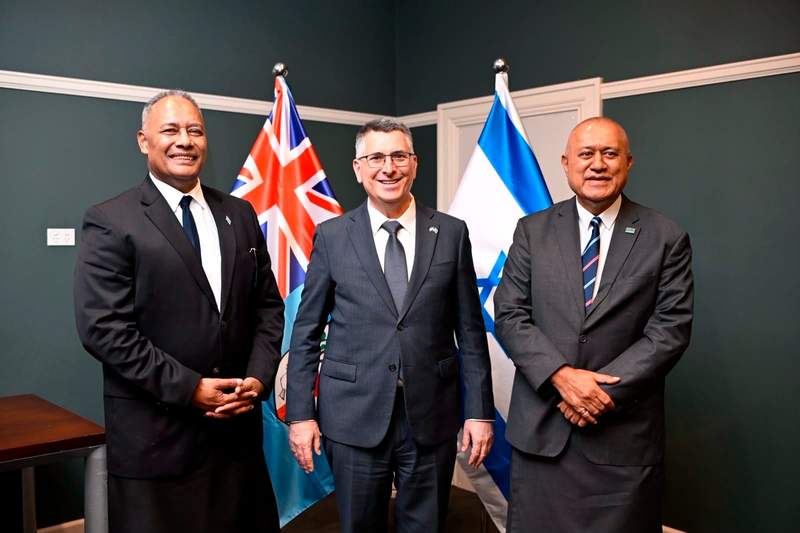
It was Gideon Sa’ar, Israel’s foreign minister at the time, who jetted halfway across the globe to Suva, Fiji. He wasn’t just there to catch some rays; he was there to christen Fiji’s brand-spanking-new embassy to Israel. And what a statement it’s. A small South Pacific nation, long seen by some as just sun-drenched beaches and palm trees, now hosting Israel’s diplomatic mission. Some might call it quaint. I’d call it a calculated, even audacious, move on a global chessboard where every pawn counts.
Thirty years, folks. Three decades. That’s how long it’s been since a resident Fijian embassy last represented the island nation in Israel. You don’t just ‘forget’ about an embassy for that long, then suddenly remember. This, dear readers, is strategic. This is about leverage. And frankly, it’s a testament to Israel’s ongoing, sometimes grueling, push for friends in every corner of the earth. But this move has implications far beyond the sandy shores of Fiji.
“This opening is more than symbolic; it represents the deep commitment Fiji has to global diplomacy and multilateral cooperation,” stated Fijian Foreign Minister, Ratu Josaia Vosanibola, addressing the attendees with a measured smile. “We don’t just open doors; we build bridges. And this bridge, it’s built for enduring friendship and shared prosperity.” His words, delivered with a tropical breeze wafting through the hall, sounded hopeful, a bit naive perhaps, or incredibly shrewd.
From Israel’s vantage point, this is an unequivocal win. Think about it: a small but sovereign state choosing Jerusalem for its diplomatic presence. And this isn’t just about racking up numbers. It’s about signaling to a world often critical of its policies, especially regarding Palestine, that its diplomatic footprint is, in fact, expanding. Foreign Minister Sa’ar, always one to articulate Israel’s broader ambitions, made sure to emphasize this during his remarks. “Every hand extended to Israel is a confirmation of our place in the international community,” Sa’ar declared, a glint in his eye. “This isn’t just about two nations; it’s about a global shift towards mutual respect — and opportunity.”
But consider the optics from, say, Jakarta or Islamabad. While not directly involved, the perception of a Muslim-majority nation like Pakistan — a country that, to this day, doesn’t recognize Israel — would likely be one of consternation. It highlights a growing fissure in what was once a more unified front against Israeli diplomatic overtures, particularly concerning the status of Jerusalem. While countries like Morocco and Sudan have normalized ties recently (and under much fanfare, I might add), smaller nations quietly making moves can be just as impactful.
📄 POLICY WIRE WHITEPAPER PUBLISHED: PAKISTAN'S NATIONAL SECURITY POLICY PRIORITIES
👉 READ BY CLICKING HEREBecause, really, no country acts purely out of sentiment in these high-stakes games. There’s always an exchange, implicit or explicit. For Fiji, a developing nation facing the existential threat of climate change and needing investment, alignment with countries willing to offer aid and expertise makes perfect sense. Fiji’s economy relies heavily on tourism, but it’s increasingly looking to diversify and secure its future. Conversely, Israel seeks partners who will lend support in international forums—like the United Nations—where votes, even from the smallest states, count. As a 2022 analysis by the Carnegie Endowment for International Peace showed, nations in the Pacific and Africa often vote differently from major powers, representing an unpredictable, but winnable, bloc for states like Israel seeking diplomatic breakthroughs. This is diplomacy by addition, building little pockets of friendship around the world. It might look small from afar, but it changes the overall arithmetic.
What This Means
The Fiji embassy opening, far from being a trivial side-note, subtly rearranges several diplomatic puzzles. For Israel, it solidifies a narrative of growing acceptance, particularly away from its traditional European and American alliances, at a time when its domestic politics can often appear consumed by turmoil and electoral churn. It’s an affirmation of its sovereignty and its ongoing efforts to counter international criticism through multilateral engagement.
For Fiji, it’s a strategic embrace of a country known for its innovation in agriculture, water management, and technology – areas where a small island nation facing resource challenges can greatly benefit. It provides an alternative pathway for aid and development partnerships, broadening its options beyond established, often demanding, powers. And for the broader Asia-Pacific region, it signals that diplomatic boundaries are continually redrawn. It reminds everyone that despite perceived distances, the currents of global power and influence touch even the most remote corners.
But let’s be clear: this isn’t about ideological alignment for most. It’s a transaction. A well-orchestrated, low-key, but profoundly significant exchange of diplomatic recognition for tangible (and intangible) benefits. It’s a masterclass in how smaller players, when given the right opportunity, can exert influence far beyond their perceived weight. And it’s a clear message to those who might prefer Israel remained isolated: that ship, for better or worse, continues to sail, gathering new crew members with every port of call.