


The Brutal Calculus of Crisis: Aid, Austerity, and the Echoes of Distant Wars
POLICY WIRE — London, UK — The slow burn of distant wars and simmering geopolitical tensions always finds its way to the balance sheets. Always. It’s a tedious certainty, like gravity, or quarterly...

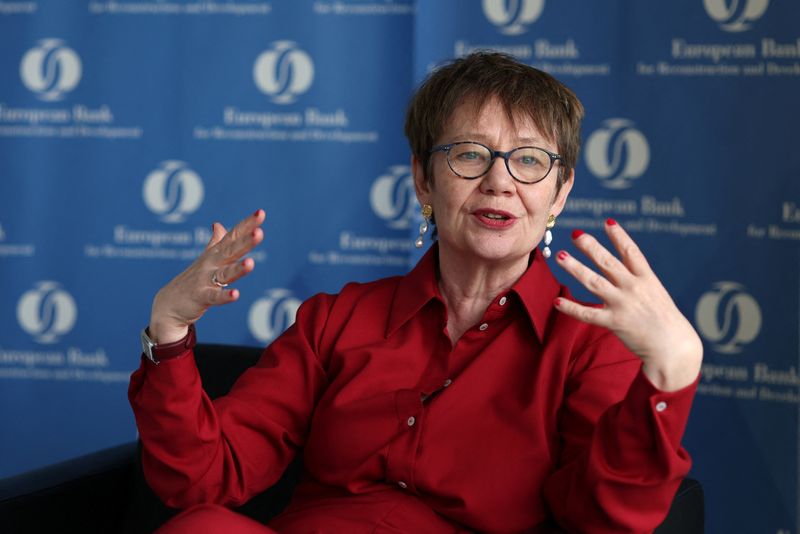
POLICY WIRE — London, UK — The slow burn of distant wars and simmering geopolitical tensions always finds its way to the balance sheets. Always. It’s a tedious certainty, like gravity, or quarterly earnings reports. We see the market shudders, the energy price lurches, — and then, inevitably, comes the bill. That bill, according to Odile Renaud-Basso, President of the European Bank for Reconstruction and Development (EBRD), isn’t one governments can afford to pay indiscriminately.
She’s not just talking about humanitarian efforts here. Nope. She’s sounding the alarm about the cascading economic fallout—the inflation, the disrupted trade, the raw material squeezes—and the absolute necessity for state aid to be surgically precise. It’s not about being uncharitable, mind you. It’s about surviving a protracted period of global strain without bankrupting the treasury. Governments, she maintains, must resist the urge to deploy blunt instruments, those costly, untargeted support packages we saw liberally dispensed during, say, the early days of the pandemic. They can’t afford that now. The well, for many, is drying up.
And let’s be frank: the stakes are considerable. These aren’t theoretical musings from an academic ivory tower. These are the pragmatic concerns of an institution that props up economies from Central Europe to North Africa. “Governments face an unenviable dilemma,” Renaud-Basso observed during a recent economic forum, her expression devoid of theatrics, just a sharp awareness of the hard numbers. “While the instinct is to soften every blow for every citizen, current fiscal realities simply don’t allow for universal handouts. The support needs to be precisely channeled to those most vulnerable, otherwise, we’re not easing economic pain, we’re simply postponing a larger crisis.” It’s an inconvenient truth, isn’t it?
But the real test of this targeted approach will be felt acutely in regions already wrestling with their own demons, nations teetering on the edge before the current geopolitical tremors even started. Take Pakistan, for instance, a nation routinely battling its debt, its energy imports, its inflation. The indirect pressures from conflicts — rising oil prices, disrupted global supply chains, dwindling foreign investment — aren’t abstract concepts there. They hit hard, right at the kitchen table.
Because every penny spent on imported oil means one less for essential social programs or debt servicing. Dr. Shamshad Akhtar, Pakistan’s interim Finance Minister, recently articulated the grim balancing act. “Our fiscal space is non-existent, for all intents — and purposes,” she stated pointedly. “Every external shock demands an internal sacrifice. We’re scrutinizing every expenditure, negotiating every loan repayment. The notion of broad-based, non-specific subsidies simply isn’t an option. We have to preserve our economic integrity for the next generation, no matter how tough that choice is today.” You’d almost think she knows what she’s talking about.
This isn’t merely about distant conflicts, you see. It’s about their insidious ability to seep into every economic pore. The International Monetary Fund (IMF), for one, had already projected that economic growth in the Middle East and North Africa (MENA) region would likely plummet from 5.6 percent in 2022 to a mere 2.0 percent in 2023, largely due to lingering global issues and nascent regional instabilities. Now, with ongoing strife, those figures aren’t just statistics—they’re harbingers of heightened poverty and, quite possibly, political turbulence across a sensitive part of the globe. It’s a truly unenviable position, isn’t it? As if existing vulnerabilities weren’t enough.
📄 POLICY WIRE WHITEPAPER PUBLISHED: PAKISTAN'S NATIONAL SECURITY POLICY PRIORITIES
👉 READ BY CLICKING HEREThe call from the EBRD, therefore, is a stark reminder to policy makers worldwide: penny-pinching now, ironically, could save pounds later. Or rupees. Or dirhams. It’s about ensuring that financial aid isn’t just a political sop, but a strategic investment in economic stability. And that means hard choices, not crowd-pleasing gestures. For more on how global tensions play out at the granular economic level, consider how geopolitics squeezes local wallets from Hormuz to New Mexico. The interconnectedness of our financial fate is becoming painfully apparent.
What This Means
This isn’t just about good fiscal housekeeping; it’s about political survival. When economies buckle under external pressures, governments often resort to popular, yet unsustainable, spending measures to quell social unrest. But these measures, as Renaud-Basso implies, are like pain relievers for a broken bone – they hide the problem without fixing it, exacerbating long-term damage. Countries like Pakistan, already heavily indebted, face a brutal calculus: bail out everyone and risk a sovereign default, or meticulously target aid and brave the immediate political backlash from those who feel left behind.
The political implications are grim: austerity, however necessary, breeds resentment. Mismanagement, however well-intentioned, fuels instability. The failure to address core economic fragility in these vulnerable regions won’t just keep development targets out of reach; it risks widening global fault lines, providing fertile ground for extremism, and ultimately, ensuring more ‘distant wars’ continue to ripple across continents. It’s a geopolitical vicious circle, one where the financial solvency of nations becomes intrinsically linked to broader global security. A nuanced understanding, one might suggest, of the global scramble for resources and economic leverage is increasingly non-negotiable for leadership, anywhere.