


Delhi’s Tightrope: India Courts Myanmar Junta Amid Regional Chess Match
POLICY WIRE — New Delhi, India — The quiet rustle of diplomatic silk often conceals the clatter of ideological concessions. This past week, a curious spectacle unfolded in India’s capital: an...

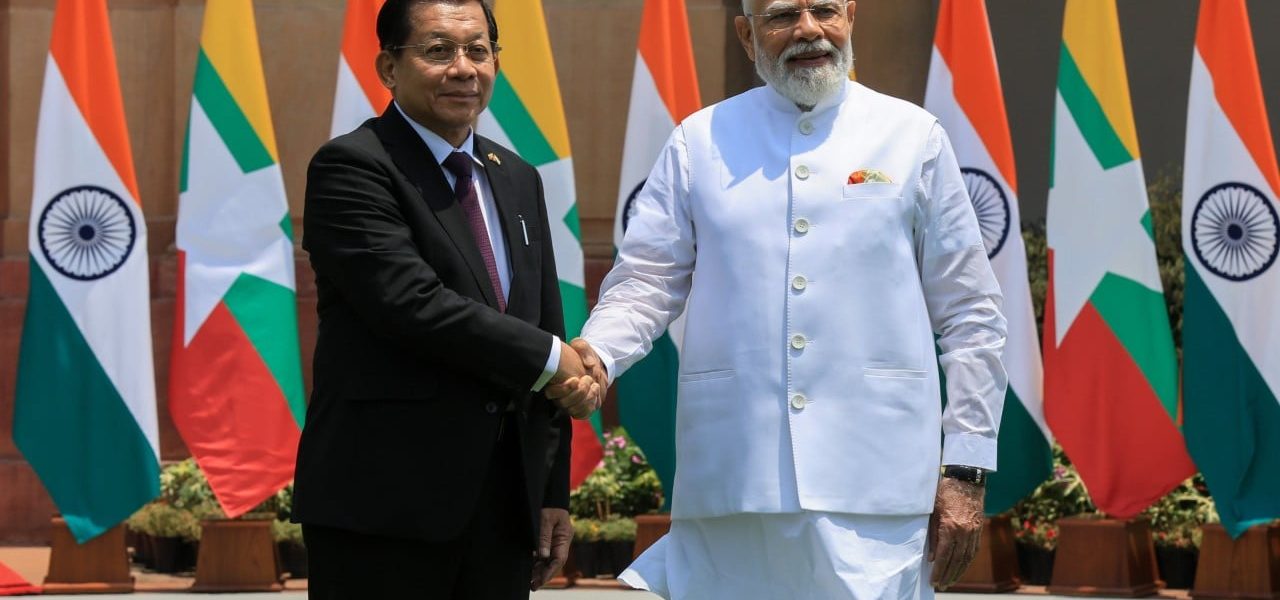
POLICY WIRE — New Delhi, India — The quiet rustle of diplomatic silk often conceals the clatter of ideological concessions. This past week, a curious spectacle unfolded in India’s capital: an invitation, extended by Prime Minister Narendra Modi himself, to a strongman whose regime is largely ostracized by the Western world. Myanmar leader Min Aung Hlaing wasn’t here for a human rights lecture, clearly. He was here because India’s playing a long game, — and sometimes, you’ve just got to make uncomfortable friends.
It’s no grand secret why Delhi rolls out the red carpet. They’ve got a Dragon Problem. Beijing’s influence keeps inching across Asia’s maps, casting a long shadow, especially over nations on India’s eastern flank. The perception, according to seasoned analysts, is that «Min Aung Hlaing’s first trip to India since being sworn in as president signals New Delhi’s recognition of the strongman’s political status as it seeks to counter mounting Chinese influence.» That’s the plain truth of it, stripped bare of any diplomatic pleasantries. India isn’t just looking to strengthen bonds; it’s fortifying its backyard against a rather imposing neighbor. [QUOTE_PLACEHOLDER]
The visitor, sworn in as president after a coup, landed for a five-day spree, rubbing shoulders with top Indian brass. «The five-day visit, which began on Saturday at the personal invitation of Prime Minister Narendra Modi, is aimed at strengthening ties with one of Myanmar’s key regional partners.» Sounds simple, doesn’t it? But beneath that boilerplate lies a strategic calculation that prioritizes pragmatism over preachiness. The Dragon’s Shadow isn’t just a concern for distant Manila; it’s a very immediate, very pressing issue for India.
And let’s be blunt: this isn’t exactly a popularity contest. Western capitals have sanctioned the junta heavily following the February 2021 takeover, cutting off financial lifelines and diplomatic avenues. «Despite Western sanctions imposed after the February 2021 coup, India has maintained…» —maintained what, exactly? Well, for starters, it’s maintained a transactional relationship that ensures India still has a seat at Myanmar’s table. They’re not going to let a power vacuum form, especially not one Beijing could effortlessly fill.
The situation isn’t black — and white; it’s a messy, mottled grey. On one hand, you’ve got the humanitarian disaster brewing in Myanmar—a crisis that’s pushed hundreds of thousands of Rohingya Muslims into neighboring Bangladesh, causing significant regional instability. India, for its part, also grapples with the fallout, particularly along its porous border with Myanmar, which sees an influx of refugees and cross-border trade, both legal and illicit. But geopolitics, unfortunately, rarely makes allowances for pure moral stands. You make your choices; sometimes they aren’t pretty.
The numbers speak to this geopolitical tension. According to data released by the Directorate of Investment and Company Administration (DICA) of Myanmar, foreign direct investment from China into Myanmar totaled over USD 1.2 billion in 2023 alone, a testament to Beijing’s relentless engagement. Compare that to India’s comparatively modest figures—it’s clear why Delhi feels it needs to pull out all the stops, even if it means dining with devils, so to speak. And don’t forget the access to the Bay of Bengal, a significant strategic asset for any power player in the Indian Ocean Rim. India’s Sagarmala program and various infrastructure projects have always eyed Myanmar as a crucial land bridge to Southeast Asia, a bypass to what some see as China’s naval choke points in the Malacca Strait.
📄 POLICY WIRE WHITEPAPER PUBLISHED: PAKISTAN'S NATIONAL SECURITY POLICY PRIORITIES
👉 READ BY CLICKING HEREBut the calculus goes beyond infrastructure. It involves counter-insurgency operations along shared borders, resource access, and—yes—that ever-present desire to deny strategic space to a rival. They’ve got their reasons. It’s just that those reasons often clash with the public’s moral compass. It’s a pragmatic necessity, or so the argument goes, in a region where realpolitik still holds sway. Because sometimes, principles gotta take a back seat to positioning on the grand stage. Just look at the historical precedents, how nations maneuver in Delhi’s away games around the globe.
What This Means
This whole situation boils down to raw geopolitical maneuvering, plain — and simple. Economically, India’s deepening engagement with Myanmar, regardless of the junta’s standing, solidifies its play for trade routes and resource access that otherwise might lean heavily toward China. It’s about maintaining options, not just for itself but also for its broader South Asian ambitions. Think connectivity, think trade corridors bypassing China’s Belt — and Road dominance. It’s about securing markets and strategic ports on the Bay of Bengal, an area of escalating interest for both regional and global powers.
Politically, the message is equally stark. New Delhi is telling Beijing—and indeed the world—that it will safeguard its perceived sphere of influence, even if it means acknowledging a regime that’s anathema to democratic ideals elsewhere. This isn’t an endorsement of military rule; it’s a strategic embrace of a geographic reality. But it also risks complicating India’s relationships with Western democracies, potentially undermining its aspirations for a larger, more ethical role on the global stage. It’s a trade-off, really: immediate strategic gain for potential long-term reputational cost. The visit probably won’t lead to Myanmar miraculously aligning with India over China, but it definitely keeps the lines of communication open, maintaining a degree of leverage that Delhi just couldn’t afford to forfeit. The play here isn’t to convert; it’s to contain.