

Desert Bloom: Geopolitical Winds Shift Gulf Petro-States to Green Future
POLICY WIRE — Abu Dhabi, UAE — For decades, the sands of the Arabian Peninsula have held the world’s purse strings. Petrodollars defined their existence, fueled their cities’...

POLICY WIRE — Abu Dhabi, UAE — For decades, the sands of the Arabian Peninsula have held the world’s purse strings. Petrodollars defined their existence, fueled their cities’ vertiginous ascent, — and gave them immense geopolitical heft. But a quiet, almost ironic revolution is brewing beneath the surface—one not of protest, but of pragmatism. The very nations built on hydrocarbons are now furiously building a future powered by the sun.
It’s an interesting turn, isn’t it? A narrative shift from crude to clean, forced not by ecological guilt (not primarily, anyway), but by hard-nosed economic reality and a region that just won’t stay still. And stability, as always, is a rather expensive commodity these days. The simple truth is, relying solely on volatile fossil fuel markets? That’s a shaky long-term bet, even for the most seasoned players. [QUOTE_PLACEHOLDER]
We’ve watched for years as tensions flared, often with Iran at the heart of it all. The persistent undercurrents of strategic rivalry and the occasional, rather dramatic, flare-ups don’t exactly make for predictable oil futures. Indeed, what was once unthinkable — a fundamental rethink of energy strategy by the world’s energy titans — is now daily business. Because The Iran conflict has disrupted oil supply, forcing a new calculation on old ledgers.
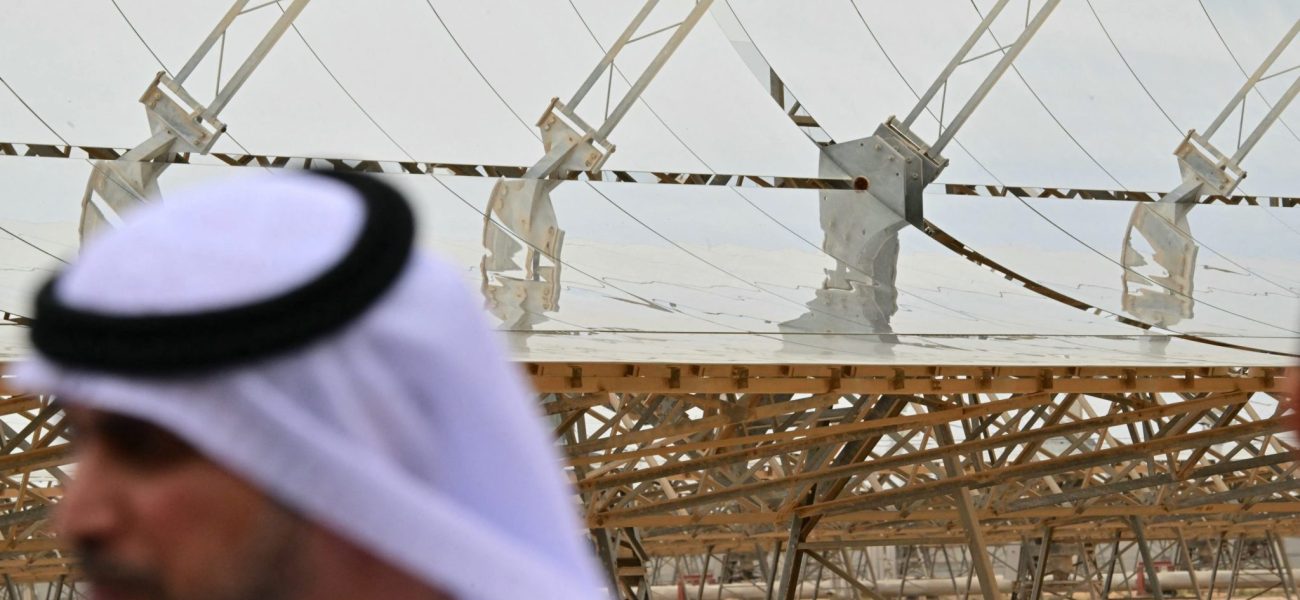
Consequently, the once unassailable dominance of black gold is beginning to wane — at least in the strategic portfolios of Riyadh, Abu Dhabi, and Doha. We’re seeing a deliberate, calculated pivot. Gulf states are now looking to multi-billion-dollar investments in renewables, a stark redirection of capital that would have been unimaginable a mere generation ago. They’re pouring money into solar farms, hydrogen projects, and even nuclear energy, all aimed at securing a future less beholden to the whims of the Strait of Hormuz.
But this isn’t merely about clean energy; it’s about national resilience, about preparing for a world that may, one day, turn its back on oil. The implications for nations like Pakistan, for instance, are substantial. As a Muslim-majority country in South Asia with chronic energy deficits and a growing population, Pakistan’s energy security is tied both to global oil prices and, increasingly, to regional energy policy shifts. Reduced reliance on oil by its wealthy neighbors could reshape trade dynamics and perhaps open doors for renewable energy collaboration or investment from the Gulf, creating new economic corridors across the broader Muslim world.
One cannot ignore the figures either. A recent UN Economic and Social Commission for Western Asia (ESCWA) report suggests Gulf Cooperation Council (GCC) countries are collectively targeting over $200 billion in renewable energy investments by 2030, a clear signal of serious intent. This isn’t pocket change; it’s a commitment, a multi-decade play that dwarfs many nations’ GDPs.
And it’s a play that demands domestic innovation. They’re not just buying technologies off the shelf; they’re investing in research, development, and building local capabilities. You can see it in their national visions — Saudi Arabia’s Vision 2030, UAE’s Energy Strategy 2050. These aren’t just pretty pamphlets; they’re blueprints for economic survival. It’s a pragmatic recognition that diversifying revenue streams isn’t just good governance; it’s essential statecraft when your primary export is subject to global political winds and technological obsolescence.
📄 POLICY WIRE WHITEPAPER PUBLISHED: PAKISTAN'S NATIONAL SECURITY POLICY PRIORITIES
👉 READ BY CLICKING HERESure, the shift won’t happen overnight. Oil still pays the bills, — and generously so. But the smart money? It’s flowing elsewhere. Because yesterday’s certainties are today’s question marks, — and tomorrow? Well, that’s where the real gambles are being placed. You can’t build an empire on a single, volatile commodity forever. Someone finally got the memo.
What This Means
This seismic shift from hydrocarbon dependence to renewable energy in the Gulf represents far more than just environmental policy; it’s a profound recalibration of regional power dynamics and economic strategy. Politically, it signals a strategic hedging against geopolitical volatility and the inevitable global energy transition. By reducing their long-term reliance on oil exports for revenue, these states are implicitly future-proofing their economies against fluctuating demand and carbon taxation pressures. It also lessens their vulnerability to conflicts — like the Iran one — that directly threaten oil supply routes and, consequently, their national income.
Economically, this diversification push opens up entirely new sectors for investment — and job creation. It’s an attempt to transition from a rentier state model to a more innovation-driven economy. We’re seeing massive national investment funds redirecting capital towards clean tech startups, renewable infrastructure, and smart cities. This could position the Gulf not just as an energy supplier, but as a major player in the global green economy, exporting expertise and technology — not just fuel. The region’s vast solar resources become its new oil fields, but without the geopolitical baggage of the past century.
For surrounding nations, particularly those in South Asia and the broader Muslim world with burgeoning energy demands, this creates both challenges and opportunities. On one hand, a decreased Gulf reliance on oil could lead to less direct intervention in oil-consuming markets, potentially shifting supply chain dynamics. On the other hand, the vast capital accumulated and now being deployed into renewables could translate into significant cross-border investments in similar projects within developing nations, fostering regional economic integration and collaboration on climate change. It signals a move away from a singularly fossil-fuel-centric vision of development towards a more diversified, resilient future, proving that even old habits can be broken under sufficient pressure.