

Ancient Roots, New Threats: French Vintners Turn to Trees as Climate Warms
POLICY WIRE — Bordeaux, France — They say change comes slowly, then all at once. For France’s hallowed wine country, that “all at once” moment has materialized as a verdant,...

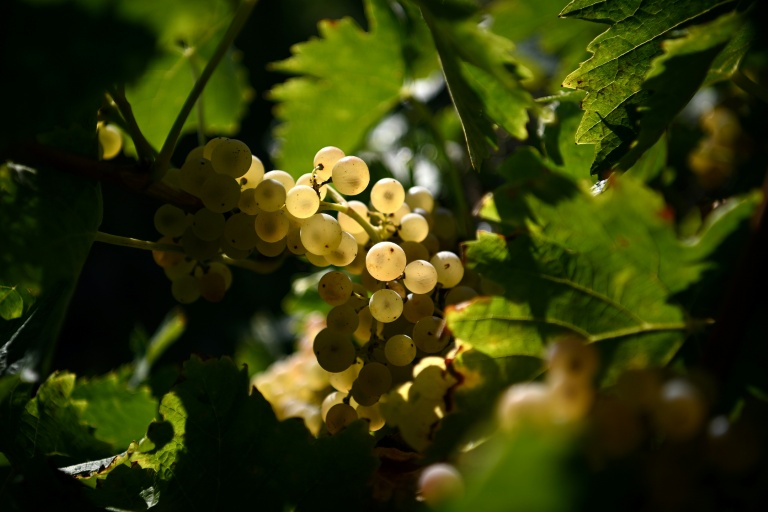
POLICY WIRE — Bordeaux, France — They say change comes slowly, then all at once. For France’s hallowed wine country, that “all at once” moment has materialized as a verdant, rustling defense line: trees. It’s an oddly pastoral scene, this urgent rewilding amidst some of the globe’s most meticulously managed agricultural landscapes, a surprising nod to forgotten ecological principles in an industry obsessed with terroir and tradition.
For centuries, the concept of a vineyard was often one of exposed, sun-drenched rows, the very definition of a monoculture. But a changing climate – warmer summers, harsher frosts, more erratic rainfall – has driven many vintners to embrace what feels like anachronism. They’re planting hedgerows, creating miniature forests between plots, anything to shield their prized grapes. This isn’t just about aesthetics; it’s an economic scramble, a quiet war for survival against an adversary that doesn’t care about AOC designations.
“We’re talking about protecting our heritage, not just a crop,” remarked Henri Dubois, Director of the Bordeaux Wine Council, his voice etched with a pragmatic resolve. “The consumer taste for our specific blends is a delicate thing. Too much sun, too much heat – — and it’s not Bordeaux anymore. It’s something else entirely.” He isn’t wrong; the very essence of French wine is intertwined with its specific growing conditions, now under existential duress. One wonders, sometimes, if the grandeur of global traditions are all quietly rotting from within, like a poorly sealed cork.
These arboricultural efforts aren’t random. They’re scientifically guided strategies to create microclimates. Trees provide shade, reducing direct sun exposure that can cook grapes and accelerate ripening, throwing off critical sugar-acid balances. They act as windbreaks, mitigating destructive gusts that strip leaves — and dehydrate vines. But they also hold soil moisture and foster biodiversity, bringing back insects and microbial life beneficial for vineyard health. It’s a systemic approach, moving far beyond simply lamenting the rising mercury.
Because, make no mistake, the mercury is rising. A study published in Nature Climate Change in 2020 predicted that by 2050, roughly 50% of the world’s current wine-growing regions could become unsuitable for cultivating grapes if global temperatures continue their upward trajectory. That’s not just a statistic; it’s a looming catastrophe for an industry that generates billions for France, employs thousands, and underpins a significant part of its national identity.
And it’s a global story, really. While French vintners fret over the perfect shade for a Cabernet Sauvignon, agriculturalists in places like Pakistan are wrestling with far more immediate, life-or-death challenges. The monsoon deluges of recent years, for instance, have decimated crops and livelihoods, plunging millions into food insecurity. They, too, are grappling with climate-induced shifts, perhaps without the luxury of debating varietal selection. They’re dealing with wholesale crop annihilation.
“We can’t just cross our fingers and hope,” stated Florence Chevalier, a climatology researcher at INRAE, France’s National Research Institute for Agriculture, Food and Environment. “The science is unequivocal. Adaptation isn’t a choice; it’s the price of continuing. And this isn’t about saving our past; it’s about imagining a viable future. But, boy, it makes you appreciate the simple solutions, doesn’t it? Just some good old trees.” Her wry tone says it all.
📄 POLICY WIRE WHITEPAPER PUBLISHED: PAKISTAN'S NATIONAL SECURITY POLICY PRIORITIES
👉 READ BY CLICKING HEREThe trees – oaks, lindens, maples, carefully selected for resilience and regional appropriateness – represent a tangible investment, a hedging bet against planetary flux. They’re slow-growing answers to fast-moving problems, a strategy that acknowledges the long game even as the present crumbles. It shows a certain resignation, an acceptance that climate shifts aren’t just future predictions but present realities demanding radical shifts. Sometimes the oldest tricks really are the best tricks.
But this isn’t merely a tale of ecological rebirth in the vineyards. It’s a testament to the global volatility that permeates every sector, from sporting arenas to agricultural fields, forcing adjustments at every level of society. It’s an inconvenient truth that tradition — and economic prowess offer no bulletproof vest against an overheating planet.
What This Means
The transformation of French vineyards carries profound implications beyond the taste profile of a Sauvignon Blanc. Economically, this adaptation represents significant capital outlay, shifting production costs for an industry already navigating global market pressures and intense competition from New World wines. If successful, it secures future revenue streams, but at what initial cost? Will these ‘greener’ wines fetch a premium, or will they simply absorb the rising costs of climate mitigation?
Politically, the shift underscores an accelerating governmental and agricultural pivot towards climate-resilient practices. Don’t be surprised to see new EU agricultural subsidies explicitly tied to ecological planting or water conservation measures. This isn’t just about French wine; it’s a bellwether for European agriculture writ large, signaling an acknowledgment that relying solely on chemical solutions or advanced irrigation systems is no longer enough. Because when a country like France—renowned for its commitment to gastronomic heritage—starts fundamentally altering how it grows its most iconic produce, everyone pays attention. And what about countries like Pakistan, reliant on primary agriculture? The lessons learned in Bordeaux could, and perhaps should, inform adaptation strategies for staple crops, albeit with far graver stakes.
Culturally, there’s a delicate dance between preserving the famed ‘terroir’ – the unique environmental factors shaping a wine – and implementing drastic changes. Purists might wince, but pragmatists see it as the only way to safeguard what’s left of that unique character. This isn’t just an agricultural story; it’s a cultural narrative about resilience, adaptation, and perhaps, a quiet admission that even the most deeply ingrained human practices must bow to nature’s whims.