


Truce Talk Trauma: As US & Iran Spar, Missiles Sport Anti-Trump Memes and Oil Lanes Choke
POLICY WIRE — DUBAI, United Arab Emirates — The world caught a glimpse of diplomatic absurdity Monday when Iranian state television aired footage of a ballistic missile—reportedly aimed...

POLICY WIRE — DUBAI, United Arab Emirates — The world caught a glimpse of diplomatic absurdity Monday when Iranian state television aired footage of a ballistic missile—reportedly aimed at U.S. forces—emblazoned with a crude cartoon of a bruised President Trump. This wasn’t some hacktivist graffiti; it was an official message from the Revolutionary Guard, overlaying the image on a ‘closed’ Strait of Hormuz, all beneath a chilling caption: ‘Until the last American soldier leaves the region.’
Because that’s the kind of subtle messaging we’re working with these days. This visual declaration, less an act of war and more an act of highly sophisticated trolling, emerged precisely as both Washington and Tehran insisted, with straight faces, that negotiations to end their extended skirmish were, shall we say, ‘continuing, at a rapid pace.’ You just can’t make this stuff up. This is a ceasefire that keeps getting tested—often aggressively.
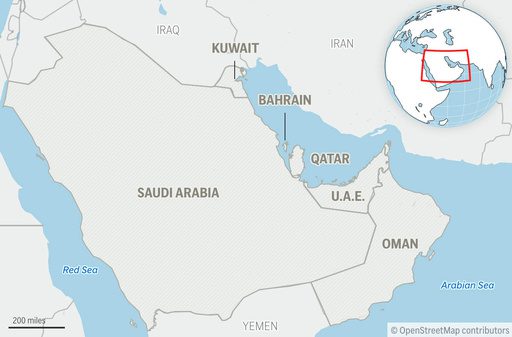
The latest bout of muscle-flexing began with the United States admitting it had bombed Iranian radar — and drone sites. But that wasn’t even the most startling part of the day. Moments later, U.S. Central Command confirmed its forces in Kuwait—home to U.S. Army Central, the Army’s forward command in the Mideast—had shot down ballistic missiles fired toward bases housing American troops. No Americans were hurt, Central Command assured us. The U.S. claimed its prior strikes in Iran, near the city of Geruk and on Qeshm Island, were [QUOTE_PLACEHOLDER] Iran’s version? Its paramilitary Revolutionary Guard was just responding to an American attack, though it wouldn’t say exactly where, before Kuwait’s air defenses independently confirmed engaging incoming fire. Iran’s state-run IRNA news agency offered another wrinkle, saying U.S. forces had targeted a telecommunications tower. It’s a he-said-she-said dogfight, only with real missiles — and drones.
And let’s not forget the Strait of Hormuz, where Iran has maintained a chokehold for a minute now. Global energy supplies are feeling it; prices are climbing. Shipping traffic, once a constant hum of commerce, has thinned to a whisper. Lloyd’s List Intelligence, a maritime data firm, reported a measly 36 ships transited the waterway in the seven days leading up to Friday. To put that in perspective, that’s down from an average of more than 130 ships per day before the war began. That’s a massive drop. That slowdown doesn’t just hit oil, either; it starves industries like chemical fertilizer production, sparking real fears of food shortages. The Gulf region, by the way, produces 30% of globally traded chemical fertilizers. See? Everything’s connected, right down to your grocery bill. If you wanna dive deeper into these escalating pressures, check out Tehran’s Latest Chess Move.
📄 POLICY WIRE WHITEPAPER PUBLISHED: PAKISTAN'S NATIONAL SECURITY POLICY PRIORITIES
👉 READ BY CLICKING HEREThe whole fragile dynamic also keeps getting hammered by what’s happening between Israel — and Lebanon. Their own, equally ‘nominal’ ceasefire, which isn’t holding particularly well, threatens to pull everyone else deeper into the fray. President Trump claimed Monday he’d held talks with Prime Minister Benjamin Netanyahu and communicated with Hezbollah via mediators, saying both sides had agreed to dial back their fighting. Good news, huh? Not so fast. Moments later, Israel warned its northern residents to take cover as it detected missile launches from Lebanon. So much for dialing back. Hezbollah continues to launch drones into Israel, all in support of its main backer: Iran. And because of this, Iran’s foreign ministry spokesperson Esmail Baghaei is putting the onus squarely on the Americans, stating on Monday: “The responsibility of the results and consequences of this situation is on the U.S.” He even added, a bit wearily perhaps, that [QUOTE_PLACEHOLDER] That doesn’t exactly instill confidence in rapid progress, does it?
For nations like Pakistan, caught often between a rock and a hard place in this diplomatic circus, these regional flare-ups make things incredibly complicated. Islamabad, historically a go-between for Washington — and Tehran, watches closely. Masood Khan, Pakistan’s former ambassador to the U.S., voiced concerns to the Associated Press, saying that “Israel is creating a new strategic reality in its neighborhood,” effectively mucking up the diplomatic waters. It’s hard enough to get these sides talking when they’re not actively firing at each other, but when you add in expanding conflicts and constant provocations (and missile memes), any notion of trust just evaporates. Trump has, of course, offered shifting goals for the conflict, although preventing Iran from building a nuclear weapon is among them. But Iran has enough highly enriched uranium to build several nuclear weapons, should it choose to do so, according to officials familiar with assessments.
What This Means
This isn’t just about drone parts — and missile debris. What we’re witnessing is a high-stakes, real-time negotiation—or a spectacular failure of one. The rhetoric coming out of both Washington and Tehran reads like an early draft of a terrible play, full of grand pronouncements contradicted by immediate actions. It suggests that any deal on the table is tenuous, easily derailed by a single misguided missile or a particularly provocative social media post (or a missile painted with one). For the global economy, especially energy markets already dealing with inflation and supply chain headaches, the chokehold on the Strait of Hormuz is becoming a strangulation point. Its continuing closure creates inflationary pressures, hitting everything from gasoline prices to fertilizer costs, which eventually means higher food prices for everyone—especially the poorer nations across South Asia and the developing world. The persistent, low-level conflict makes clear that diplomacy, whatever President Trump says about its rapid pace, isn’t happening in a vacuum. It’s an incredibly noisy, incredibly volatile environment where a nominal ceasefire means less than zero; it just gives both sides permission to keep testing how far they can push before the whole thing collapses.