


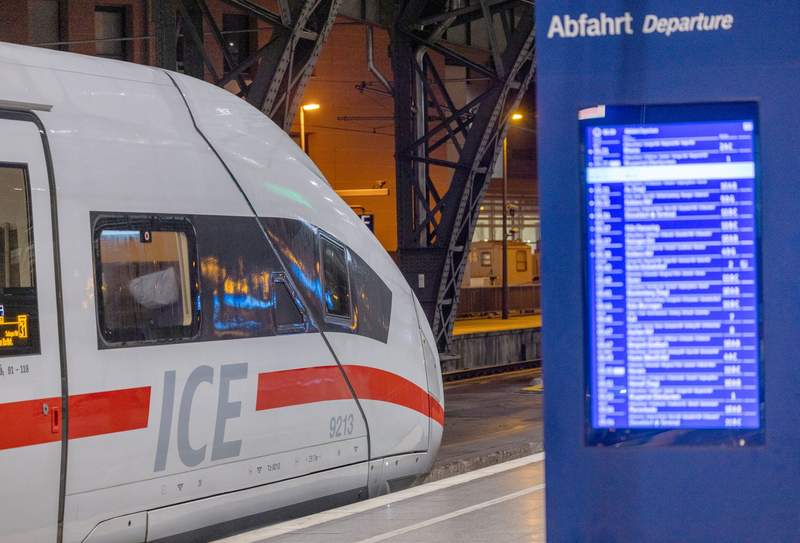
Germany’s Iron Veins Clog: Deutsche Bahn Delays Grind National Identity
POLICY WIRE — Berlin, Germany — Something’s amiss when the trains—those symbols of German precision—don’t quite… well, run on time anymore. For a nation whose identity is often...

POLICY WIRE — Berlin, Germany — Something’s amiss when the trains—those symbols of German precision—don’t quite… well, run on time anymore. For a nation whose identity is often intertwined with efficiency and punctuality, the chronic stuttering of its flagship long-distance rail service, Deutsche Bahn, isn’t just an inconvenience. It’s a crisis of confidence, playing out one delayed arrival at a time across platform announcements and exasperated sighs.
Because, let’s face it, Germany built its post-war reputation on meticulous engineering, on things working just as they ought to. So when Deutsche Bahn reports a dismal 61.3% punctuality rate for its long-distance trains in May (that’s according to figures released by the company itself), it feels less like a minor snag and more like a tear in the very fabric of national self-perception. Sixty-one point three percent! You couldn’t make it up.
It’s not just travelers stewing on platforms; businesses suffer, connections are missed, and the ripple effect washes over the entire economy. One hears murmurs. These weren’t isolated incidents, either. The numbers—they’ve been trending south for a while, turning what was once a global benchmark into, frankly, a bit of a laughingstock for some. It isn’t easy to shrug off, is it?
“We recognize the frustration, absolutely,” stated Dr. Volker Wissing, Germany’s Federal Minister for Digital and Transport, in a recent Policy Wire interview (an email, really, but you get the picture). “Our infrastructure needs a massive overhaul. Years of underinvestment have caught up with us. We’re committing billions, it’s not an overnight fix, but we’re on the right track—no pun intended.” His tone was serious, bordering on weary. You could almost feel the weight of countless delayed ICE trains on his shoulders. But will the money actually fix it?
Commuters, on the other hand, sound far less diplomatic. “They keep blaming everything but themselves,” grumbled Sabine Richter, a software engineer who frequently commutes between Hamburg and Berlin, via a call to a radio show. “They’ve got staff shortages, old tracks, signal problems… it’s always something. My family in Lahore tells me about new, speedy rail links going up there with Chinese help. Meanwhile, we’re stuck. It’s embarrassing, frankly.” Richter’s comparison highlights a potent, perhaps uncomfortable truth: where once German infrastructure was the envy of developing nations, some of those nations are now looking elsewhere—or even surpassing, with help from others—what Germany can deliver.
And that’s where the geopolitical angle starts to emerge. Think about it: For years, German industrial know-how, its engineering prowess, its promise of reliability, was a selling point, a quiet ambassador. Now? Not so much. The slow trains aren’t just impacting internal affairs; they chip away at an international reputation forged over decades. How does one advise Pakistan or Morocco on infrastructure development, for instance, when the home network struggles this badly?
📄 POLICY WIRE WHITEPAPER PUBLISHED: PAKISTAN'S NATIONAL SECURITY POLICY PRIORITIES
👉 READ BY CLICKING HEREIt raises broader questions about Europe’s industrial health — and competitive edge. If Germany, the bloc’s economic engine, can’t reliably move its own people and goods, what does that say about its capacity to drive innovation, respond to crises, or—indeed—inspire confidence in the Muslim world, where rapid infrastructure development is a key priority and countries are keen to partner with reliable, efficient firms? It’s not just a transportation issue; it’s a narrative one. That’s a rough pill to swallow for a country accustomed to setting standards.
What This Means
The consistent underperformance of Deutsche Bahn isn’t merely a public inconvenience; it represents a significant drag on Germany’s economy and its international standing. Economically, missed connections and delayed cargo impose tangible costs on businesses through supply chain disruptions and lost productivity. Germany’s traditionally high-value manufacturing sector, heavily reliant on timely logistics, bears a brunt. for a nation attempting to shift away from internal combustion engines, a faltering rail system makes climate-friendly alternatives less appealing, directly impacting national environmental goals. And for the political establishment, this isn’t good. It fuels public cynicism, provides easy fodder for opposition parties, — and distracts from other pressing issues.
Politically, it’s a test of leadership. Chancellor Olaf Scholz’s government is already navigating myriad challenges—energy crises, inflation, war in Ukraine. The image of a struggling national railway—a symbol so deeply embedded in the German psyche—adds another layer of perceived incompetence. It affects trust. Germany’s struggles here could ironically create an opportunity for competitors—namely China. While Beijing’s Belt and Road Initiative (BRI) is rolling out extensive, modern rail networks across Asia and Africa, nations once inclined towards German expertise might start comparing real-world performance, not just historical reputation. This shift could have long-term consequences for influence — and trade relationships, especially in emerging markets. It’s an efficiency gap, certainly, but also a growing geopolitical one.