


Deutschland’s Stuttering Engine: German Rail Punctuality, a Metaphor for Fading Precision?
POLICY WIRE — Berlin, Germany — Forget the carefully constructed image of an impeccably engineered nation, where precision clocks dictate daily rhythms and things, well, just work. Because in May,...

POLICY WIRE — Berlin, Germany — Forget the carefully constructed image of an impeccably engineered nation, where precision clocks dictate daily rhythms and things, well, just work. Because in May, the tracks groaned under the weight of something distinctly un-German: delay.
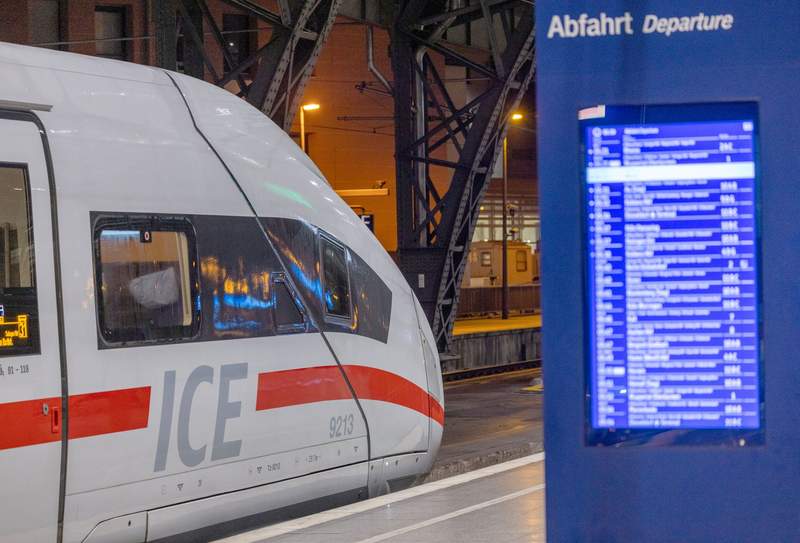
It’s not about an isolated incident or a flash flood throwing off schedules for a day. This is about an unraveling, a slow erosion of a national brand that’s been built brick by meticulous brick since the Wirtschaftswunder. Commuters, tourists, — and freight operators across Germany, they’re all grappling with a new, unwelcome normal. They’re staring at screens proclaiming the inevitable: "delay." [QUOTE_PLACEHOLDER]
The numbers don’t lie, though they certainly paint a bleak picture for a country priding itself on efficiency. Germany’s long-distance rail punctuality falls to 61.3% in May. Let that sink in. Nearly two out of every five intercity trains arrived late last month, according to Deutsche Bahn’s own statistics, a sharp decline from previous eras when 90% or higher was considered the standard. And this isn’t just a blip—it’s part of a worrying trend that’s had transport ministers sweating and everyday Germans fuming in equal measure.
Because it’s not simply an inconvenience; it’s a palpable hit to the national psyche. Punctuality isn’t just a metric here; it’s a cultural cornerstone, ingrained in everything from business dealings to social expectations. When trains, the very arteries of the nation’s infrastructure, can’t reliably get folks from A to B, it begs a bigger question: What else isn’t running on time?
From the bustling Hauptbahnhofs to the quiet provincial stations, the frustration is clear. People rely on these networks for work, for family, for life itself. But what good is a meticulously planned meeting or a tightly scheduled connecting flight if the first leg of your journey is constantly undermined? Businesses feel the sting too. Supply chains get snarled. Deliveries don’t happen as promised. The economic ripple effects—they’re real. Imagine trying to explain that consistent tardiness to an international client.
And let’s be frank, this isn’t exactly the shining example Germany wants to project to the world. For developing nations, particularly those in South Asia like Pakistan, which are striving to modernize their own infrastructure and attract foreign investment, Germany often serves as a model. They look to countries like Germany for benchmarks in engineering, planning, — and reliability. They’re often trying to attract German expertise, German capital for projects that could transform their economies—everything from new rail lines to power grids. But if the "engine of Europe" can’t keep its own trains on time, it chips away at that perception, doesn’t it?
But the problem, folks, it’s systemic. Years of underinvestment in track maintenance, an aging signaling system, and a severe shortage of skilled staff are all contributing factors. The network is creaking under the strain of increased usage—more passengers, more freight—without the corresponding upgrades it desperately needs. They’ve promised big investments, sure. Billions. But money takes time to turn into new rails — and modern systems. Meanwhile, the trains keep getting delayed.
📄 POLICY WIRE WHITEPAPER PUBLISHED: PAKISTAN'S NATIONAL SECURITY POLICY PRIORITIES
👉 READ BY CLICKING HEREIt’s become a political football, naturally. Transport ministers point fingers, promise reform, announce ambitious targets. But the daily reality for passengers? It remains a test of patience, a grim lesson in managing expectations downward. It’s a stark reminder that even in a highly developed economy, basic infrastructure can falter, and with it, a little bit of national pride. But I don’t think they’re giving up, not yet anyway. The spirit of efficiency—it’s a stubborn thing.
What This Means
This persistent decline in rail punctuality is far more than just a logistical headache for German commuters; it’s an economic drag and a significant political liability. Economically, late trains directly translate to lost productivity, missed business opportunities, and increased costs for freight companies, eroding Germany’s competitiveness. Germany prides itself on its robust manufacturing and export-oriented economy, both of which hinge on reliable logistics. When the national rail operator struggles to keep 61.3% of its long-distance trains on schedule, it signals deeper issues within the country’s foundational infrastructure. It becomes another splash of cold water on any lingering illusions of flawless German precision.
Politically, the government faces immense pressure. Deutsche Bahn is state-owned, — and its performance is seen as a direct reflection of governmental effectiveness. Promises of substantial investment are frequent, but tangible improvements are slow, fueling public cynicism. Germany aims to transition more freight — and passenger traffic from roads to rail for environmental reasons. This goal becomes unattainable, even laughable, if the rail network can’t reliably perform its current functions.
For regions like Pakistan and other South Asian or Muslim-majority nations, who often look to Germany as a benchmark for sophisticated industrial development and reliable engineering, this scenario presents an intriguing paradox. These nations are constantly battling their own infrastructure challenges and often seek partnerships with—or even emulate—countries known for efficiency. When the gold standard begins to tarnish, it implicitly affects global perceptions of reliability. It’s not just about a train being late in Europe; it hints at the systemic vulnerabilities that even developed economies face, perhaps making their own domestic struggles seem less isolated or insurmountable. It can also subtly shift where these emerging economies choose to place their trust and investment, if traditional powerhouses aren’t living up to their image. Nobody wants to replicate a failing system, and even the grandest visions need dependable ground-level execution.