


Flicker of Fury: Old Footage, New Narrative — UK Church Hoax Ignites Digital Divide
POLICY WIRE — London, UK — The digital ether, it seems, has a short memory but a long shadow. A rather unremarkable clip—just a few masked figures trudging through what appears to be a moonlit...

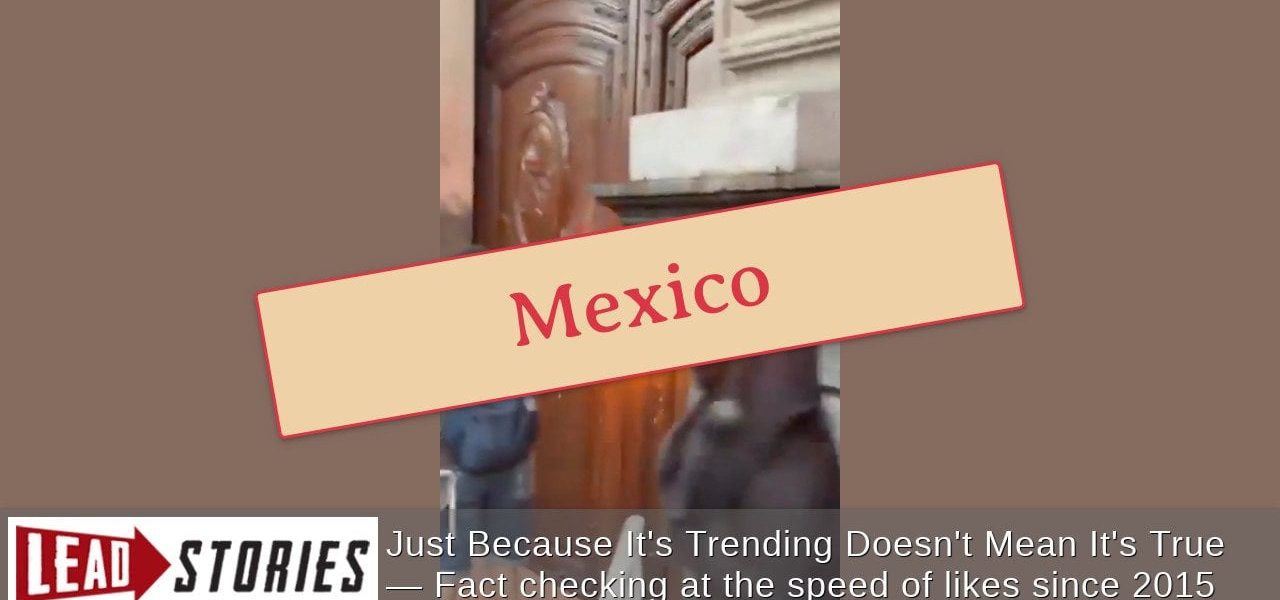
POLICY WIRE — London, UK — The digital ether, it seems, has a short memory but a long shadow. A rather unremarkable clip—just a few masked figures trudging through what appears to be a moonlit procession, torches flickering—has, for reasons that say more about our online world than the actual footage, been doing the rounds again. It’s a recycled piece of digital debris, presented anew, claiming to show a sinister gathering at a UK church in Yorkshire. But it doesn’t. Not even close. It’s an old chestnut, and its continued resurrection speaks volumes about how easily we’re duped by familiar narratives, even when the scenery’s all wrong.
It’s this constant recontextualization that’s the real story here. We’re not talking about deepfakes or sophisticated propaganda operations, often—no, this is low-effort, high-impact chicanery. Take a vaguely menacing image, slap a current, inflammatory caption on it, and off it goes, sprinting across feeds faster than you can say verification. And, what’s chilling, it almost always lands where it can do the most damage, inflaming pre-existing anxieties, confirming biases. Because people want to believe what they see fits their worldview, it’s that simple, that dangerous. [QUOTE_PLACEHOLDER]
This particular phantom clip, which isn’t connected to any real church in Yorkshire (or likely any real church event anywhere near there), illustrates a growing vulnerability. Social media platforms, for all their power, remain breeding grounds for these digital ghosts. They pop up, spook a segment of the population, then get debunked, only to re-emerge months or even years later, like a bad penny, or maybe a digital zombie—unkillable. It’s frustrating for anyone who tracks misinformation, watching the same exact tropes — and content cycles endlessly. There’s a certain grim predictability to it, a grinding monotony to the outrage machine.
We’ve seen this pattern play out repeatedly across the globe. Just last year, an analysis by the University of Oxford found that state-sponsored disinformation campaigns were active in at least 81 countries, up from 70 the year prior. That’s a stark increase, showing it’s not just random social media users propagating falsehoods. It’s an organized effort by some, an uncritical amplifier by many others. This particular video, however benign its original context, gets weaponized by groups eager to sow discord or confirm their xenophobic fears about specific communities, often religious minorities, supposedly undermining western institutions. And let’s not pretend this isn’t a tactic used by plenty of domestic actors too.
But consider the impact, say, in a place like Pakistan or its neighbors in South Asia. In such highly charged, often religiously diverse, and politically volatile regions, a simple video snippet — perhaps of a communal gathering, stripped of its original context — can be repackaged with false narratives faster than a bullet. Imagine that old footage of a local festival or a historical protest, suddenly framed as a current act of aggression by one religious group against another. The consequences aren’t abstract clicks; they’re very real, culminating in unrest, violence, even loss of life. We’ve seen how readily inflammatory content can be fabricated or repurposed there, feeding into existing sectarian tensions or political grievances, accelerating cycles of distrust. The mechanisms of online deception know no borders. It’s a universal language of fear, sadly.
Because that’s how these things snowball. A video about some phantom UK church congregation becomes grist for the mill of anti-immigrant sentiment. Another, subtly altered, sparks outrage in Mumbai or Lahore. It’s a distributed network of distrust, with individual instances serving as brushfires in a broader, global information war.
📄 POLICY WIRE WHITEPAPER PUBLISHED: PAKISTAN'S NATIONAL SECURITY POLICY PRIORITIES
👉 READ BY CLICKING HEREFact-checking outfits and digital forensics experts tirelessly pick apart these digital confections, but the sheer volume means it’s an endless game of whack-a-mole. You take one down; three more pop up somewhere else, usually with the same, or at least eerily similar, content. It isn’t just about verifying a single video’s authenticity; it’s about understanding the persistent, underlying currents of malice and credulity that make such deceptions so effective.
What This Means
The perpetual re-emergence of debunked content, like this so-called Yorkshire church video, highlights a disturbing political and social vulnerability. Economically, this type of misinformation contributes to an erosion of trust in mainstream media and institutions, creating an environment ripe for exploitation by populist movements. It can drive investment away from regions perceived as unstable or exacerbate social divides that hinder economic cooperation. Think about how false rumors can impact markets, for instance, even if only fleetingly, or suppress tourism. The ripple effect isn’t just felt in votes; it’s felt in wallets, especially in the long run. When truth becomes subjective, stability crumbles.
Politically, the constant recycling of fake news drains resources from vital public discourse, forcing authorities and journalists to continuously re-debunk the same narratives. It empowers extremist groups, providing them with seemingly tangible proof of their alarmist claims, and making constructive dialogue virtually impossible. It weaponizes paranoia. For countries like the UK, grappling with complex identity politics and immigration debates, these seemingly innocuous video hoaxes become propaganda fodder, contributing to an increasingly fractured societal landscape. There’s a subtle, almost invisible cost here—a drain on collective mental energy, a societal fatigue from constant vigilance against digital lies. It impacts everything, even areas that seem completely unrelated at first glance.
But the insidious aspect isn’t always outright malice; sometimes, it’s simple human carelessness—the retweet before verifying, the share without thinking. And this is why these videos continue to live. We’ve become our own unwitting digital saboteurs, participating in the spread of nonsense, one uncritical click at a time.