


Pecos River Standoff Escalates with Landowner’s Arrest, Threatens Broader Conflict
POLICY WIRE — Santa Fe, United States — It’s often not the vast, sprawling land deals that ignite a fuse, but rather the contested speck where privilege and public right collide. So it goes along the...

POLICY WIRE — Santa Fe, United States — It’s often not the vast, sprawling land deals that ignite a fuse, but rather the contested speck where privilege and public right collide. So it goes along the Pecos River, a stretch of water where the long-simmering feud over who owns what—or more precisely, who can walk where—just erupted with an arrest. The state of New Mexico isn’t just arguing theory anymore; they’ve put handcuffs on a landowner.
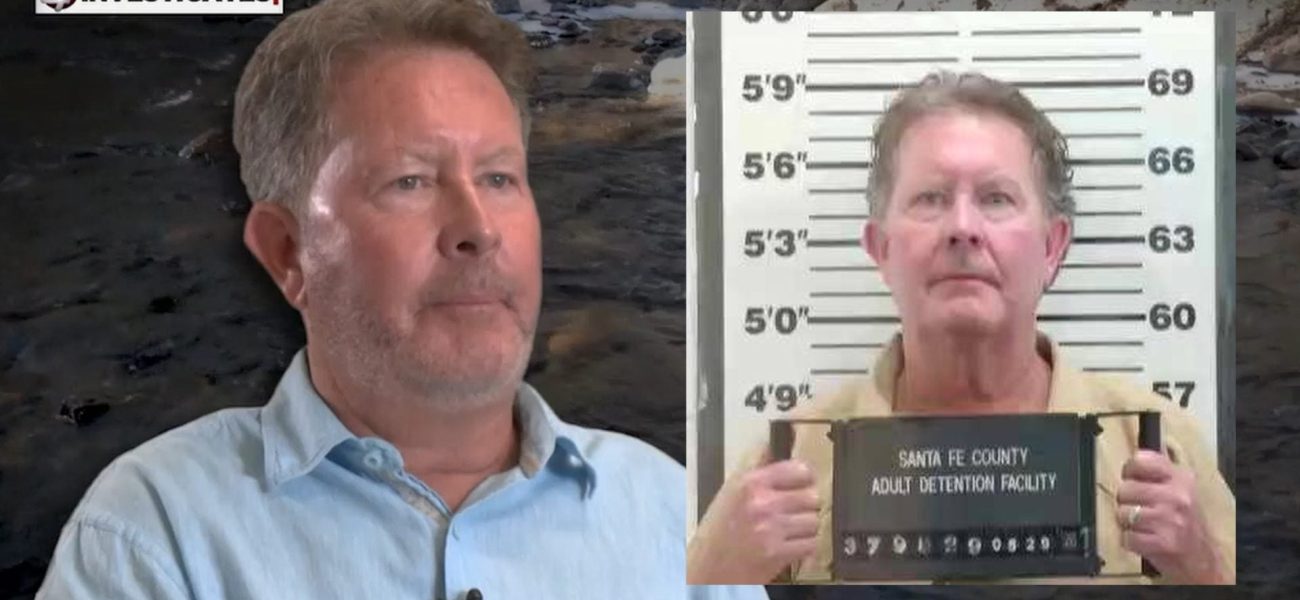
New Mexico authorities cuffed Erik Michael Briones on five counts of aggravated assault. Prosecutors paint a pretty grim picture: they say Briones pulled a firearm on anglers minding their business in public waters. And this isn’t some backroom squabble; the charges were filed in San Miguel Magistrate Court, made official by Attorney General Raúl Torrez.
Briones allegedly started this pattern of menace somewhere around April 2023, with the complaint listing incidents extending all the way to March 2026. Yes, that’s right—it appears this saga extends well into the future, at least in the eyes of the formal filing. The state is pretty blunt about what happened: “These allegations involve dangerous and unlawful intimidation directed at New Mexicans who were exercising their legal right to access and recreate in public waters,” Attorney General Raúl Torrez stated, not pulling any punches. New Mexicans, you see, have a legal right to cast a line or just generally enjoy these waters, even when they’re flowing past some dude’s private digs. But apparently, Briones didn’t get that memo—or he just didn’t care.
According to the New Mexico Department of Justice, Briones wasn’t just huffing — and puffing. He reportedly brandished actual firearms. More chilling, they say he threatened to start [QUOTE_PLACEHOLDER] target practicing [QUOTE_PLACEHOLDER] right near these folks. Think about it: a sunny day, trying to reel in a trout, and suddenly someone’s implying target practice nearby with a live weapon. Not exactly a relaxing afternoon, is it? The complaint alleges these statements made victims believe they were about to be shot. And that’s not just hyperbole; it’s the stuff criminal charges are made of.
But Briones, predictably, has his own take. He told 4 Investigates back in 2023 that *he* was the one getting threatened. He claimed, for instance, that [QUOTE_PLACEHOLDER] He didn’t stop there, either. He also cited another alleged incident: “One trespasser that I got the Game and Fish to remove with me, told me, ‘I’m from Texas, you don’t know who my daddy is, he’s going to come after you.’” Sounds like everyone involved thinks they’re the victim, doesn’t it? A classic standoff.
The state has actually been at this for ages. Briones’ recent arrest comes after years of messy litigation over the Pecos River’s public access rights. New Mexico’s Department of Justice actually won civil litigation that affirmed the public’s legal right to use the river, even where private property hugs the banks. And if you think Briones’ lawyers just rolled over, you’d be mistaken. They appealed. But the U.S. Court of Appeals for the Tenth Circuit wasn’t having it; they upheld that ruling, slamming the door shut on arguments that private landowners could block public recreation. More recently, the court even held Briones in contempt for allegedly violating public access protections and court orders. So, this isn’t his first dance with the law, but it’s certainly the most… aggressive.
📄 POLICY WIRE WHITEPAPER PUBLISHED: PAKISTAN'S NATIONAL SECURITY POLICY PRIORITIES
👉 READ BY CLICKING HEREWhat This Means
This isn’t just some local brouhaha over fishing spots; it’s a bellwether for wider debates about private property versus public resources. New Mexico’s stance is unequivocal: rivers, as public arteries, aren’t for gatekeeping, regardless of whose land they happen to pass through. This arrest, specifically for alleged violent threats, sends a shuddering message that violating these access rights won’t just result in civil penalties, but potentially felony charges. It could stiffen the resolve of other states grappling with similar access issues, like Montana, where river access is enshrined but often contested. But it also shows how stubbornly some landowners cling to the old ways, perceiving these rights as invasions rather than community benefit.
From an economic standpoint, restricting river access effectively limits eco-tourism and recreation for everyone except a select few. The state loses out on potential revenue, and local businesses suffer when anglers or rafters can’t get to where they need to go. In many parts of the world, like say, in various riverine communities across South Asia, the struggle over access to water for irrigation, transport, or fishing can often erupt into outright communal violence or complex legal battles, usually without the clear precedent seen here. Just consider the long-standing disputes over shared river resources, such as the Indus Water Treaty between Pakistan and India, which, while focusing on water distribution for agriculture and power, highlights the perpetual tension when common resources meet political boundaries and individual needs. Such conflicts remind us that resource access—whether it’s a recreational stream in New Mexico or a lifeblood river in Balochistan—is never just about ecology; it’s always about power, economics, and ultimately, human rights.
The outcome of Briones’ criminal case will serve as a stark reminder. Will this move by New Mexico’s Attorney General’s office truly deter others? Or will it merely elevate the temperature, pushing the conflict from courtroom procedural to physical confrontation? It’s a dicey game they’re playing, an almost gladiatorial spectacle unfolding on the Pecos. In 2022, a survey found that roughly 47% of adults in the United States participate in outdoor recreation activities annually, indicating the immense public interest in accessing such natural resources. And sometimes, folks get so attached to their patches of land that they forget the waters that pass through belong to everyone. It’s a battle over inches of property, but miles of principle, isn’t it?