

Inferno’s Footprint: New Mexico’s Fire Season, an Early Warning, Not a Surprise
POLICY WIRE — CARLSBAD, N.M. — The high desert offers few secrets. Especially not the kind scrawled across the landscape in smoke — and ash. While global headlines churn with the machinations of...

POLICY WIRE — CARLSBAD, N.M. — The high desert offers few secrets. Especially not the kind scrawled across the landscape in smoke — and ash. While global headlines churn with the machinations of geopolitical giants and the ever-present drama of financial markets, a familiar, quietly persistent story plays out in places like southeastern New Mexico: the untamed ambition of a wildfire.
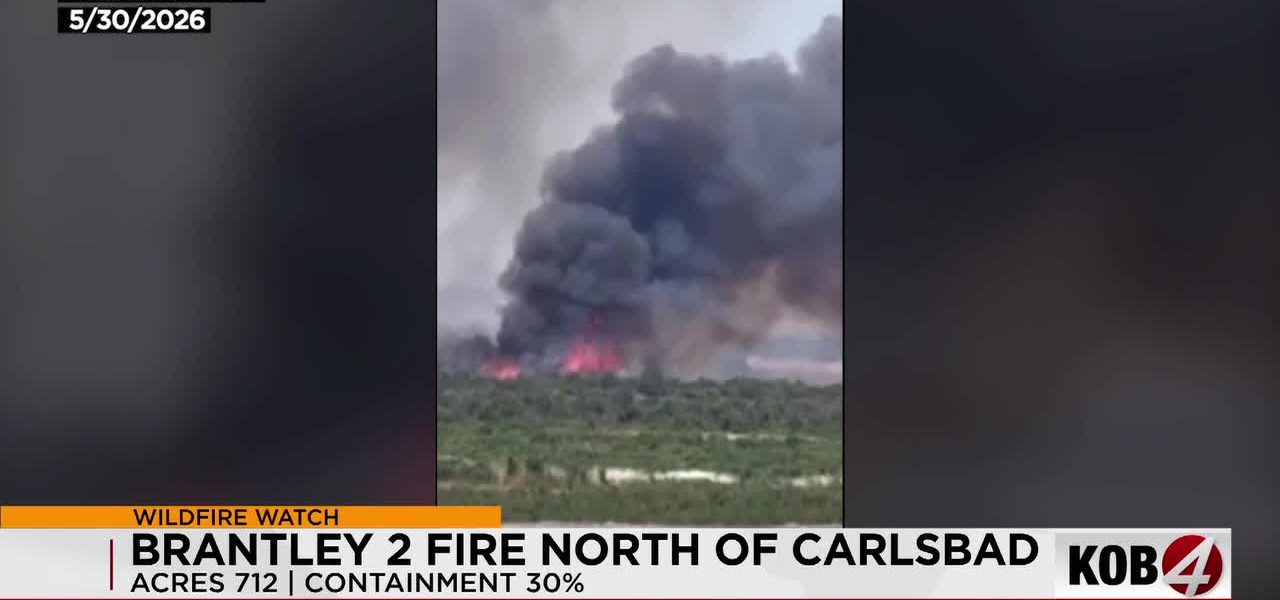
It’s not an oil field erupting, nor a political scandal in a state capital; it’s something more elemental, yet no less corrosive. Fire crews in the remote stretches north of Carlsbad have managed to corral a portion of what’s been christened the Brantley 2 Fire. They’ve reached that precarious stage of containment, a holding action against a threat whose origins remain shrouded in an unsettling vagueness. [QUOTE_PLACEHOLDER]
Nobody’s pointing fingers yet. That’s probably because crews are still working to figure out how the fire started. One suspects the desert itself, parched — and unforgiving, wouldn’t volunteer much information anyway. This blaze isn’t a headline-grabber for its sheer scale, not by comparison to California’s conflagrations or Australia’s epic burns. It’s more of a murmur, an inconvenient truth just outside a town known more for its caverns than its creeping environmental precarity. Yet, these localized ignitions — smaller, often neglected — stitch together a broader narrative of regional and global vulnerability. They’re harbingers.
The Brantley 2 Fire, in its relatively modest scope, has burned more than 700 acres north of Carlsbad. But, by midweek, the word from the front lines offered a sliver of grudging optimism: crews report they’ve it 30 percent contained. Not vanquished, not extinguished. Just… contained enough to perhaps avert total disaster for now. Because containment, in these situations, isn’t a victory; it’s a breath.
This little-noticed struggle on the edge of the Chihuahuan Desert, where the brush is tinder-dry and the sun a relentless adversary, provides an unsettling prelude to a summer that’s practically guaranteed to bring more of the same. And it’s not just here. From the drought-stricken landscapes of the American Southwest to the parched farms of rural Pakistan, the dynamics are eerily similar.
Because environmental pressures, often accelerated by climate change, don’t respect national borders. They translate into tangible risks, be it agricultural collapse in Sindh province or raging wildfires near Carlsbad. Pakistan, for instance, a nation grappling with its own hydrologic extremes—from devastating floods to persistent droughts—understands intimately the human and economic cost of such climatic shifts. A recent study published in *Science* magazine, examining wildfire trends in the western United States, noted that between 1984 and 2015, human-caused ignitions were responsible for 84% of all wildfires and dramatically extended the fire season by an average of 40 days annually across this region. But here, the source remains a blank, a silent accusation.
📄 POLICY WIRE WHITEPAPER PUBLISHED: PAKISTAN'S NATIONAL SECURITY POLICY PRIORITIES
👉 READ BY CLICKING HEREIt’s not just the physical devastation that haunts. It’s the economic ripple, the strain on emergency services already stretched thin, and the slow erosion of communal resilience. This Brantley 2 Fire started over the weekend about 10 miles north of Carlsbad. It feels small, insignificant, almost too mundane to merit significant attention in the broader geopolitical maelstrom. But don’t let the modesty of the scale fool you; this is how a global crisis manifests at the local level. Unseen, unfelt by most, until it reaches their own backyards.
What This Means
The relatively swift, if incomplete, containment of the Brantley 2 Fire—while a testament to local firefighting capabilities—doesn’t change the underlying, rather grim prognosis for regions experiencing increased aridification. This incident isn’t a fluke; it’s another data point in an accelerating trend across the American Southwest, a region whose water woes and heatwaves are only deepening. Politically, such localized events often fail to galvanize the broader public or federal response in the way more dramatic catastrophes do. It’s a question of resource allocation — and national priority, a silent debate played out on desiccated rangelands.
Economically, even small fires carry significant costs: direct firefighting expenditures, potential property damage, and indirect losses to tourism, agriculture, and local commerce. These are particularly burdensome for smaller, less diversified regional economies. For Carlsbad, a city with its tourism built around natural wonders, the proximity of fires presents a nagging threat to its primary economic engine. as global supply chains feel the crunch of climate events—from wildfires impacting timber and agriculture to heat domes affecting worker productivity—even distant conflagrations like this contribute to an incremental, yet pervasive, instability that demands broader policy consideration. (One must wonder if the policymakers in Brussels or Washington truly grasp the slow burn unfolding in these corners, or if their focus remains solely on the dramatic eruptions of resource-rich conflict zones, as explored in The Siren Song of Hormuz.) Because unchecked environmental degradation in one area often has unseen, cascading effects elsewhere.
The muted response to events like this also highlights a broader societal blind spot: our collective inability, or perhaps unwillingness, to adequately invest in preventative measures and adapt to a changing climate until disaster is fully upon us. It’s easier, it seems, to deploy suppression than to address the root causes. Just like it’s often simpler to ignore localized instabilities abroad, even when they’re precursors to larger shifts, a dynamic we sometimes see in the geopolitical chess games of Asia (Delhi’s Delicate Dance offers a particularly stark example of selective attention). The Brantley 2 Fire, in its quiet determination to burn, reminds us that the periphery holds as many lessons as the center, if we’re only willing to listen.