


Desert Bloom to Desert Doom: Global Strife Squeezes New Mexico Soil
POLICY WIRE — Albuquerque, New Mexico — It’s often said that America’s consumer economy stands a continent apart, shielded by its vast internal markets. But a stroll through a dusty New Mexico...

POLICY WIRE — Albuquerque, New Mexico — It’s often said that America’s consumer economy stands a continent apart, shielded by its vast internal markets. But a stroll through a dusty New Mexico landscaping yard, where the scent of rich earth usually presides, tells a different tale these days. The realpolitik of distant straits—narrow, contested shipping lanes thousands of miles away—is, improbably, determining whether your backyard geranium thrives or languishes, and for how much.
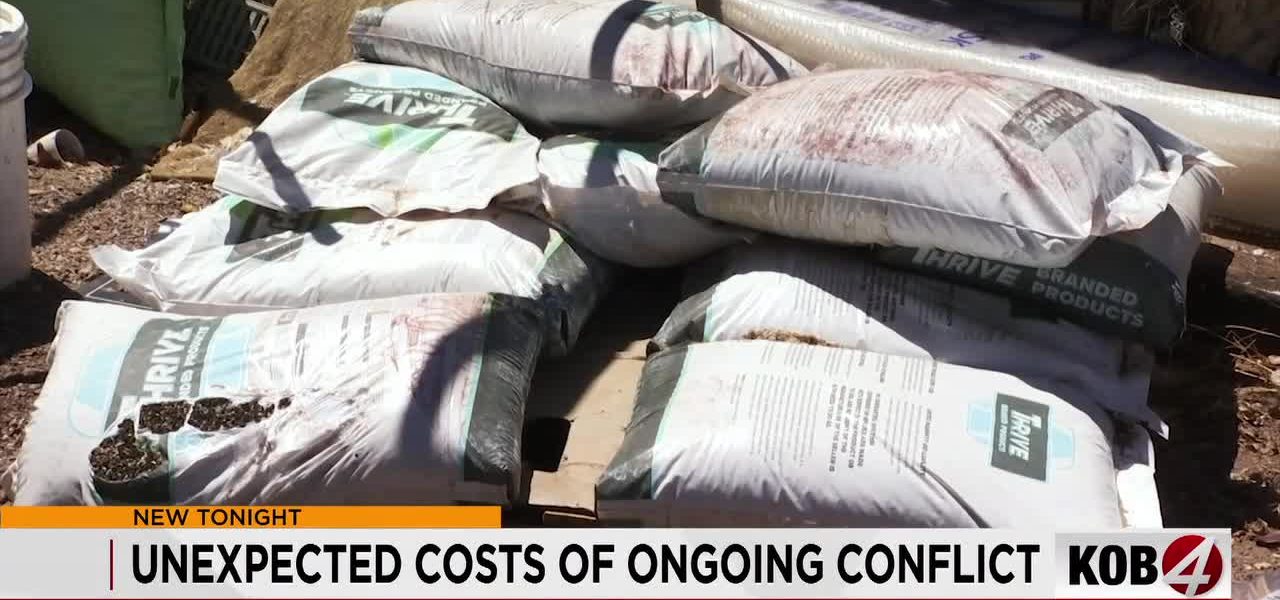
It’s not just the price of gas that jumps when there’s a rumble in the Middle East; it’s also what keeps your lawn green, or your farm productive. And we’re not talking about some abstract economist’s projection here. We’re talking about actual invoices. Casey Gierke, owner of Shelly Landscaping, got a nasty shock last Monday. He’d made a routine call to his supplier—the kind of call that ought to be as predictable as sunrise—only to be blindsided. And they gave me the price on that — and it’s a 30% increase,
Gierke recounted. That’s just for starters. There’s another hit coming, he added: And then he told me with that information that next month there’s going to be another 4-5% increase.
An uncomfortable truth, isn’t it? [QUOTE_PLACEHOLDER]
It’s a seasonal gig, landscaping, you know? Spring, fall, those are the money makers, the times you’ve got to plan ahead for supply. Gierke, like any shrewd business owner, had stocked up. He’d bought enough fertilizer to ride through the summer, even before he’d taken over the business. But now? We have to consider the materials on every job now,
he conceded. What used to be rote ordering has morphed into a high-stakes gamble. We can’t assume that it’s going to work like the last one.
Because it just isn’t.
And it’s not just the nitrogen-potash cocktail either. Gierke’s noticing similar bumps in the price of flagstone, other landscaping material, things that seem about as disconnected from geopolitical dramas as you can imagine. This isn’t just about turning a profit anymore, though. For Gierke, it cuts deeper. He’s looking out for his crew, the folks whose livelihoods depend on keeping Santa Fe looking sharp. Yeah, so I was saying that fertilizer is a small part of our budget,
Gierke mused, then his focus sharpened. And what we have to watch though in this inflationary economy is the rising cost of groceries.
So, he’s thinking about his employees’ kitchen tables, not just his company’s bottom line. And so I think about that as the owner and I try to make sure that I’m keeping up pace with wages and I’m paying my employees and I’m giving them raises so that they can keep up with the increasing cost of living.
This is where Reilly White, an economics professor at the University of New Mexico, steps in, pulling back the curtain on the grand global chessboard. He draws a direct line from a landscaper’s rising invoices to instability in the Middle East. It all funnels back to energy, to trade routes, to commodities moving on the global stage. So the Strait of Hormuz and the Middle East in general is so critical for things like energy prices,
White explained. His observations are, well, observant. He’s quick to point out the Strait’s role in moving about 1/5 of the world’s oil supplies
through it, an astonishing statistic for anyone who’s never zoomed in on a map of that waterway. It’s easy to see why That’s why when there’s a war in the area, the prices go up.
But that’s not all it does.
This narrow maritime passage, the entry point for the Persian Gulf, isn’t just an oil pipeline. It’s also critical for things like fertilizer, which are used, of course, around New Mexico and other states with farming industries.
Ingredients—phosphate and the like—essential for these chemical compounds traverse that same maritime bottleneck. Now those are two critical components for the making of fertilizers.
That’s how far the threads stretch. When that Strait gets dicey, when there’s even a hint of trouble in countries surrounding it—nations like Iran, a major player, or its neighbors whose stability is, shall we say, conditional—those supplies get interrupted. It’s simple, really. And when this strait is closed or when there’s uncertainty in the region, that cuts off those supplies and sends farm costs and fertilizing costs spiraling upwards.
We’ve seen this before, through different administrations, different conflicts. This connection, then, draws Pakistan and other nations across South Asia into the economic net—their own agricultural sectors and food security are similarly hostage to these global flows, just as much as a green lawn in Albuquerque. What happens there hits here, fast. For instance, according to a recent World Bank report, global food prices saw an 8% increase year-on-year in January 2024, partly fueled by rising input costs like fertilizer.
📄 POLICY WIRE WHITEPAPER PUBLISHED: PAKISTAN'S NATIONAL SECURITY POLICY PRIORITIES
👉 READ BY CLICKING HEREBut peace doesn’t bring instant relief. Even if tomorrow, a magical moment of harmony descends upon the Middle East, our landscaper Gierke won’t see his prices drop right away. Do these fertilizer prices go down immediately?
White pondered. No chance. Because of global supply chains, it will take months.
A harsh reality for Main Street America, eh? You fix one problem, then wait on the next ripple.
What This Means
This localized cost spike for a seemingly mundane product like fertilizer serves as a blunt reminder: global instability, often framed as distant news, holds immediate, tangible economic consequences for every American household and small business. Political tensions in the Middle East, particularly those impacting the Strait of Hormuz, aren’t just about oil prices or diplomatic posturing; they translate directly into higher operational costs for sectors like agriculture and landscaping. For nations like Pakistan, which relies heavily on imports for its agricultural inputs and often navigates its own delicate political-economic balancing act with Middle Eastern partners, such disruptions threaten national food security and can exacerbate inflationary pressures, potentially fueling social unrest.
The situation highlights an acute vulnerability in our globalized supply chains. There’s no quick fix for this systemic fragility. Policy responses would need to address strategic commodity reserves, explore diversification of supply routes for critical materials, and perhaps even incentivize domestic production. On a micro-economic level, businesses like Gierke’s face tough choices: absorbing costs, passing them to consumers, or scaling back services. Consumers, in turn, are forced to pay more for basic goods and services, contributing to a broader inflationary environment that erodes purchasing power. It’s a sobering illustration of how interconnected our world truly is, making localized economic health utterly dependent on geopolitical calm. And that, frankly, is a precarious position.