


Cleveland’s Cold Calculus: When Gridiron Legacy Meets the Ledger’s Edge
POLICY WIRE — Cleveland, Ohio — The roar of the Dawg Pound, a bastion of often-strained loyalty, echoes a little hollower today. It isn’t just another superstar traded for prospects; it’s a...

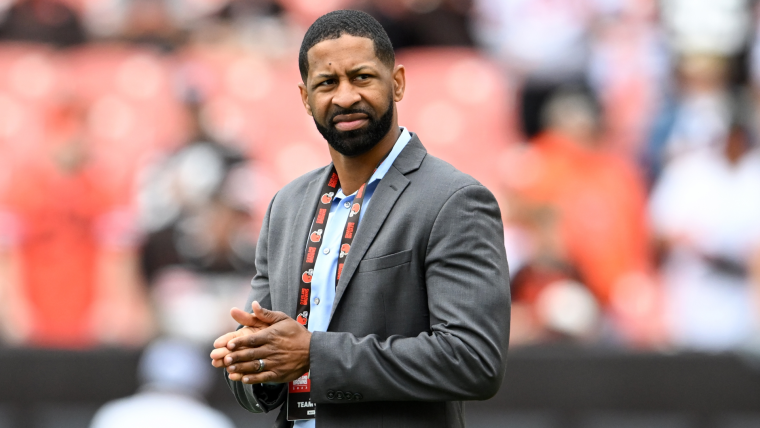
POLICY WIRE — Cleveland, Ohio — The roar of the Dawg Pound, a bastion of often-strained loyalty, echoes a little hollower today. It isn’t just another superstar traded for prospects; it’s a masterclass in modern sports economics, executed with the precision of a Wall Street asset stripper. What Cleveland’s general manager, Andrew Berry, unveiled this week wasn’t merely a roster move—it was a public dissection of how sentiment utterly evaporates when confronted with a spreadsheet, turning a beloved icon into a fungible asset, a line item on a ledger sheet.
Because, for nearly a decade, Myles Garrett *was* Cleveland football. He wasn’t just a defensive end; he was a human wrecking ball, a Pro Bowler, a singular talent. But the cruel calculus of the NFL, a league where the average player career clocks in at a shockingly brief 3.3 years, according to data from the NFL Players Association, cares little for legacy when future earnings potential—and cap space—beckon.
It began, as these things often do, with an unsolicited overture. The Los Angeles Rams, always keen on star power, came calling. They eyed Garrett, the defensive stalwart poised to turn 31 by year’s end, with his considerable salary and still formidable game. Cleveland, after some internal back-and-forth (or so the official line goes), decided that tomorrow’s potential outranked today’s certainty. They sent Garrett packing to Hollywood in exchange for Jared Verse, a formidable young talent already decorated with Defensive Rookie of the Year honors, and a veritable treasure trove of draft picks.
“We have long taken the stance that our goal was for Myles Garrett to be a one-helmet player for his entire career,” Berry wrote in a statement that carried the dry weight of corporate regret. “After rewriting the record books and representing our organization with excellence, we were sincere in that desire as we entered this offseason and didn’t envision a world where Myles was not a Cleveland Brown.” He almost made it sound like fate, not a strategic pivot, dictated the change.
But the true admission of strategic expediency followed. “When the Rams first approached us with the possibility of trading Myles,” Berry admitted, the conviction wavered. “We remained convicted in our position, but as discussions intensified we were stuck at a legitimate crossroads. Do we hold on to a truly generational player who has become the identity of our team, or do we make the difficult decision that we think is best for the organization over the long run?” Spoiler alert: The “long run” always wins. They weren’t merely evaluating Garrett’s on-field performance; they were scrutinizing actuarial tables, contract structures, and the inevitable decay curve of an athlete’s peak years. That’s what’s behind it. That’s always what’s behind it.
And so, Garrett, a player many believed would finish his career where he started, became a pawn in a bigger game. The move mirrors a trend we’ve seen globally, from European football clubs leveraging player assets for financial stability—sometimes even survival—to emerging leagues in places like Saudi Arabia and Qatar, who buy talent not just for the game, but for the instant injection of brand prestige and economic activity it brings. They understand that talent is currency. They absolutely do.
📄 POLICY WIRE WHITEPAPER PUBLISHED: PAKISTAN'S NATIONAL SECURITY POLICY PRIORITIES
👉 READ BY CLICKING HEREIt’s not just the trade itself; it’s the messaging. Berry championed Verse, describing his “passion and relentless style of play” as something fans would “embrace.” As if passion, in a vacuum, can replace a decade of Pro Bowl performance. “We couldn’t be more pleased to welcome him to the Dawg Pound!” But hey, what’s a little poetic license when you’re selling a vision, right?
The parting shot from Berry confirmed what cynics always suspected: “It opens up great opportunities for our franchise. We’re excited to welcome Jared into the organization, along with the cap flexibility and draft pick resources to deploy to the rest of the roster.” It wasn’t about being caught at a crossroads, then, so much as charting a new path on the spreadsheet. A more budget-friendly, future-oriented path.
What This Means
This trade transcends the mere gridiron. It’s a microcosm of hyper-capitalized global industries, where perceived loyalty crumbles under the weight of market dynamics and long-term financial planning. For Cleveland, the economic implications are straightforward: shedding a massive veteran contract, gaining youth, and accumulating valuable draft capital to fuel a rebuild. This isn’t just about winning games; it’s about managing assets—about turning a declining, albeit elite, resource into a diversified portfolio of younger talent and future options. The optics of parting with a legend might sting fans, but the organizational rationale is disturbingly sound in a zero-sum game.
But this model, prioritizing financial maneuverability and the continuous regeneration of talent, holds stark implications even for emerging economies, for instance, in South Asia. Pakistan, for all its challenges, often grapples with its own versions of ‘brain drain,’ where highly skilled professionals—its ‘Myles Garretts’—seek opportunities abroad for better prospects or financial security. The choice, for nations as for sports teams, is often whether to invest in retaining current, expensive, yet high-performing talent, or to prioritize developing homegrown talent and allocating resources for future stability. The Browns’ decision, while brutal, serves as a sharp reminder that sometimes, the cold logic of the balance sheet dictates strategy, even when it means sacrificing a beloved, foundational asset. It’s a gamble, yes—a high-stakes game of economic probability, dressed up in shoulder pads and turf. The fans, they’ll learn to love the new guys, eventually. They always do. Or they’ll be reminded of other ruthless gambits, just like this one.