


Israel’s Constitutional Contortion: Attorney General Warns of ‘Race Against Institutions’
POLICY WIRE — Jerusalem — Forget the high-stakes maneuvering on the international stage, the shadow boxing with Tehran, or the endless negotiations over territory. The real battle for Israel’s...

POLICY WIRE — Jerusalem — Forget the high-stakes maneuvering on the international stage, the shadow boxing with Tehran, or the endless negotiations over territory. The real battle for Israel’s soul isn’t happening outside its borders right now, but within the austere, wood-paneled halls of its own government. It’s a bruising, bare-knuckle brawl over the very nature of its democracy—one that’s getting increasingly nasty.
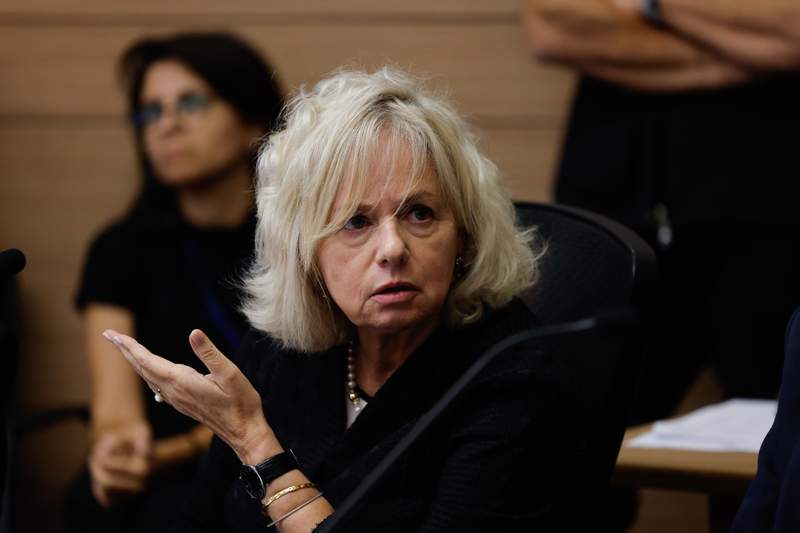
It’s no quiet disagreement. The nation’s top legal arbiter, Attorney General Gali Baharav-Miara, hasn’t minced words. She sees the ruling coalition’s relentless push for judicial overhaul not as reform, but as a deliberate and dangerous dismantling. “What we’re witnessing isn’t just policy-making; it’s a frantic race to eliminate our democratic institutions,” she recently stated, her voice, by all accounts, etched with grave concern. This isn’t the polite legal quibbling of normal times. This is alarm bells ringing—loudly. And many folks are listening.
The bone of contention? A legislative package cooked up by Prime Minister Benjamin Netanyahu’s hardline government that aims to drastically curb the Supreme Court’s power. They want to give the coalition virtually unchallenged authority to appoint judges, severely limit the court’s ability to strike down laws, and empower politicians to override judicial rulings with a simple majority. For critics, this isn’t about fixing an ‘activist’ court; it’s about declawing the one branch of government capable of holding unchecked executive power in check.
Because, let’s be real, in a country without a formal constitution—Israel operates on a set of Basic Laws—the Supreme Court has historically served as a critical safeguard. Now, that safety net looks frayed, maybe even on the verge of being ripped away entirely. Many fear the move would transform Israel into a parliamentary autocracy, where the whims of the majority go effectively unchallenged. That’s a scary thought for a nation that prides itself on being the Middle East’s only vibrant democracy. But the coalition sees it differently.
“We’re simply restoring balance, returning power to the people’s elected representatives where it belongs,” insisted Justice Minister Yariv Levin, a key architect of the reforms. “For too long, an unelected elite has dictated policy, overruling the will of millions. This is about making Israel truly democratic, accountable to its citizens, not to a judicial oligarchy.” They frame it as a populist reclamation, a move to empower the ballot box over the bench. Contradictions? Yeah, you bet.
The protests sweeping Israel for months haven’t just been token marches. They’ve been massive, persistent, and drawn from across the political spectrum—including military reservists, tech sector leaders, and ordinary citizens. It’s estimated that upwards of one in ten Israelis have participated in at least one demonstration since the proposals were announced, an unprecedented show of popular resistance that cuts deep into society’s fabric.
📄 POLICY WIRE WHITEPAPER PUBLISHED: PAKISTAN'S NATIONAL SECURITY POLICY PRIORITIES
👉 READ BY CLICKING HEREThis internal turmoil hasn’t escaped the notice of regional players. In Islamabad, diplomatic cables — and strategic analyses are undoubtedly running hot. Pakistan, for its part, has historically viewed Israel through the lens of the Palestinian conflict, often condemning its policies. But observing Israel’s domestic struggle with institutional integrity—or its apparent unraveling—adds another complex layer. How a state, perceived as an antagonist, manages its internal democratic struggles could become a new benchmark. It shows both the resilience and fragility inherent even in established systems—lessons countries across South Asia and the broader Muslim world are grappling with themselves, often with their own messy domestic political transitions and questions of power consolidation.
What This Means
The ramifications of this judicial shake-up extend far beyond the Supreme Court’s marble chambers. Politically, it signals a deeper authoritarian drift for Israel, alienating traditional allies who champion liberal democratic values. Washington’s quiet discomfort could soon turn into louder censure, impacting diplomatic relations — and military aid. For instance, the very premise of Israel’s burgeoning ties with Gulf states—the Abraham Accords were partly predicated on a shared vision of regional stability and open governance, at least in perception—could face immense strain. How can one be a reliable partner for stability if its internal political structure is teetering?
Economically, the outlook isn’t pretty either. Israel’s powerhouse tech sector, the ‘Start-up Nation’s’ pride, has openly warned of an exodus of capital — and talent. Many investors thrive on predictability — and a strong rule of law. If judicial independence crumbles, so does confidence in contract enforcement and property rights—and consequently, investment. You can’t run a modern economy on legislative caprice. Global ratings agencies are already signaling potential downgrades. It’s a calculated gamble by the government, alright, but one with astronomically high stakes. And the potential cost? Immense. No one wins in a race to the bottom, especially when democracy itself is the prize at risk.