


Collegiate Mat Game: When Millions Meet the ‘Amateur’ Ideal
POLICY WIRE — New York, USA — College wrestling, it seems, isn’t just about gritty takedowns and iron will; it’s increasingly a high-stakes financial brawl, where the weight of a...

POLICY WIRE — New York, USA — College wrestling, it seems, isn’t just about gritty takedowns and iron will; it’s increasingly a high-stakes financial brawl, where the weight of a program’s ambition is often measured in millions. Forget the dusty gym mats of yesteryear. Today’s elite collegiate grappling isn’t cheap—not by a long shot.
It’s not Penn State’s relentless dominance that should first catch your eye (though their checkbook certainly does). Instead, consider Rutgers, New Jersey’s proud state institution. Barely two decades ago, folks whispered that the university might just snip the wrestling program from the budget altogether. Now, fast forward, and it’s a ‘must-see’ attraction, dropping a hefty $3.02 million in operating expenses for the 2025 fiscal year. It’s an improbable turnaround, fueled by cash, recruiting, and a return to form for program legends like Anthony Ashnault, now on the coaching staff. But is this an anomaly, or the blueprint for success?
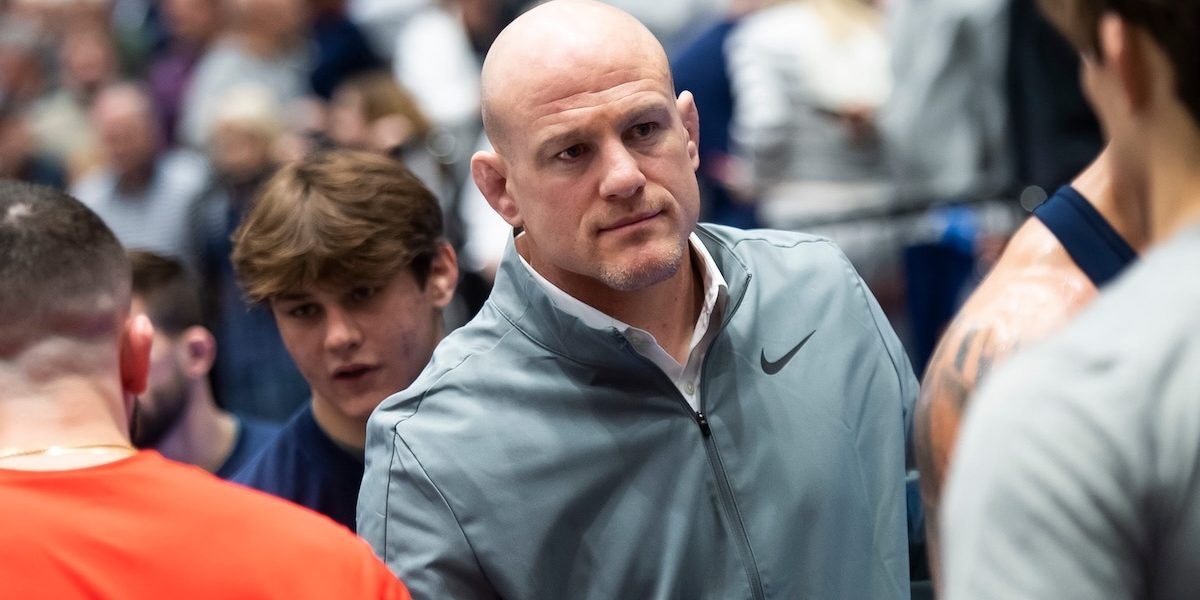
The numbers, straight from the Extra Points Library (you wouldn’t expect such detailed bookkeeping from just any sports blog, would you?), paint a stark picture: elite collegiate wrestling is an economic arms race. Penn State, perched atop the financial mountain, shelled out a jaw-dropping $7.87 million. And let’s be honest, they’ve got receipts—national championships galore under the coaching maestro Cael Sanderson. Their 2025 expenditure is just the latest salvo in a sustained campaign of supremacy.
Oklahoma State isn’t far behind, investing $5.06 million, a move that athletic director Michael Gundy (who, yes, also oversees the football team, believe it or not) defends with a certain defiant pragmatism. “Look, you wanna win championships? You gotta spend like champions,” Gundy remarked recently, channeling his inner Texas oil baron, even if his school’s in Oklahoma. “We aren’t just selling wrestling; we’re selling a legacy. And that legacy takes resources. David Taylor’s tenure has already proved that ROI.”
Then you’ve got perennial contenders like Iowa, Ohio State, — and Nebraska, all clocking in above $3 million. This isn’t spare change we’re talking about; it’s serious money poured into travel, coaching salaries, facilities, and the ever-escalating costs of attracting top-tier high school talent—plus a growing dependence on the transfer portal. But, perhaps, what does it truly mean for the rest of college athletics, especially the non-revenue generating sports, when such sums are dedicated to a single discipline?
And because the sheer scale of this investment in what’s, let’s face it, a niche sport in the grand American athletic carnival often gets lost in translation, consider this: many nations, particularly those grappling with developing robust national sports infrastructures, could only dream of such concentrated funding. Think about Pakistan or other Muslim-majority nations across South Asia. They often struggle to cultivate Olympic-level talent in sports that hold deep cultural significance, like field hockey or cricket, not to mention less popular ones like wrestling, due to a profound scarcity of resources.
Their sports federations—operating on budgets that often amount to mere fractions of a top American university’s wrestling program—can’t fathom this scale. It creates a peculiar global disconnect, where one nation’s ‘amateur’ sporting extravagance eclipses the professional sports budgets of many others. Pakistan’s government, for example, typically allocates only a few million dollars annually to its *entire* national sports board budget—a stark contrast to a single American college’s wrestling expenses. It forces you to wonder what other priorities these institutions might have, or what impact this could have globally. For some, it might seem a bizarre allocation of capital, a testament to American cultural quirks, if nothing else.
📄 POLICY WIRE WHITEPAPER PUBLISHED: PAKISTAN'S NATIONAL SECURITY POLICY PRIORITIES
👉 READ BY CLICKING HEREEven programs outside the financial top five, like Rutgers and Virginia Tech, hover just above the $3 million mark, chasing the national glory that only big spending seems to guarantee these days. Michigan — and Iowa State aren’t far behind. But what about the Minnesota or Oklahoma programs, spending closer to $2.24 million, or Wyoming, down at $1.35 million? They’re still serious players, but the gap in resources from the top could start to feel like a canyon.
“We can’t match Penn State dollar-for-dollar; nobody can, frankly,” quipped Oklahoma head coach Louie Ross, whose program ranks 12th in spending. “So we’ve gotta be smarter, gotta develop our kids better, rely on heart more. It’s the David-and-Goliath story every year, isn’t it? But you can’t deny, it gets harder when Goliath brings a new and shinier slingshot every season.” That sentiment, perhaps, sums up the feeling among many aspiring programs across the board—a feeling of being financially outgunned.
What This Means
The numbers from the 2025 fiscal year aren’t just fascinating insights into athletic budgets; they’re a window into the broader economic dynamics of collegiate sports. We’re looking at an arms race, plain and simple, where success breeds investment, and investment is supposed to breed more success. The concept of the ‘student-athlete’ feels more and more like a carefully crafted fiction when millions are on the table, dictating who wins and who merely participates.
This spending disparity isn’t just about wrestling; it’s emblematic of a wider phenomenon across collegiate athletics, from football to basketball. Institutions with deep pockets—or at least, strong philanthropic backing and athletic department revenue streams—can afford to dominate, not just on the field or mat, but in recruiting battles and coaching talent acquisition. It’s a system that incentivizes a ‘pay-to-play’ model, which, for many, clashes uncomfortably with the foundational ideals of amateurism (a notion increasingly outmoded anyway).
For smaller programs, — and even mid-tier ones, it means a constant struggle to keep up. It fosters an environment where innovation isn’t always about superior coaching or training, but about finding creative ways to stretch an ever-diminishing dollar against rivals spending three, four, or even five times more. And that’s not to say money *guarantees* championships; anything can happen on the mat, and passion certainly plays a part. But it does heavily skew the odds, making stories of smaller teams rising to the top rarer and rarer—truly the stuff of legend, when it does occur. This trend just tightens the grip of the already dominant, making the pursuit of athletic excellence a rather expensive venture indeed.