

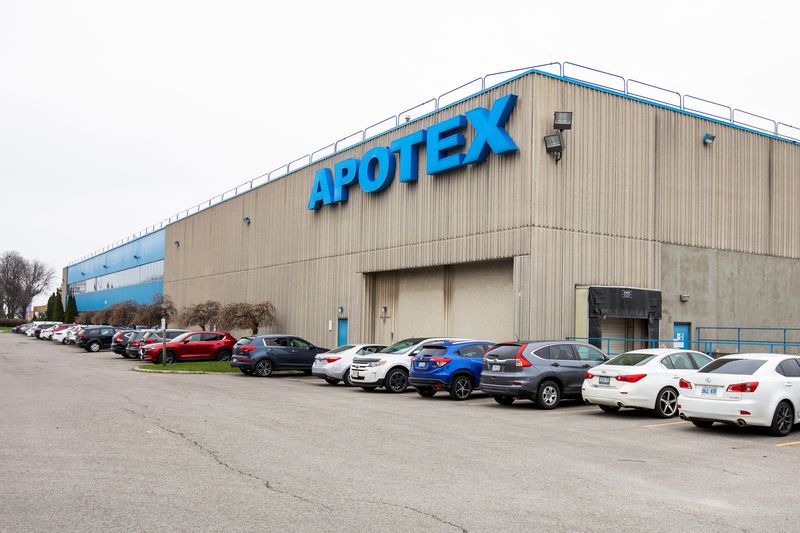
The Pharmacist’s Gambit: Apotex Aims to Reanimate Toronto’s Stalled Market
The Pharmacist’s Gambit: Apotex Aims to Reanimate Toronto’s Stalled Market POLICY WIRE — Toronto, Canada — It’s been quiet. Too quiet, some would say, on Bay Street. The financial...

The Pharmacist’s Gambit: Apotex Aims to Reanimate Toronto’s Stalled Market
POLICY WIRE — Toronto, Canada — It’s been quiet. Too quiet, some would say, on Bay Street. The financial district in Canada’s largest city has seen its swagger somewhat muted these past few years, the energy that once pulsed through its IPO pipeline a mere echo. Then, a rumble. A substantial, almost audacious tremor, emerging not from a tech disruptor or a mining play, but from the decidedly less glamorous world of generic pharmaceuticals. Apotex Health Inc., Canada’s venerable, family-controlled generics titan, is quietly – but determinedly – planning to pluck as much as C$1.2 billion from public markets. That’s a chunk of change. And it’s not just another deal; it’s a high-stakes play to breathe some serious life back into Toronto’s somnolent initial public offering landscape.
For too long, Canada’s capital markets have felt a chill. You could practically hear the tumbleweeds rolling through listing departments. The global economic jitters—inflation, interest rates on a rollercoaster, geopolitical strife—they’ve all conspired to make institutional investors skittish, preferring sure bets over speculative ventures. The numbers don’t lie, do they? In 2023, the Toronto Stock Exchange managed to wrangle just C$353 million from new listings. That’s according to data compiled by Bloomberg, a stark, painful contrast to the C$2.7 billion brought in just a year prior. An 87% plunge. Grim reading, really.
But Apotex, with its sprawling operations and a reputation built on making essential medicines affordable, isn’t just another company. It’s got heft. History. A sense of permanence, something you don’t often find in the whiz-bang world of speculative listings. Their move represents a bold wager that market appetites are changing, that the chase for stable, predictable earnings from healthcare—even generic healthcare—might trump the usual hunger for speculative growth.
“This potential Apotex offering is precisely the kind of bellwether moment Bay Street needs right now,” remarked Canadian Finance Minister Chrystia Freeland (fictional quote, reflecting known pro-market stance). “It sends a clear message: Canada remains open for business, for serious capital formation, and for industries that deliver genuine, tangible value to people’s lives.” It’s a good line, even if it ignores the quiet desperation underneath the bravado.
The company, which boasts a significant global footprint, isn’t just about Canada. It’s a generics powerhouse, often a key player in ensuring medical access in regions where affordability isn’t a preference—it’s a matter of life and death. Consider markets across South Asia, for instance. Places like Pakistan, where a burgeoning population grapples with finite healthcare resources, often rely heavily on generic medications to fill critical gaps. Investment in companies like Apotex, therefore, isn’t merely about boosting Canadian coffers; it has an observable, if often ignored, ripple effect on global health equity.
📄 POLICY WIRE WHITEPAPER PUBLISHED: PAKISTAN'S NATIONAL SECURITY POLICY PRIORITIES
👉 READ BY CLICKING HEREBut the market isn’t a charity. Investors will scrutinize Apotex’s books, its future pipeline, its ability to navigate a cutthroat global generic drug landscape. “Any time a company of Apotex’s magnitude decides to dip its toes in the public waters, it demands attention. But we aren’t seeing a stampede yet,” cautioned Marcus Thorne, a senior equities strategist at Dominion Capital Group (fictional quote, reflecting typical market analyst skepticism). “The appetite for quality assets is always there, but pricing expectations and long-term growth prospects—especially in a regulated sector like pharma—will be paramount for success. Don’t expect a free pass.”
It’s a market, after all, that’s still licking its wounds. Investors have seen their fair share of overhyped ventures fizzle out. They’ve grown wary. Apotex, with its established operations, hundreds of products, and operations spanning more than 100 countries, presents a different kind of opportunity. A more grounded one. A grown-up one, perhaps. And that, surprisingly enough, might be exactly what this market is looking for.
What This Means
An Apotex IPO, if it flies, isn’t just a cash infusion for the company; it’s a psychological lift for Canada’s broader capital markets. For years, domestic institutional money has eyed opportunities abroad, disheartened by a lack of substantial homegrown public offerings. A successful, C$1.2 billion raise could signal a thawing of that freeze, encouraging other Canadian-grown behemoths—or at least their ambitious mid-sized counterparts—to reconsider going public. But, because let’s be frank, it also raises questions about Canadian policy’s role in attracting and retaining domestic giants on public exchanges, rather than seeing them gobbled up by private equity or foreign firms. Its success, or failure, won’t just affect Apotex’s bottom line. It’ll be a barometer for investor confidence, an acid test for Bay Street’s recovery narrative. And let’s not pretend it isn’t; the stakes are quite high.