


Delhi’s Embrace: Why India Courted Myanmar’s Strongman Amid Sanctions
POLICY WIRE — New Delhi, India — Forget the niceties of international diplomacy, the stern pronouncements from Western capitals, or the stark humanitarian crisis gripping a neighboring land....

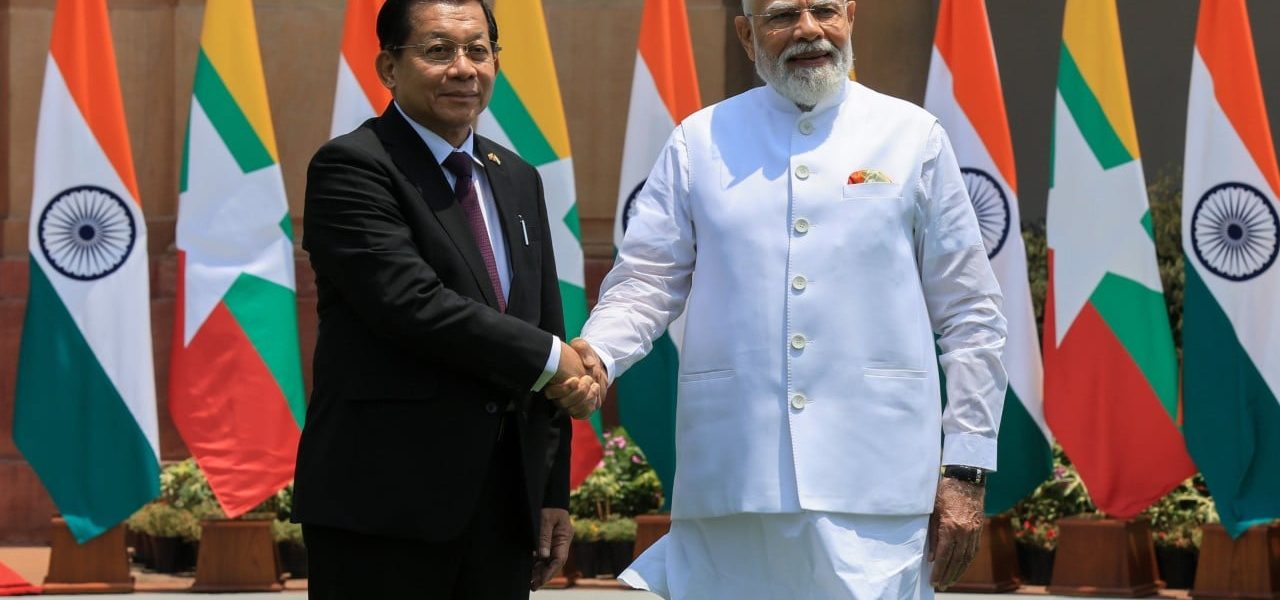
POLICY WIRE — New Delhi, India — Forget the niceties of international diplomacy, the stern pronouncements from Western capitals, or the stark humanitarian crisis gripping a neighboring land. Sometimes, a country just does what it feels it must, damn the torpedoes. That’s precisely the hard-nosed calculus India seems to have applied, extending an invitation to Myanmar’s widely-condemned military supremo, Min Aung Hlaing. He’s the architect of a bloody coup, a man persona non grata across much of the globe. But in New Delhi, for five days anyway, he wasn’t. He was a guest. A VIP.
It’s less about a sudden blossoming bromance — and more about geopolitical street fighting. Plain and simple. This wasn’t some casual invite; Prime Minister Narendra Modi personally okayed it, a move that peeled back the layers of India’s foreign policy to reveal a naked pursuit of strategic interests. Call it realpolitik with a side of regional jostling. China, you see, has been busy—very busy—cultivating its influence in Myanmar, building ports and infrastructure, weaving that struggling nation deeper into its economic orbit. India isn’t thrilled about that. Not one bit.
Because, from Delhi’s vantage point, a stable—if unsavory—Myanmar on its eastern flank is better than a rogue state dancing exclusively to Beijing’s tune. And they’re betting big on this principle. Many in the diplomatic corps abroad raised eyebrows. Others just shrugged, accustomed to such expediency. Dr. Aruna Singh, a former Indian diplomat with extensive experience in Southeast Asia, didn’t mince words. “Look, we’re not blind to the criticisms. But our neighborhood isn’t a university seminar on ethics. It’s a rough-and-tumble playground where you pick your allies based on reality, not just idealism. We can’t afford a vacuum for others to fill.”
Myanmar’s junta, under Min Aung Hlaing, has overseen a devastating crackdown on its own people since the February 2021 coup, killing thousands and displacing millions. The Rohingya Muslim minority, having faced decades of persecution, found little respite even before the coup. Their plight has drawn sharp condemnation from Muslim-majority nations globally, including Pakistan, which has consistently called for accountability and aid. But for India, the concerns about human rights often take a backseat to containing an expansive China. India-Myanmar trade relations, while modest compared to China’s, hover around $1.6 billion annually, primarily agricultural products and timber—a mere drop in the geopolitical ocean, yet one India doesn’t want China controlling exclusively. That’s a tough pill for the international community to swallow. But hey, nations operate on different moral codes sometimes, don’t they?
The timing itself screams calculated defiance. The visit came smack dab in the middle of ongoing Western sanctions designed to isolate the junta. India’s message was loud: those sanctions aren’t our problem. And for Min Aung Hlaing? It was a massive win, a stamp of international legitimacy (or at least, regional acceptance) when he needed it most. He doesn’t get many red-carpet invites these days, you know? Colonel Kyaw Zaw Min, a spokesperson for Myanmar’s State Administration Council, reportedly remarked, “Our sovereignty is non-negotiable. Friends who recognize that, who stand with us against external meddling—they’re welcome. Others? Well, they can keep their sanctions and their sermons.” A clear echo of the regime’s self-perception: unbowed, self-reliant. And quite pleased with India’s company.
📄 POLICY WIRE WHITEPAPER PUBLISHED: PAKISTAN'S NATIONAL SECURITY POLICY PRIORITIES
👉 READ BY CLICKING HEREIt’s an uncomfortable dance, for sure. But India’s pragmatic playbook here isn’t entirely unique. Many regional powers, caught between global ethics — and local realities, make similar concessions. Look at Southeast Asia. Look at parts of Africa. But this one feels a bit more stark, a blunt declaration that the Indo-Pacific geopolitical contest supersedes —at least for now—any shared democratic values or humanitarian obligations. And it makes you wonder what else will be sacrificed on the altar of containing Beijing’s long shadow. It’s all part of a grander chessboard, isn’t it?
What This Means
This episode serves as a cold splash of reality in an increasingly fractured international order. Politically, India’s embrace signals a continued drift by non-Western powers towards a transactional foreign policy, where shared principles often buckle under strategic imperatives. It won’t win New Delhi any points with human rights organizations, but it absolutely signals to Beijing that India is willing to engage with *any* player in the region if it serves its long-term security and economic interests.
Economically, while direct benefits for India are relatively minor right now, the move secures a foothold for future investments and critical access routes through Myanmar to Southeast Asia—part of India’s ‘Act East’ policy. It’s a calculated gamble to diversify regional supply chains — and counteract Chinese dominance. But it’s also a public recognition that Western sanctions, without broad-based buy-in, can be effectively neutralized by determined regional actors pursuing their own agendas. It won’t normalize the junta’s international standing overnight, but it certainly offers them breathing room. Expect more such alliances of convenience to emerge as the great power competition heats up, often at the expense of universal human rights doctrines. It’s a sobering prospect for many, but a predictable maneuver for veteran observers of global politics. India’s playing for keeps. Very few powers aren’t, when you get right down to it.