


Anfield’s High-Stakes Gambit: £87M Bid, Managerial Chaos, and the Global Reckoning
POLICY WIRE — London, UK — While the corridors of Anfield buzz with whispered names of potential new managers—a carousel of tactical minds jockeying for perhaps the most scrutinized bench in European...

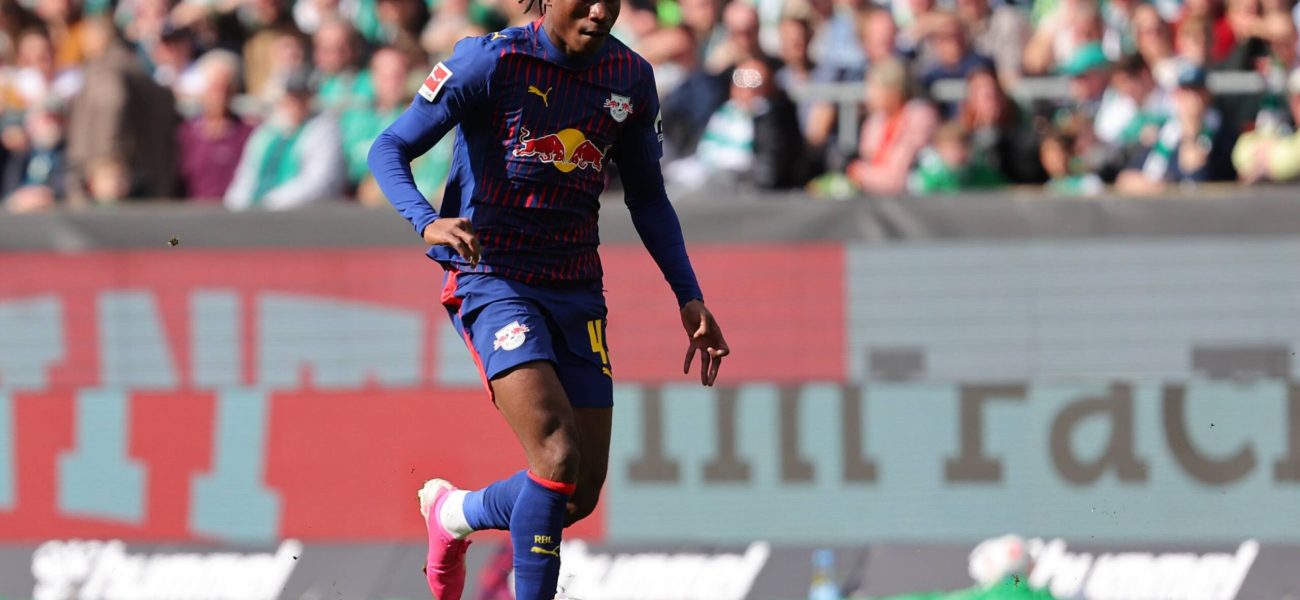
POLICY WIRE — London, UK — While the corridors of Anfield buzz with whispered names of potential new managers—a carousel of tactical minds jockeying for perhaps the most scrutinized bench in European football—something far more foundational is quietly, perhaps ruthlessly, taking shape. Forget the dugout drama for a moment. Richard Hughes, Liverpool’s relatively new sporting director, isn’t waiting for the smoke to clear; he’s already pouring gasoline on an £87 million pyre, aiming to snap up RB Leipzig’s electrifying winger, Yan Diomande.
It’s an audacious move. A club in the throes of post-Jürgen Klopp succession planning, with the managerial reins yet to be formally passed—initial talks with Arne Slot, for instance, didn’t pan out—is simultaneously attempting a signature transfer that would recalibrate its entire attacking infrastructure. It speaks to a cold, clinical logic that defines modern football’s apex. Teams simply can’t afford to hit the pause button, not even for seismic leadership shifts. They’d be left behind.
“It’s never about standing still; it’s about intelligent evolution,” Hughes reportedly told confidants, articulating a philosophy now becoming Liverpool’s unofficial mantra. “The market doesn’t pause for institutional transitions. You don’t get ahead by waiting for perfect clarity.” And he’s right, isn’t he? Clarity? A luxury most sporting empires can’t afford. This isn’t just about winning games; it’s about commercial imperatives, brand valuations, and satisfying a global audience that demands constant reinforcement. It’s an investment strategy, really.
Diomande, an Ivorian prodigy, is no bargain bin find. Sources close to RB Leipzig suggest their valuation for the young talent stands firm at around £87 million (€100 million)—a sum that, according to industry estimates, places him in the stratosphere of ‘statement signings’ rather than ‘future projects.’ That’s a king’s ransom for a twenty-something. But Liverpool, say observers, senses a fleeting window. Bayern Munich might wait until 2027. Paris Saint-Germain’s interest might ebb — and flow with their own star power dynamics. Other Premier League giants are merely “monitoring.” But Liverpool? They want to act, — and they want to act now. They just can’t dither. The club wants a succession plan for Mohamed Salah, the Egyptian King who has captivated fans globally, particularly in the Middle East and South Asia—regions that are increasingly integral to the financial backbone of European football. Millions in Pakistan, for example, watch Premier League matches with devout regularity, making the future of players like Salah a topic of considerable, well, import.
Because ultimately, these clubs are global enterprises. They’re multi-million dollar brands with viewership — and merchandising footprints stretching from Merseyside to Manila. A dip in perceived ambition, a perceived lull in recruitment—that’s not just a blip on the pitch; it’s a tremor in quarterly earnings reports. An executive at a rival Premier League club, who requested anonymity to speak candidly about market forces, put it plainly: “The game’s moved on. You can’t rebuild on sentiment, or even just tactics. It’s a balance sheet game now, — and sometimes, you’ve just got to pay the freight. Even if your house is on fire.”
📄 POLICY WIRE WHITEPAPER PUBLISHED: PAKISTAN'S NATIONAL SECURITY POLICY PRIORITIES
👉 READ BY CLICKING HEREThis pursuit isn’t just an isolated transfer saga. It’s a calculated gamble on future success, both sporting — and commercial. The pressure is immense; Diomande isn’t just arriving with a massive price tag, but with the unenviable task of filling a legend’s boots. It requires more than just raw talent. It needs the right tactical system, the right coaching, the right psychological environment. All of which Liverpool is attempting to assemble simultaneously. It’s a bold stroke in what could otherwise be a summer of uneasy transition, reflecting a proactive rather than reactive stance.
What This Means
Liverpool’s high-stakes pursuit of Yan Diomande amid its managerial vacuum underscores a brutal truth of contemporary football: the sport has decoupled from traditional leadership stability. The sheer volume of global capital pouring into the game, much of it from Gulf nations and East Asian investment funds, mandates continuous operational aggression. Political decisions, economic shifts in emerging markets like Pakistan, and even the cultural cachet of superstar athletes—these all coalesce to influence the multi-billion dollar transfer market. Clubs operate less as simple sports teams and more as complex multinational corporations, where talent acquisition isn’t just about athletic prowess, but about securing market share and brand relevance. Delay means vulnerability; proactive spending, even amidst internal flux, is viewed as an imperative to maintain global competitiveness and revenue streams.