


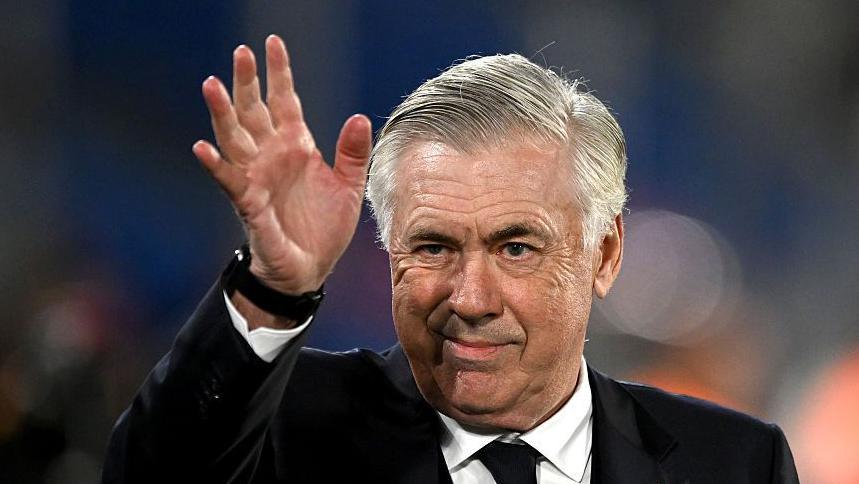
Ancelotti’s Cultural Gambit: Can a Foreign Hand Reclaim Brazil’s Golden Boot?
POLICY WIRE — RIO DE JANEIRO, BRAZIL — Forget the tactics, the formations, the blinding pace of Vinicius Jr. Before Carlo Ancelotti even chalked up his first win, he confronted something far more...

POLICY WIRE — RIO DE JANEIRO, BRAZIL — Forget the tactics, the formations, the blinding pace of Vinicius Jr. Before Carlo Ancelotti even chalked up his first win, he confronted something far more formidable than an opposing defense: the visceral, unyielding pride of Brazilian football. A nation that birthed Pelé, Ronaldo, and an aesthetic — a certain samba-infused swagger — they call the Jogo Bonito, was handing its sacred Seleção over to an Italian. It wasn’t just a coaching change; it was a profound cultural moment, an admission, perhaps, that even gods sometimes need outside help.
Ancelotti, a man with five Champions League titles shimmering on his resumé, wasn’t naive. He’d spent his career mastering the art of adapting, winning major trophies in every top-tier European league. But this? This was different. This was Brazil, a country whose relationship with its national team borders on religious fervor, and whose footballing identity has always proclaimed, quite loudly, its self-sufficiency. You don’t just walk in — and demand respect. You earn it, slow burn style.
His opening gambit was deceptively simple: learn the language. While local staff, perhaps eager to ease the transition, fumbled with Spanish or Italian, Ancelotti promptly declared, with that knowing, disarming smile, “No, no. I’m the one who has to make the effort to speak Portuguese here.” And he did. He signed up for four lessons a week, hiring instructor Roberto Piantino, who recalled the Italian’s almost obsessive dedication. “I was surprised by his commitment,” Piantino told BBC Sport, reminiscing about lessons scheduled for early Saturday mornings, Vancouver time (where Ancelotti lives part-time). That’s not just professional courtesy; that’s cultural immersion, a crucial first strike in winning over a deeply skeptical populace.
The resistance was palpable. It wasn’t always hostile, often more of a wistful disappointment. Cafu, a two-time World Cup winner who lifted the trophy in ’94 and ’02, voiced the common sentiment: “We’re the only country to have won the World Cup five times. It’s not that a foreigner should never coach the national team, but I would have gone for a Brazilian coach.” Because for many, it felt like an abdication of national footballing spirit. This echoed similar sentiments heard across the global south, where the intrusion of foreign expertise into cherished national institutions – be it sport, military, or economic planning – is often viewed through a lens of colonial hangover or a painful acknowledgement of perceived local deficiencies. Just look at the enduring debate in Pakistan over the necessity and impact of foreign coaches in its own beloved sport of cricket. The fervor, the emotional investment, is remarkably similar.
Yet, results talk. The recent 6-2 thrashing of Panama, a significant confidence booster ahead of the World Cup, showcased the raw talent Ancelotti has at his disposal. Goals flowed from Vinicius Jr., Casemiro, Paqueta—a signal that something might just be clicking. It’s early days, yes, but for a squad that suffered a chaotic four-year cycle, cycling through four coaches and enduring its worst-ever qualifying campaign, any semblance of stability is gold. And the polls, according to Quaest, a leading polling institute, reflect a cautiously optimistic public: 41% of Brazilians approve of his work, against 29% who disapprove.
📄 POLICY WIRE WHITEPAPER PUBLISHED: PAKISTAN'S NATIONAL SECURITY POLICY PRIORITIES
👉 READ BY CLICKING HEREAncelotti’s greatest strength isn’t just his tactical mind; it’s his empathy, his uncanny knack for human connection. He delayed signing his own contract extension until 2030 until he secured extensions for three support staff who’d helped him settle in. It’s a shrewd move, a silent power play demonstrating loyalty — and foresight. Leonardo, the 1994 World Cup winner who played under and worked with Ancelotti, called him a “chameleon.” He says, “Wherever he goes, he adapts to the people, the team, the players. He is a world champion at that. If I ever bought a team, my coach would be Carlo. There’s no other choice.” This adaptability—this human touch—is precisely why he’s found an audience in a country notorious for its impassioned, demanding fans. The global landscape of top-tier sports, whether football or baseball, is increasingly defined by these intricate dances of power and personality. Because ultimately, success transcends borders, but people want to feel understood.
But the hardest part looms: transforming individual brilliance into a cohesive, World Cup-winning machine. He’s got players like Vinicius Jr. and Raphinha, whom he rates as “two of the five best players in the world.” Making them click in his bold 4-2-4 system? That’s the real test. And he’s already started reshaping the dressing room dynamics. Manchester United’s Casemiro recounts a pivotal halftime moment when chaos reigned, with players all talking over each other. “Then he said: ‘Guys, wait. I’m going to smoke a cigarette, I’ll be back in five minutes and then you can talk.’” Ancelotti returned, spoke, and everyone listened. “Everyone was like: ‘OK. This guy is different,’” Casemiro recalled. It’s moments like these, understated yet impactful, that demonstrate his subtle authority.
What This Means
Ancelotti’s tenure with the Seleção isn’t just a sporting event; it’s a social experiment. Brazil’s embrace of a foreign coach, especially one so deeply committed to cultural assimilation, signifies a potential shift in how national identity and excellence are perceived. It suggests a pragmatic acknowledgement that tradition, while powerful, might need modern, external influences to stay competitive on a global stage. Politically, a World Cup win under Ancelotti could be a unifying force in a nation often fractured by internal disputes. Economically, success would pour fuel on a significant tourism and merchandising machine, providing a much-needed boost to local economies. Conversely, failure—especially a deep one—could ignite a renewed nativist backlash, proving critics right and deepening questions about Brazil’s footballing future. This isn’t just about goals; it’s about national pride, global standing, and the very narrative a nation tells itself about its place in the world. Much like the intense scrutiny placed on young talents breaking barriers in international sporting events, Ancelotti’s performance will be dissected, analyzed, and ultimately, used to shape Brazil’s perception of itself.