

Auburn’s Late-Night Triumph: Echoes of Collegiate Grind, Global Sporting Dreams
POLICY WIRE — Auburn, Alabama — The clock nudged past midnight, Plainsman Park’s stands, drenched hours earlier by an unforeseen summer deluge, now thrummed with a nervous energy that felt, well,...

POLICY WIRE — Auburn, Alabama — The clock nudged past midnight, Plainsman Park’s stands, drenched hours earlier by an unforeseen summer deluge, now thrummed with a nervous energy that felt, well, distinctly American. This wasn’t just a baseball game; it was a testament to the grinding machinery of collegiate sports, a relentless march through exhaustion and high-stakes pressure. And for Auburn, their 8-1 regional championship victory over Milwaukee wasn’t just a win—it was a brutal, late-night affirmation of their tenacious grasp on a dream.
Many folks had packed up after the weather delay, deciding their comfort was more important than sticking around. But the true believers, the fanatics, they stayed. And their commitment paid off. Auburn, already having ripped UCF 9-3 earlier to stay alive, looked like a team running on fumes but propelled by sheer will. The Milwaukee Panthers, bless their hearts, battled with the same cold, quiet determination, but the Tigers’ potent offense, dormant for too long, finally clawed its way to life.
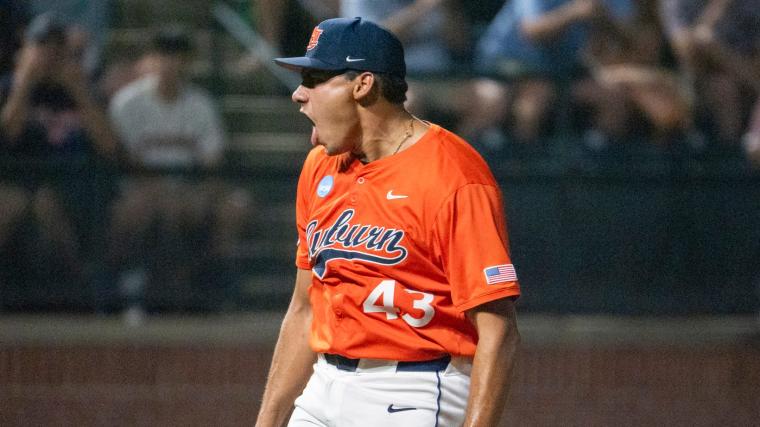
Pitcher Ryan Hetzler was a revelation for Auburn, shutting down the Panthers’ bats with six strikeouts through four frames, only yielding a lone run. He threw 67 pitches (44 strikes), according to official NCAA statistics. “He really dug deep tonight, gave us exactly what we needed after that long day,” said Auburn Head Coach Butch Thompson, visibly drained but smiling slightly in the post-game presser. “You know, you ask these kids to perform under insane circumstances, — and they just answer the bell. It’s special.”
Milwaukee’s pitching staff, in contrast, seemed to unravel quickly under the floodlights. Starter Camden Kuhnke lasted less than two innings, giving up five earned runs. It wasn’t an ideal scenario for a team needing to pull off a miracle upset. Panthers Coach Scott Doffek summed it up: “We fought. We just didn’t have enough left in the tank against a team that’s got the full national apparatus behind it. But they never quit, — and you can’t ask for more than that. It’s a learning experience for these young men, you know?”
But beyond the immediate spectacle of fly balls and strike zones, this particular late-night slugfest throws a stark light on the often-overlooked demands placed on student-athletes. They’re pushed through double-headers, travel schedules that would break seasoned professionals, all while balancing academics and the crushing weight of a winner-take-all mentality. It’s a policy framework that prioritizes competition and revenue over — let’s be honest — the mental and physical well-being of the actual participants. Some might call it a kind of organized chaos; others simply call it college sports.
📄 POLICY WIRE WHITEPAPER PUBLISHED: PAKISTAN'S NATIONAL SECURITY POLICY PRIORITIES
👉 READ BY CLICKING HEREThis isn’t to say there isn’t genuine passion. From the meticulously manicured fields of Plainsman Park to the fledgling baseball programs making waves in places like Pakistan and other parts of the Muslim world—where cricket still reigns supreme but a global fascination with the diamond grows—the allure of competitive sport transcends borders and socio-economic lines. The universal language of athletic struggle, perseverance, and fleeting glory speaks to something deeply ingrained in humanity. It’s a drama that plays out differently in Islamabad than it does in Alabama, but the human striving, the raw emotional investment? That remains the same.
Chase Fralick, Auburn’s catcher, managed to collect three RBIs, proving instrumental in a game where every run felt earned, extracted almost. They’ve advanced. And it’s tough to ignore the sheer relief etched on the faces of the Auburn dugout after that final out. They weren’t just playing for Omaha anymore; they were playing for the next sunrise.
What This Means
This single regional victory, coming on the heels of a long and challenging day, might seem like a mere blip on the national sports radar, but its implications ripple through the complex ecosystem of collegiate athletics. Economically, late-night games with uncertain starts—a consequence of weather delays—often translate to lost concessions revenue, diminished live viewership, and headaches for broadcast partners. Policy-wise, it reignites debates about athlete welfare, scheduling protocols, and the sometimes-staggering expectations placed on amateur players. Should there be stricter guidelines on turnaround times for games, especially given the physical toll and potential for injury? Many administrators quietly believe so, but the financial incentives to complete tournaments often overshadow player well-being. for smaller programs like Milwaukee (who finished their season 27-31), competing against SEC giants like Auburn (now 40-20) highlights the stark resource disparities in college sports—a gulf that’s widening annually. It’s an imbalance that mirrors global power shifts in many sectors, where financial might dictates opportunity. But it’s not all cynicism. These games, arduous as they’re, also offer a glimpse into the raw human spirit—the push to overcome, against all odds, whether that’s on a field in Alabama or battling another kind of ‘divide’ somewhere across the world.