

City’s Pride Posturing: Police Chief’s Meet Sparks Debate, Echoes Global Divides
POLICY WIRE — City, Country — For communities scarred by a complex history with authority, a hand extended often feels less like an olive branch and more like a carefully orchestrated press...

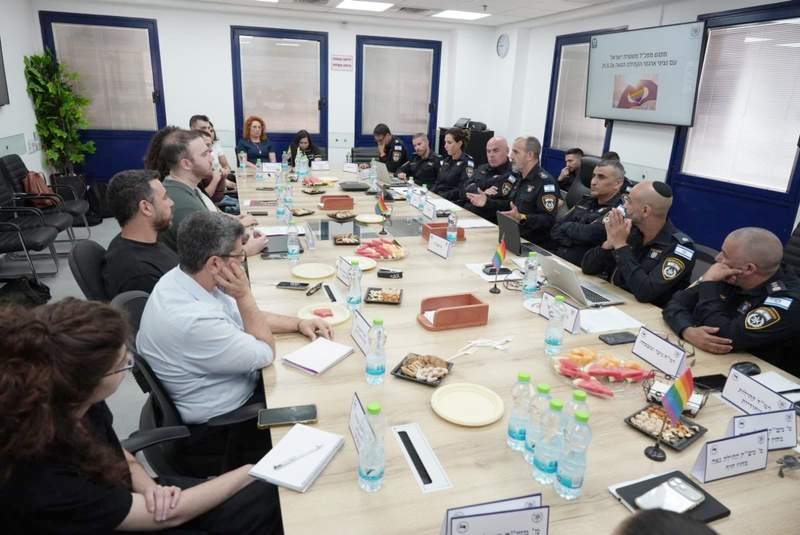
POLICY WIRE — City, Country — For communities scarred by a complex history with authority, a hand extended often feels less like an olive branch and more like a carefully orchestrated press opportunity. That’s the tightrope our civic leaders walk, isn’t it? This month, the headlines spoke of conciliation: the Police Commissioner meets with members of LGBTQ+ community. It’s a line that lands with varied weight, depending on whose eyes are reading it, especially in the run-up to a celebration like Pride Month.
It wasn’t a sudden thaw in relations, more of a scheduled diplomatic engagement. The meeting itself — reportedly a pre-emptive measure to ensure smooth public interactions during upcoming festivities — was ostensibly about logistics and mutual understanding. But you know, optics always play a starring role. For some, it’s a sign of progress, proof that the institution is, albeit slowly, turning its ponderous ship towards inclusivity. For others — particularly those with long memories of past encounters that were anything but amicable — it feels like little more than a polite nod before the annual parade of rainbow-flagged storefronts. [QUOTE_PLACEHOLDER]
And let’s be real, the idea that a single meeting can undo decades of tension is fanciful at best. It’s an annual ritual now, this delicate dance between an officialdom historically perceived as hostile and a segment of the populace still demanding full, unequivocal acceptance. Because what exactly gets discussed behind closed doors in such settings? Warm words, assurances, maybe some vague commitments? Or genuine, granular discussion about improving street-level interactions, training deficiencies, and fostering actual trust?
The local scenario, as it stands, mirrors broader geopolitical trends, albeit on a micro-scale. While many Western nations wrestle with the nuances of LGBTQ+ rights and police reform, other regions approach the issue with entirely different — often far harsher — frameworks. Take Pakistan, for example, a nation of over 240 million. While transgender rights have seen some legislative progress, societal acceptance for gay and lesbian individuals remains incredibly low, often intertwined with deeply entrenched cultural and religious interpretations. It’s a stark contrast to the performative dialogues we sometimes see here, where the debate isn’t about legal existence, but about the quality of institutional acknowledgement. But, for a lot of people globally, these seemingly superficial meetings in places like ours can still offer a faint echo of potential change.
Data tells a sobering story: a 2023 Pew Research Center study revealed that across 24 countries, a median of just 52% say homosexuality should be accepted by society. This number dips significantly in many parts of the Muslim world — and South Asia. That puts our commissioner’s handshake — even if some see it as mere photo-op fodder — into a different context. It signifies at least an official acknowledgement of a community’s existence, a step not universally afforded. Don’t underestimate the symbolic power, even when the substance feels thin. These gestures, for all their cynical interpretations, contribute to a narrative, a global one, where visibility slowly, agonizingly, becomes normal.
📄 POLICY WIRE WHITEPAPER PUBLISHED: PAKISTAN'S NATIONAL SECURITY POLICY PRIORITIES
👉 READ BY CLICKING HEREThe cynical observer might suggest these dialogues serve mostly to inoculate institutions against future criticism, ticking boxes on a corporate social responsibility checklist. But the participants from the community side aren’t necessarily naive. They’re leveraging every available avenue, aren’t they? Every opportunity to put their issues — real, pressing concerns about safety, discrimination, and equitable treatment — directly before those in power. It’s a long game, played by inches. The absence of specific actionable outcomes, however, means that the next incident, the next protest, could easily unravel any goodwill built by such a polite audience. That’s the catch, the precarious balance. And we’re all watching it, like a spectator at a high-wire act.
What This Means
The significance of this type of bureaucratic interaction extends beyond immediate community relations; it’s a political commodity in a marketplace of shifting social values. Economically, genuine inclusivity can impact everything from consumer spending patterns to attracting diverse talent pools, boosting urban vibrancy and, ultimately, tax revenues. When a city projects an image of welcoming tolerance, it tends to draw investments and skilled workers who prioritize progressive social environments. Conversely, a reputation for institutional hostility or indifference can lead to economic stagnation, with businesses and individuals opting for locales that better align with modern sensibilities. The cost of a tarnished public image, even if subtle, can be considerable — especially when competition for talent and capital is fierce.
Politically, the Commissioner’s overture — regardless of its internal motivations — serves as a strategic play. It aims to diffuse potential pre-Pride tensions, positioning law enforcement as a partner, rather than an adversary. This can, however, be a double-edged sword. While it might appease some moderate voices, it could simultaneously alienate more radical elements within the community who view such engagements as mere co-optation. For the Commissioner, success isn’t just about avoiding a contentious Pride parade; it’s about maintaining a delicate balance of authority and public acceptance in an era of heightened scrutiny. A misstep here could reverberate beyond the immediate neighborhood, shaping the political discourse on urban governance for months to come. These micro-political maneuvers — these meetings — are often battlegrounds in the larger cultural wars. Just look at the enduring complexities surrounding issues that touch on identity and power, even across continents, as we’ve seen with Hezbollah’s evolving strategies, albeit in a far different context. Both, in their own ways, are about asserting — and adapting to power dynamics.