


Paradise Lost: Triple Homicide Jolts Hawaii’s Off-Grid Dreamers
POLICY WIRE — Honolulu, USA — Even paradise, it turns out, can’t inoculate against humanity’s darker impulses. And when those impulses erupt in a community founded on idealism and...

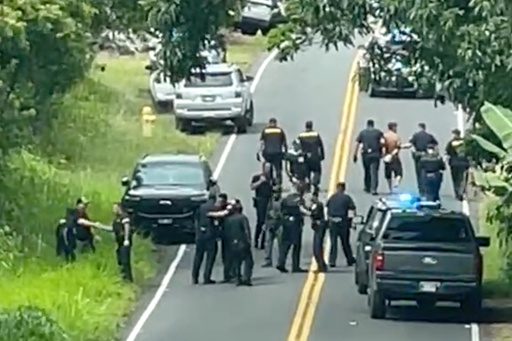
POLICY WIRE — Honolulu, USA — Even paradise, it turns out, can’t inoculate against humanity’s darker impulses. And when those impulses erupt in a community founded on idealism and self-reliance, the shockwaves resonate far beyond the sandy shores of Hawaii’s Big Island. A sprawling manhunt for Jacob Daniel Baker, 36, concluded recently, but the quiet terror he allegedly left behind in the Puna district—a trio of murdered residents—has just begun to fester.
It wasn’t a shark attack or a volcanic eruption that shattered the bucolic calm here. It was something far more insidious: a suspected individual spree, leaving three men dead in circumstances as stark as the Big Island’s landscape of lush jungle and barren lava fields. Baker now faces a serious rap sheet, including first- and second-degree murder charges, which Hawaii Police Department officials filed Saturday. But those formal declarations do little to assuage a community suddenly staring down the grim realities of trust betrayed.
Life in Puna draws a particular sort of person—folks seeking to live off-grid, trading skills for shelter, a sort of modern-day pioneer spirit thriving amidst the tropical humidity. They’re after a simpler existence, unburdened by the complexities of the mainstream. But sometimes, you know, those same choices open doors to new, unforeseen complications. Robert Shine, 69, was discovered first, Monday, partially submerged in a cement pond. Just a couple of hundred feet off, a 79-year-old, later identified as Chitta Morse, surfaced Tuesday. And then, 19 miles (31 kilometers) away, at a separate property, police located the third victim, 69-year-old John Carse, late Tuesday.
What linked these disparate deaths? For now, officially, not much. Hawaii Police Chief Reed Mahuna has said investigators found no connections among the victims other than that two of them lived near each other. But sometimes the lack of obvious connection can be the most unsettling thing of all. And the story gets muddier.
Baker, the accused, wasn’t a complete stranger to the Puna social fabric. Stephen Shaffer, a local resident, related that Baker had worked for his ex-wife, scaling coconut trees in exchange for a place to sleep. It’s a common arrangement in these parts. But the communal spirit has its limits. After several months, Shaffer recounted, his ex-wife actually sought a restraining order, feeling [QUOTE_PLACEHOLDER]. A friend of Shaffer’s ex-wife and two of the victims, Donald Hyatt, remembers Baker vacating the cabin he was staying in months ago. But, then again, Hyatt said, Baker had recently returned claiming ‘squatter’s rights’ — and threatening Shaffer’s ex.
Because, before all this horror, there were signals. Red flags, some might call them. Just days prior to the killings, two other women had requested temporary restraining orders against Baker. They reported threats, harassment. Court records verify this. A judge, however, denied both requests. There wasn’t enough proof of harassment, the judge concluded. Imagine that—not enough proof, until it’s far, far too late. Baker’s past? Not spotless. Court records showed Baker named in 20 other cases in the past two decades, many of them traffic infractions. Often, he’d represented himself. Maybe that suggests a certain comfort with bending rules, or a stubborn self-reliance that spilled over into defiance. He remained jailed without bond Sunday, his first court appearance slated for Monday. Nobody’s confirmed an attorney for him yet, which is kind of par for the course with someone who’s spent decades seemingly navigating the legal system solo.
What This Means
This horrifying incident cuts directly to the bone of the ‘off-grid’ utopian ideal, a lifestyle that appeals to many seeking freedom from conventional societal strictures. While it promises community — and self-sufficiency, it can also create dangerous blind spots. Without formal structures like robust background checks for temporary residents or a swiftly responsive, resourced legal system equipped to handle preliminary complaints—especially in isolated locales—vulnerable individuals, particularly women, often find themselves exposed.
📄 POLICY WIRE WHITEPAPER PUBLISHED: PAKISTAN'S NATIONAL SECURITY POLICY PRIORITIES
👉 READ BY CLICKING HEREEconomically, this sort of tragic disruption could trigger a chilling effect. The unique labor-for-lodging economy, a backbone of such communities, relies heavily on trust. When that trust is shattered, economic exchanges become fraught with peril, making it harder for people to secure housing or essential services. From a policy standpoint, there’s a delicate balance. How does one protect individual liberty and the right to an alternative lifestyle without inadvertently creating havens for dangerous individuals, or leaving communities with inadequate access to protective legal mechanisms? The Hawaii case, therefore, serves as a harsh mirror, reflecting not just a local crime, but a broader socio-political dilemma.
Consider the broader global context for a moment. This dynamic—where marginalized or vulnerable populations in loosely structured communities face systemic issues of security and justice—isn’t confined to a tropical island. From remote Pakistani tribal areas grappling with internal disputes to informal settlements in South Asia where legal recourse is minimal or mistrusted, the challenges of governance, personal security, and timely intervention are strikingly similar. When official channels fall short or are perceived as ineffective, the risk of disputes escalating dramatically — often with fatal consequences — is ever-present. This case should prompt policymakers globally to consider how to extend the umbrella of legal protection and support to all citizens, no matter how remote their living choices.
It also forces us to re-evaluate the threshold for intervention. How many red flags are enough before the state steps in decisively? Two rejected restraining orders, multiple previous legal entanglements – it paints a picture. It isn’t just about ‘squatter’s rights’ anymore. It’s about life and death. And these aren’t simple problems to solve—they rarely are—but we’ve got to try. Resource constraints often hobble judicial systems in rural or unconventional areas. But the cost of inaction, as Puna now knows too well, is tragically high.
This incident is a grim reminder that human unpredictability — and systemic failures aren’t exclusively urban problems. They haunt the most idyllic fringes of society too, — and often, that’s where they strike hardest.