


Ancient Gods, Modern Pitches: Mexico’s World Cup Artistry Challenges Global Homogeneity
POLICY WIRE — MEXICO CITY — It’s not the rumble of soccer hooliganism or the clang of turnstiles that announces Mexico’s World Cup preparations. No, a more subtle, yet arguably far more...

POLICY WIRE — MEXICO CITY — It’s not the rumble of soccer hooliganism or the clang of turnstiles that announces Mexico’s World Cup preparations. No, a more subtle, yet arguably far more defiant, overture is underway here. Deep within workshops nestled near the pulsing heart of Mexico City, brothers Hugo and Andrés Rosas are orchestrating a quiet cultural revolution. They’re, in essence, smuggling ancient deities and ancestral beliefs onto the modern sporting stage—and doing it with threads and dyes.
While the world fixates on the latest high-tech fabrics or celebrity endorsements, these two are charting a different course. Their brand, Mexclart, is grafting the intricate beauty of pre-Hispanic symbols and folk art onto polyester jerseys destined for cheering fans. This isn’t merely fashion; it’s a statement, a refusal to let a globalized sports industry erase local identity. It’s taking something as ephemeral as a cheer, — and grounding it in millennia of spiritual history.
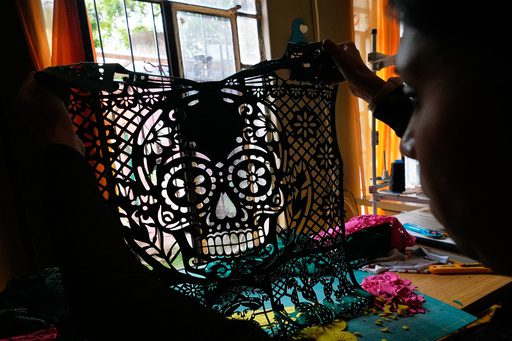
And their timing couldn’t be better, or perhaps, more telling. The brothers’ latest collection, appropriately titled “Calados del Alma,” meaning “Cutouts of the Soul,” directly channels papel picado, those delicate, celebratory cut-paper ornaments. “We try to create concepts that resonate with us and convey traditions that make Mexicans feel proud,” Rosas told the wire service. But it’s more than pride, isn’t it? It’s preservation, an active battle against cultural amnesia, waged with a needle — and thread. Hugo, the artisan, runs the workshop with his brother, who handles marketing—a smart division of labor, considering what they’re up against.
The very first jersey they sketched was a showstopper: Quetzalcoatl, the feathered serpent, a deity revered across numerous pre-Hispanic civilizations. Andrés, who oversees the brand’s outward face, hasn’t let that initial design go. “Quetzalcoatl represents a balance that sees the world as a system, not as something extractive that human beings can simply benefit from,” he explains. [QUOTE_PLACEHOLDER] You see? This isn’t about novelty; it’s about worldview. It’s about remembering that for all our modern consumption, sometimes ancient wisdom offers a starker, truer path.
The reverence for heritage permeates their approach. Another collection, “Ofrenda Viva” (Live Offering), drew from Mexico’s Day of the Dead, a practice that treats remembrance with a vibrant joy instead of stoic sorrow. Rosas explained that its aesthetics and concept are rooted in Mexico’s Day the Dead — that the living remember and honor their dearly departed with celebration instead of sorrow. “It’s a garment resembling papel picado so that a person can offer their actions, thoughts and passions as an homage to those who are already gone,” Rosas added, linking the act of wearing with the act of devotion. Polyester—it turns out—is a surprisingly robust canvas for this deeply spiritual artistry, allowing for precise cuts without tears, a technical detail as unassuming as it’s crucial.
These aren’t mass-produced, sweatshop affairs either. Crafting each jersey can demand up to three weeks, with the sewing — and cutting alone consuming eight to 10 hours. It’s a deliberate, painstaking process. Rosas determines the symbols first, then meticulously scales — and shapes them to align with his vision. After that, it’s the team’s seamstresses, patiently cutting and stitching each piece—an antidote, perhaps, to our disposable consumer culture. Since the World Cup line debuted in April, the Mexclart brand has created a modest yet meaningful about 30 jerseys. But Hugo expects demand to increase as the tournament draws nearer. Why wouldn’t it? In an age of manufactured cool, authenticity is the real luxury.
📄 POLICY WIRE WHITEPAPER PUBLISHED: PAKISTAN'S NATIONAL SECURITY POLICY PRIORITIES
👉 READ BY CLICKING HEREAnd it’s an authenticity not restricted to one myth. Rosas finds inspiration in many pre-Hispanic gods, particularly Mictlantecuhtli, the Aztec lord of the underworld, often depicted skeletally. “Putting on a garment like this is like wearing a modern armor through which we can carry that pride and passion for our roots and show it to the world,” Rosas said. The very idea of an outfit as armor, as protection — and proclamation of identity, resonates. He’s not just making clothes; he’s crafting contemporary totems. While books offer guidance, Rosas told the wire service that the source of inspiration he enjoys the most is traveling to Indigenous communities where ancient ceremonies and customs remain alive. If he had his way, he’d use materials even grander: “If it were up to me, I’d use gold or another material that could accurately represent our gods the way our ancestors did,” he wished, underlining the profound respect driving his craft.
But the narrative extends beyond Mesoamerican lands. Think about how cultures across South Asia or the Muslim world also wrestle with presenting their rich, often complex, heritage on a global stage—be it through textiles, architecture, or even cuisine. Like the vibrant folk art of Pakistan, often at odds with Western sartorial trends, these Mexican jerseys are a quiet, dignified insistence that one’s history isn’t just for museums—it’s for life, for sport, for every living, breathing moment. They’re a counterpoint to the often bland, universal aesthetic that pervades global sports merchandise, which, according to some analyses, collectively exceeds $28 billion annually—a vast ocean of opportunity, or homogeneity, depending on your perspective. These small, artisanal producers are, in their own way, showing the big players how to embrace a genuine, profitable niche.
What This Means
The Rosas brothers’ endeavor, while seemingly confined to bespoke jerseys, actually speaks volumes about contemporary geopolitics and global economic dynamics. First, it represents a potent form of soft power. In a world where cultural homogenization often threatens local distinctiveness, showcasing pre-Hispanic heritage through an internationally adored sport like soccer is a masterstroke. It’s a subtle but effective way for Mexico to project its unique identity, inviting global engagement on its own terms, rather than purely through economic or political leverage. But it’s also a statement against the cultural imperialism inherent in many global sports narratives—where the biggest brands often dictate aesthetics, effectively sidelining local interpretations. Their work is a quiet protest, a reminder that authentic expression can challenge market dominance.
Economically, their artisanal, small-batch approach stands in stark contrast to the colossal manufacturing chains of sportswear giants. This micro-economy of craft emphasizes fair labor, meticulous attention, and high value—characteristics often absent in the fast-fashion-driven global sports apparel market. It suggests a viable, albeit niche, pathway for other nations with rich craft traditions—think Pakistani artisans meticulously hand-embroidering garments or Turkish rug makers—to leverage global events. This model offers an alternative revenue stream that values cultural authenticity over sheer volume, challenging developing nations to recognize the untapped commercial power of their unique heritage in a globally branded, sporting arena. Their jerseys, more than mere apparel, become economic statements on behalf of the unquantifiable value of tradition. It’s about demonstrating that genuine cultural products can, indeed, carve out a space, even in a world obsessed with scale and speed.