


Twilight Skirmish in Santa Fe: A Domestic Dispute’s Lingering Shadows
POLICY WIRE — Santa Fe, N.M. — It wasn’t the sound of gunfire that truly shattered Sunday’s pre-dawn quiet in Santa Fe, not at first. It was the aftermath, the familiar routine of law...

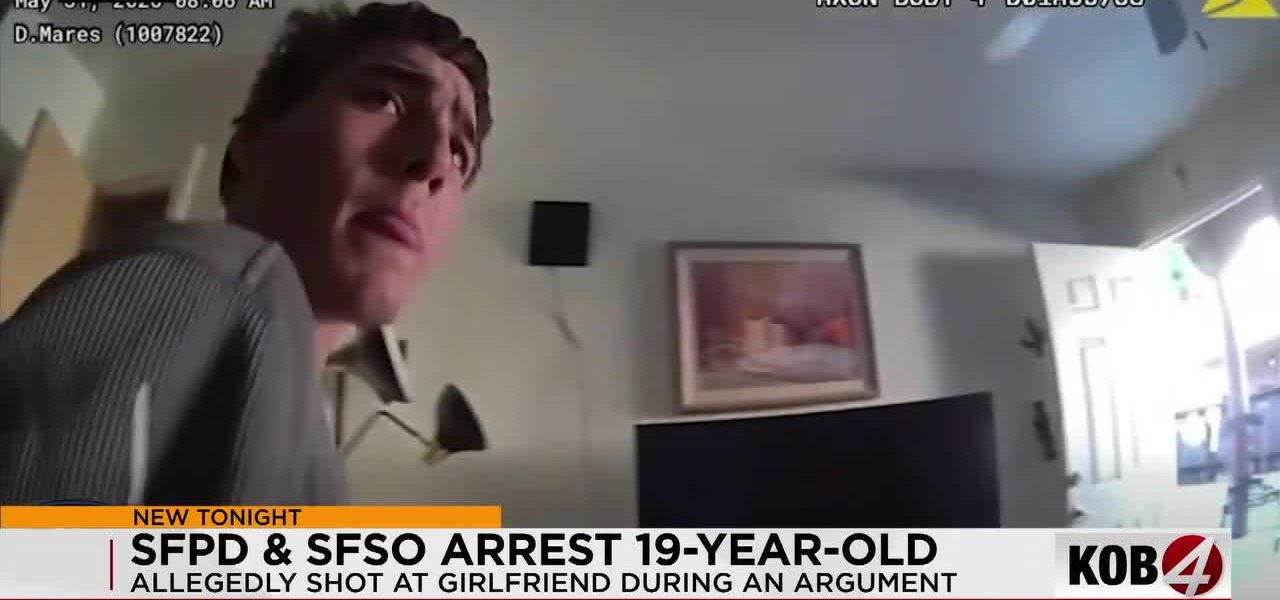
POLICY WIRE — Santa Fe, N.M. — It wasn’t the sound of gunfire that truly shattered Sunday’s pre-dawn quiet in Santa Fe, not at first. It was the aftermath, the familiar routine of law enforcement scrambling to contain a domestic upheaval that, in a city this size, plays out far too often. But for a few hours, at an apartment complex on Casa Rufina Road, the banal turned dramatic, drawing in police, a sheriff’s office, and eventually, a SWAT team to quell one man’s alleged tempest.
It began—as these things often do—with an argument. Around 2:30 a.m., according to authorities, 19-year-old Jerome Jeremy Gurule found himself in a heated confrontation with his girlfriend near Zepol Road. Details on what precisely sparked the friction remain hazy, though police said he fired a gun as another woman attempted to intervene. No one was struck, which, frankly, often feels less like good fortune and more like a mere statistical anomaly in these kinds of encounters. [QUOTE_PLACEHOLDER]
And then came the tell-tale signs: police discovered indicators of a physical struggle. They also recovered an expended shell casing, a small, cold metallic reminder of a boundary crossed. From there, the trail led to Gurule’s grandparents’ home—a common enough refuge, it seems, when private battles spill into the public domain and then, swiftly, require an escape hatch. That’s where things escalated.
When officers, with assistance from the Santa Fe County Sheriff’s Office, tracked down Gurule’s vehicle at the Casa Rufina Apartments, the situation pivoted. Law enforcement established a perimeter. They issued a reverse 911 alert, instructing residents to shelter in place. A residential building—once a haven of quiet sleep—became a tactical zone, bathed in the flashing blue and red of emergency services. It’s an inconvenient intrusion for neighbors, but it’s part of the standard playbook when dealing with armed, volatile situations. The grandparents, caught between family — and officialdom, reportedly emerged from the apartment. Then officers saw Gurule on the roof before he retreated back inside, barricading himself away from the looming confrontation.
The waiting game commenced. Barricaded suspects, even young ones, represent an unknown quantity, a pressure cooker. Police eventually mobilized SWAT—heavy-duty resources for a very domestic problem. They entered the apartment, found Gurule, and, rather unceremoniously, took him into custody without incident. The lack of further injury or struggle was a minor blessing in a situation that had already exhausted substantial public resources.
What This Means
This incident, on its face, seems like just another blotch in the local police blotter. A domestic dispute. Gun involved. A young man’s alleged bad judgment. But the implications are far more reaching. First, it highlights the pervasive nature of domestic disputes as a public safety issue. These aren’t just private affairs; they’re resource drains, consuming valuable police time, sheriff’s department efforts, and specialized tactical teams that are already stretched thin. Think about the taxpayer money tied up in a 2:30 a.m. SWAT deployment for a single 19-year-old. It’s a colossal sum for a single alleged act of domestic violence. And New Mexico has a problem; in 2022, there were 48,639 domestic violence reports in the state, according to data from the New Mexico Coalition Against Domestic Violence, representing a consistently high incidence rate.
📄 POLICY WIRE WHITEPAPER PUBLISHED: PAKISTAN'S NATIONAL SECURITY POLICY PRIORITIES
👉 READ BY CLICKING HERESecondly, it’s another chilling example of easy access to firearms amplifying the danger in domestic arguments. This isn’t just an American phenomenon, of course. Across South Asia, for instance—a region rife with social and political tensions—domestic disputes often take on tragic dimensions. While the specific legal frameworks and societal norms around firearm ownership differ wildly, the principle remains: when conflicts within the home collide with readily available instruments of serious harm, the outcomes are disproportionately brutal. Look at how honor killings, though culturally distinct, demonstrate extreme forms of domestic violence often rooted in perceived transgressions and social control, where the societal structures often fail to adequately protect vulnerable individuals. In both contexts—a suburb of Santa Fe and a village in Punjab, Pakistan—the home, meant to be a sanctuary, can become a battleground, with lasting ripple effects.
But beyond the immediate cost — and obvious danger, this kind of event reveals deeper societal cracks. It speaks to a persistent challenge in communities everywhere: how do we intervene earlier? How do we de-escalate without mobilizing small armies? The fact that a single, heated argument between two young people can necessitate a multi-agency, tactical response tells us something profound about the escalating stakes in personal conflicts, especially when weapons are part of the equation. It’s a harsh reminder that societal health isn’t just about grand economic policies or international treaties; it’s also about what happens, or nearly happens, in the dead of night, in ordinary apartments.
We’re talking about preventative measures here, really—about mental health resources, anger management, perhaps even basic mediation skills that could divert such scenarios from turning into potential felonies and, often enough, tragedies. This isn’t just about Gurule’s alleged actions; it’s about the entire complex infrastructure that has to respond when private lives erupt violently into public incidents. The sirens, the barricades, the taxpayer bill—it’s all a reaction to a failure at a much more fundamental, human level. As we often observe in the complicated geopolitical landscape of, say, Beijing’s urban planning issues or South Asia’s intensifying climate crisis, systemic problems have individual, often agonizing, consequences. This one is no different; it’s a micro-drama reflecting macro-failings.