
Ephemeral Justice: Zorro Ranch Memorial Vanishes, Echoing a Larger Fight Against Erasure
POLICY WIRE — SANTA FE, N.M. — It’s a macabre game of whack-a-mole, played out against the stark, unforgiving landscape surrounding Jeffrey Epstein’s infamous Zorro Ranch. No sooner had a freshly...

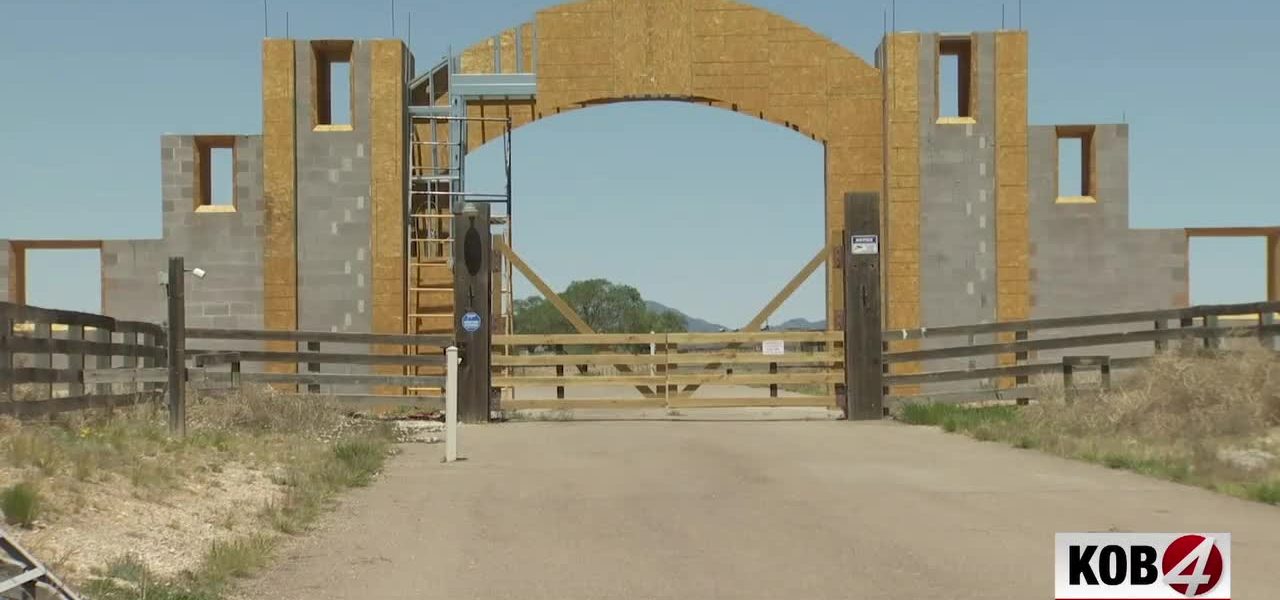
POLICY WIRE — SANTA FE, N.M. — It’s a macabre game of whack-a-mole, played out against the stark, unforgiving landscape surrounding Jeffrey Epstein’s infamous Zorro Ranch. No sooner had a freshly erected memorial for his victims staked its silent claim on public land near the estate than it vanished, spirited away under the cover of night, all within twenty-four hours. This isn’t just a petty act of vandalism; it’s a grim, repetitive exercise in erasure, and it asks pressing questions about who truly controls the narrative—and the ground beneath our feet—in the shadows of such profound human atrocity.
For organizers, this isn’t news, not really. It’s a familiar gut-punch, a disheartening echo of past removals. On a recent Saturday, dozens of dedicated souls—because you’ve got to be dedicated to keep showing up for this kind of fight—returned to the rural stretch in Santa Fe County, meticulously rebuilding what had been torn down before. Kathy Barber, one of the steadfast voices in this relentless effort, articulated the weary resolve that fuels their mission. “We’re going to keep on rebuilding. I mean, you know, the horrors that happened here have to stop,” Barber stated, her voice likely laced with an edge of exasperation. “We’ll be out here every time until we get justice and accountability, and people, we’re not going to stop.” It’s a declaration of war against forgetting, plain and simple.
But who’s doing the taking? That remains an open question, though suspicions hang heavy in the thin desert air. State Representative Tara Lujan, D-N.M., isn’t mincing words; she’s seen this cycle too many times. She’s pushing for accountability, pointing squarely at New Mexico law. “For the desecration of what we saw there, and the repeated desecration, there are laws in New Mexico that protect the descansos,” Lujan explained, referencing the traditional roadside memorials, often imbued with deep cultural and spiritual significance. “And this is clear to see that this is a repeated offense, and it’s a misdemeanor, and perhaps we need to make that a more severe charge.” She’s suggesting a legal hammer to hit what appears to be a persistent, defiant hand.
The law’s intent is clear: protect these markers of memory. Yet, the brazen speed of each removal suggests either an absolute disregard for it or a calculated confidence that consequences won’t stick. According to a 2022 analysis by the New Mexico Office of the State Attorney General, misdemeanor charges related to descansos or similar public monuments are pursued in fewer than 10% of reported incidents, suggesting a lax enforcement environment that emboldens repeat offenders. And this laxity—this inability or unwillingness to apply legal leverage—becomes a kind of permission slip for those intent on silencing the uncomfortable truths.
This localized battle in the arid expanses of New Mexico isn’t an isolated quirk; it’s a stark, American echo of a broader global phenomenon. Consider the enduring struggles in South Asia, where victims of political violence or forgotten conflicts—from the borderlands of Kashmir to the remote valleys of Balochistan—often find their memorials erased, their pleas for recognition stonewalled, and their historical narratives deliberately whitewashed by those in power. It’s a familiar playbook, played on different scales. Because for many, the mere existence of a memorial isn’t just an act of remembrance; it’s an assertion of power, a defiance of the idea that some horrors can just be swept under a dusty rug, their victims never truly acknowledged. The act of tearing down a small shrine, whether to a loved one or a victim of systemic abuse, is fundamentally an act of de-legitimization.
📄 POLICY WIRE WHITEPAPER PUBLISHED: PAKISTAN'S NATIONAL SECURITY POLICY PRIORITIES
👉 READ BY CLICKING HERENext on the agenda for those pushing back against this systematic erasure is the first public Epstein Truth Commission meeting, slated for Monday afternoon at the Roundhouse in Santa Fe. It’s the next formal step mentioned by organizers — and their supporters. These fault lines—legal, emotional, and social—run deep in New Mexico, often intertwining in unexpected ways. They highlight a community’s determination to reclaim its voice, its landscape, and its conscience from the long, dark shadow cast by Epstein’s presence.
It’s not simply about one memorial, is it? It’s about the stubborn, inconvenient memory of lives scarred, of abuses unaddressed. It’s a persistent assertion that even if you can’t fully dismantle the fortress of silence built around certain truths, you can, at the very least, leave a persistent, impossible-to-ignore marker right outside its gates—even if it has to be rebuilt every single day. The removal, then, isn’t a victory for whoever is behind it; it’s a testament to the organizers’ fierce tenacity. They know a fight for memory isn’t linear, — and they’re prepared for the long haul.
What This Means
This repeated desecration isn’t merely criminal mischief; it represents a disturbing, protracted psychological war between public memory and unseen forces, likely those invested in suppressing the lingering stain of Epstein’s legacy. Politically, the state’s slow-footed legal response—as highlighted by the statistic regarding low prosecution rates for similar incidents—erodes public trust and emboldens bad actors. Lujan’s call for stronger penalties, while laudable, speaks to a reactive stance rather than a proactive defense of victims’ spaces. Economically, while a localized issue, the ongoing saga surrounding Zorro Ranch, once a symbol of opulence and secrecy, continues to attract negative attention to Santa Fe, potentially impacting perceptions of accountability and justice in the region. There’s a certain market for truth, — and a stubborn refusal to let it take root exacts a cost, tangible and otherwise. It’s not just a sign disappearing; it’s a constant battle for the right to remember, and that, fundamentally, challenges the very notion of a functioning, just civil society, anywhere in the world.