


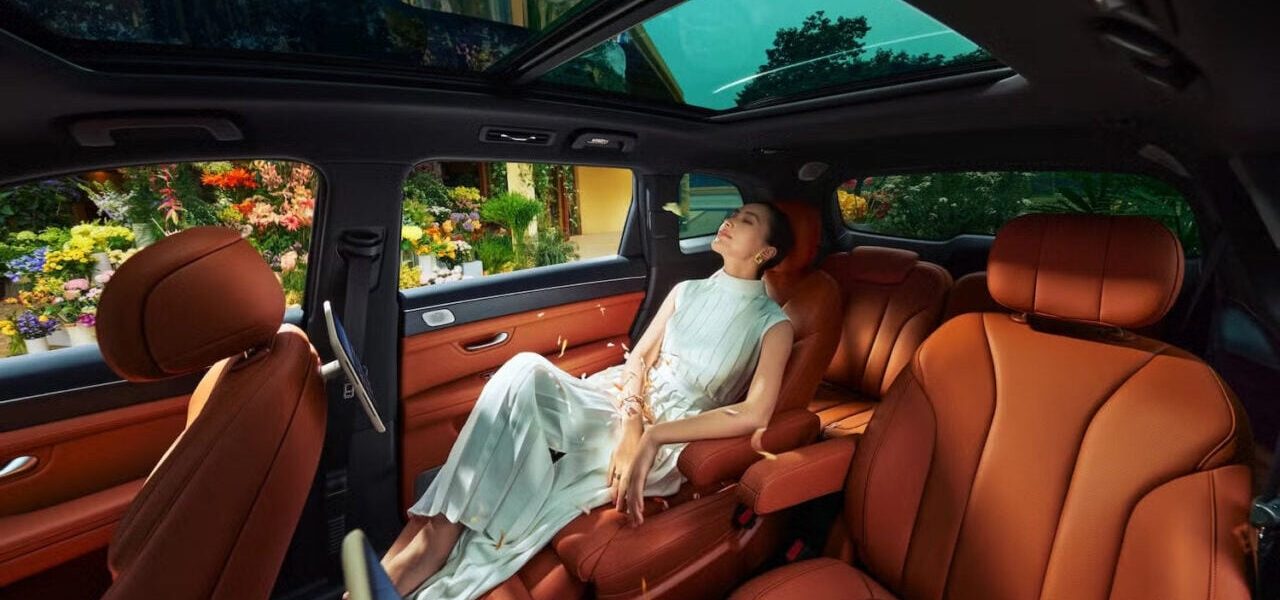
The Comfort Trap: Are China’s Luxe Car Seats Sedating Drivers, Or Just Western Regulators?
POLICY WIRE — Washington, D.C. — They’re soft. Plush. Ergonomic, even. And apparently, they might just kill you. We’re not talking about some existential threat from cheaply manufactured...

POLICY WIRE — Washington, D.C. — They’re soft. Plush. Ergonomic, even. And apparently, they might just kill you. We’re not talking about some existential threat from cheaply manufactured components, mind you, or an insidious Trojan horse disguised as automotive upholstery. No, the latest industrial skirmish involves something far more perplexing: China’s luxury car seats, which—according to an increasingly vocal chorus of Western regulators—are simply too damn comfortable to be safe. It’s an almost absurd proposition, isn’t it?
For decades, carmakers chased ever-increasing levels of interior opulence. Heated seats, massage functions, power lumbar supports – the whole shebang. Because, you know, what’s a luxury vehicle if it doesn’t cocoon its occupants in pampered bliss? But now, it seems the East has perfected this art to such a degree that it’s ringing alarm bells from Brussels to Detroit. The argument? That an excessively comfortable driver becomes an inattentive driver. A drowsy driver. And ultimately, a dangerous one.
It’s not just a whisper anymore; it’s a full-throated complaint echoing through policy chambers. Because, sure, safety is paramount. We get that. But for many, this particular line of reasoning smacks less of genuine concern for road fatalities and more of thinly veiled protectionism. China’s automotive industry, long a juggernaut in raw output, has been aggressively pushing into the premium segment. Their cars, brimming with cutting-edge tech and lavish interiors, are often priced significantly lower than established Western marques. And suddenly, comfort itself becomes a regulatory hurdle. It’s rich, really.
“We’re not targeting any single country’s products, but we must uphold stringent safety benchmarks,” stated European Transport Commissioner Isabelle Moreau earlier this week, her remarks widely seen as a diplomatic sidestep. “Data suggests driver fatigue contributes to roughly 10% of all serious road traffic accidents in the EU annually, and we can’t ignore anything that exacerbates that risk. Not even — and especially not — something as seemingly innocuous as seat comfort.” Her tone was firm. It sounded, frankly, a bit desperate.
But Chinese officials aren’t buying it. Not for a minute. Wang Lei, spokesperson for the China Association of Automobile Manufacturers, was typically blunt when queried by state media. “Our manufacturers adhere to international quality — and safety standards, often exceeding them. To suggest superior comfort is inherently dangerous is absurd. It’s a transparent attempt to stifle competition from innovative, high-quality Chinese brands.” He didn’t just push back; he practically shoved. He added, almost as an afterthought, “Our consumers appreciate innovation — and comfort. They shouldn’t be denied that because some older markets can’t keep up.”
What This Means
This bizarre regulatory wrangle signals several important shifts. First, it’s a clear indicator that the trade wars aren’t just about steel and tariffs; they’ve trickled down into the almost microscopic — comfort, of all things. Western powers, struggling to compete with China’s efficiency and escalating product quality, are searching for any lever they can pull. And because genuine quality issues are getting harder to find, they’re inventing new ones, morphing a desired feature into a bug.
📄 POLICY WIRE WHITEPAPER PUBLISHED: PAKISTAN'S NATIONAL SECURITY POLICY PRIORITIES
👉 READ BY CLICKING HEREEconomically, if these regulations stick, it means increased costs for Chinese manufacturers (retooling, redesigning for less comfort – an ironic expenditure), and potentially, higher prices for consumers. It also impacts global supply chains, including nations like Pakistan, which have historically relied on components and assembly from both Western and Eastern markets. Imagine auto manufacturers in Karachi or Lahore having to choose between economically viable, comfort-rich Chinese components and more expensive, ‘safety-compliant’ Western ones. For countries on the cusp of significant auto market growth, like Pakistan or Bangladesh, this presents a particularly sticky wicket. They need affordable cars with features consumers actually want. The optics aren’t great, either; it looks like Western economies are dictating what level of luxury is acceptable for a developing world customer. This isn’t just about car seats; it’s about whose standards prevail in an increasingly fragmented global economy.
It reflects a deeper tension: the West’s diminishing ability to dictate global product norms purely on the strength of its innovation or manufacturing prowess. China’s rising tide isn’t just economic; it’s cultural, technological. And when you can’t beat ’em on price or features, you legislate against their very success. It’s an age-old trick, yes. And we’re watching it play out in the ergonomic contours of a luxury sedan seat.
And then there’s the broader policy question: Where does the line get drawn? Are too many infotainment screens next? Too powerful engines that encourage speeding? Because once you start legislating against a subjective perception of ‘too comfortable,’ you’ve essentially opened a Pandora’s Box of regulatory overreach. It won’t stop with seats; it never does.
For more on the delicate balance of geopolitics and commerce, you might be interested in our analysis on Moscow adjusting to a new geo-chessboard, or perhaps the echoes of urban tides in Detroit’s evolving economy.