

Father-Son Football Saga Takes Unexpected Turn as Spalletti Jr. Opts for Genoa
POLICY WIRE — Turin, Italy — Not every family reunion ends with shared victory parades. Sometimes, despite the celebrated patriarch pulling strings and wielding influence, the junior member charts an...

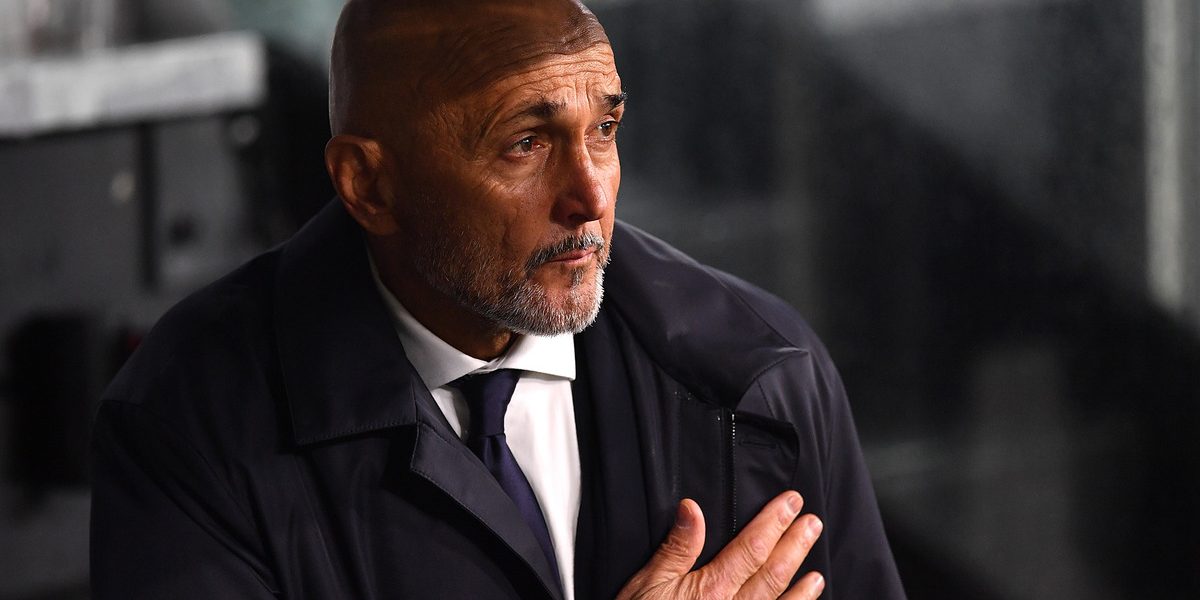
POLICY WIRE — Turin, Italy — Not every family reunion ends with shared victory parades. Sometimes, despite the celebrated patriarch pulling strings and wielding influence, the junior member charts an altogether different course. So it goes in the fiercely insular, yet utterly global, arena of top-flight Italian football, where Federico Spalletti—son of national team manager Luciano Spalletti—is ditching the gilded cages of Juventus for what he clearly believes is a grander stage at Genoa.
It’s a peculiar twist, this, considering Luciano had only recently installed himself as Juventus’s head coach back in October 2025, after the rather abrupt dismissal of Igor Tudor. A quick glance at the papers at the time hailed it as a domestic dream scenario; a father and son sharing the same venerable black-and-white stripes, albeit with one calling the shots from the dugout and the other sifting through tactical minutiae and player analytics. But seven months, it turns out, is a lifetime in this game. Or, more accurately, merely a moment.
Federico, 31, isn’t your garden-variety ex-pro trying his hand at scouting. He’s a brainy type, armed with a master’s in analytical philosophy from Switzerland. Not the typical CV one expects when mapping out a career in Serie A’s often-gritty backrooms, is it? But, he’s insisted, football runs in the blood. “My passion for football has never left me; in fact, I’ve increasingly combined football and philosophy through the study of tactics, statistics, and player analysis,” he declared once on his LinkedIn, articulating a nuanced approach that seems to fly in the face of pure nepotism.
His path to Turin wasn’t a direct consequence of his father’s fame. After securing scouting badges from Coverciano in 2022—the very cradle of Italian footballing thought—Spalletti Jr. cut his teeth at Udinese as a scout in 2023. A year on, Juventus snapped him up. It was only later that fate, or perhaps careful career planning by others, brought his dad into the fold. But a father-son tandem, even when well-intentioned, often operates under an uncomfortable glare, don’t it?
And now, he’s off to Genoa. Why? The official line from the Turin whisper networks, like those at La Gazzetta dello Sport, remains frustratingly vague. Perhaps a promise of a more substantial role? Or was it simply the realization that working under his father, however natural, carried a particular weight he no longer wished to bear? You can’t exactly climb the ladder stealthily when your old man is sitting in the top office, even if your specific role is miles removed from his day-to-day. Family loyalty’s one thing, but ambition—true, burning ambition—often demands a clear, unencumbered path.
“Federico’s decision reflects his independent spirit and commitment to forging his own professional identity,” a spokesperson for Genoa was reported saying, acknowledging the whispers but pivoting to professionalism. Luciano Spalletti, for his part, has always kept a professional distance on such matters. “My focus is entirely on Juventus, on the club’s objectives and the hard work ahead,” he stated recently, maintaining the stoic public persona expected of national team bosses, a clear if unsaid acknowledgement of his son’s career moves. “Every individual must pursue their path.” It’s classic Spalletti. Concise. Resolute. A touch impenetrable.
📄 POLICY WIRE WHITEPAPER PUBLISHED: PAKISTAN'S NATIONAL SECURITY POLICY PRIORITIES
👉 READ BY CLICKING HEREIt’s worth remembering that this isn’t just an Italian narrative. The intertwining of family and business, often seen as a virtue, can just as easily become a source of friction in high-stakes environments globally—from the boardroom dynasties of Karachi to the mega-clubs of Europe. Professional football is big business. As the geopolitics of passion illustrates, these internal club decisions ripple across fan bases extending well beyond national borders, impacting viewing figures and merchandise sales even in distant lands like Pakistan, where Serie A enjoys considerable viewership. One doesn’t simply make career moves in the top echelons of a €2.7 billion industry—a figure representing Serie A’s collective revenue in 2022/23, according to Deloitte’s Annual Review of Football Finance—without some larger, less obvious forces at play.
What This Means
This move, while seemingly minor in the grand tapestry of European football, highlights a fascinating tension between legacy, filial expectation, and individual career ascendancy. In an era where football has transformed into a colossal global enterprise, meritocracy, not mere bloodlines, increasingly governs professional trajectories. For Federico, stepping out of his father’s direct orbit—even within the broader, all-consuming world of Serie A—could very well be a calculated maneuver to establish his own distinct reputation.
Economically, it underscores the constant churn of talent, not just on the pitch but in the analytical and scouting departments too. Clubs are essentially talent factories and management consultancies rolled into one, and competition for astute minds is fierce. Genoa, a club with its own storied past and renewed ambitions, likely offered a role with greater autonomy or a clearer path to higher leadership. And because, ultimately, what’s a scout without the space to, well, scout?
Politically (within the club’s micro-climate, that’s), it probably spares Juventus a potential headache. Accusations of preferential treatment, however unfounded, are easy fodder for the Italian press, an entity always hungry for intrigue. Better to avoid that entirely, particularly for a club like Juve, which knows a thing or two about intense media scrutiny. It’s a pragmatic, if perhaps personally challenging, decision for both father and son, showcasing that in professional sport, the personal often takes a back seat to strategic maneuverings.