

Europe’s Nuclear Tightrope: Zaporizhzhia’s Latest Scare Ignites Old Fears
POLICY WIRE — Vienna, Austria — The world breathed, then held its breath again. Another drone, another explosive tremor against the walls of Europe’s largest nuclear power facility, the...

POLICY WIRE — Vienna, Austria — The world breathed, then held its breath again. Another drone, another explosive tremor against the walls of Europe’s largest nuclear power facility, the Zaporizhzhia Nuclear Power Plant. It wasn’t the apocalyptic detonation some feared, not this time anyway, but the sheer audaciousness of the strike – landing uncomfortably close to a reactor building, reportedly damaging protective structures – served as a grim reminder. A few hours of nerve-wracking silence later, the international atomic watchdog confirmed it: radiation levels were, mercifully, normal. But doesn’t this recurring ballet with catastrophe get old?
For weeks, for months, even for years, the six reactors of Zaporizhzhia have stood like a geopolitical pressure cooker in Ukraine’s occupied territories. They’re a bizarre trophy of war, producing little power but generating immense anxiety across continents. This latest incident, blamed by Ukraine on Russia and by Russia on Ukraine – a predictable finger-pointing contest we’ve seen before – shows no party has found a way to truly neutralize the threat of a localized meltdown spiraling into something far nastier.
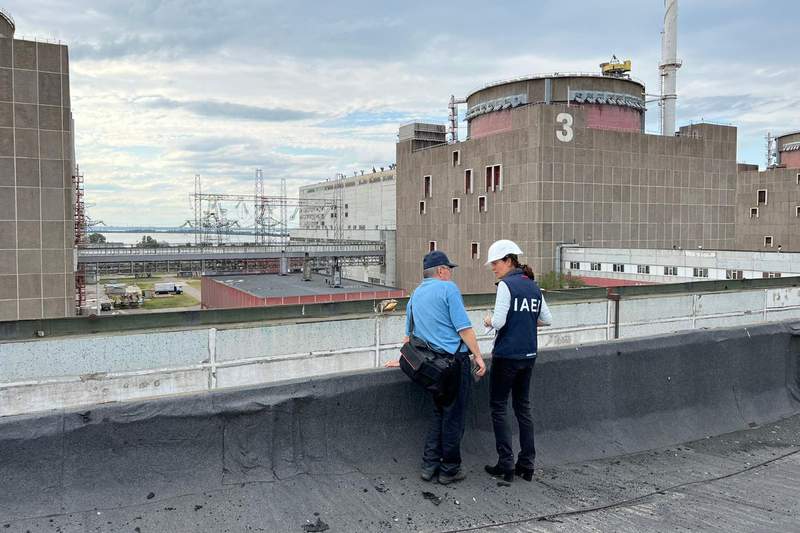
And so, the International Atomic Energy Agency (IAEA) once more played the role of global fact-checker. Rafael Grossi, the agency’s director general, didn’t mince words. He called the attacks “reckless,” a grim understatement if there ever was one. “We’ve been at this edge for too long,” Grossi reportedly stated to Policy Wire. “It’s not just a warning; it’s a desperate cry for common sense. The world watches, expecting us to conjure miracles when what we need is an enforceable agreement not to target these plants.” His exasperation, you can’t help but feel, isn’t feigned.
But common sense, it seems, isn’t high on the list of strategic assets in this particular theater of conflict. Reports from the IAEA inspection teams detailed at least three direct hits, prompting another round of international condemnation. The plant, seized early in the invasion, represents a terrifying precedent for warfare in the 21st century—one where the ghost of Chernobyl always hovers, just out of frame. Consider the pre-war landscape: this gargantuan plant once supplied approximately 20% of Ukraine’s total electricity. That figure, according to reports by the Energy Information Administration (EIA), represents a substantial slice of the country’s grid, now mostly offline and existing solely as a looming danger.
Because the strategic and psychological impact of striking such a facility, regardless of the ‘all clear’ on radiation, reverberates. It tells every nation with a reactor, particularly those in politically volatile regions like Pakistan or South Asia, that their civilian nuclear infrastructure could be fair game. It’s a sobering prospect for a country like Pakistan, for instance, which relies on nuclear power for a growing segment of its energy mix, facing its own regional tensions. You’d think nations might learn a thing or two from these European close calls.
Ukrainian energy officials, like Minister Herman Halushchenko, haven’t been shy about voicing their outrage. “Russia’s strategy isn’t just about destroying infrastructure; it’s about weaponizing dread, turning a critical energy source into a bomb with a hair trigger,” Halushchenko is believed to have told local media, reflecting a government weary of international hand-wringing. This endless cycle of strike-and-condemn—it isn’t solving anything. It’s a macabre dance, with millions of lives as potential collateral.
📄 POLICY WIRE WHITEPAPER PUBLISHED: PAKISTAN'S NATIONAL SECURITY POLICY PRIORITIES
👉 READ BY CLICKING HEREWhat This Means
The Zaporizhzhia incidents, recurrent as they’re, consistently throw into sharp relief the glaring lack of a robust international mechanism to safeguard critical infrastructure in active war zones. This isn’t just a Ukrainian or Russian problem; it’s a global policy vacuum. Politically, the attacks serve as potent propaganda, each side accusing the other while painting themselves as victims. Economically, even without a catastrophic meltdown, the plant’s continued volatility ensures it remains offline. That prolongs Europe’s dependence on more expensive, often dirtier, energy sources—an unwelcome strain on budgets already stretched thin. Think about the atomic dice roll Europe’s already taking, trying to navigate this energy crunch.
For states outside the immediate conflict, especially those in regions susceptible to similar instability—South Asia immediately comes to mind, with nations like India and Pakistan possessing advanced nuclear programs—Zaporizhzhia is a chilling precedent. It demonstrates how readily nuclear installations can become tools of strategic leverage, or worse, targets. The incident highlights not just the risk of radiation release but also the systemic failure of diplomacy and deterrence to prevent such occurrences. It’s a wake-up call, frankly, for renewed focus on arms control and non-proliferation treaties that feel, at present, rather quaint.
The global community seems stuck in a loop. They’ll condemn the latest hit. They’ll call for a demilitarized zone. But they aren’t, ultimately, stopping these episodes. And that, more than any localized radiation reading, should keep us all up at night. The longer this goes on, the higher the odds—it’s just math, isn’t it?—that one day, we won’t get a comforting ‘normal’ reading.