

Cross-Community Unity Surfaces Amidst NYC Academic Storm, Defying Divisive Echoes
POLICY WIRE — NEW YORK — It wasn’t the usual Monday in Manhattan. Forget the predictable churn of city life, the endless traffic, or the familiar rhythm of commerce. Instead, something far more...

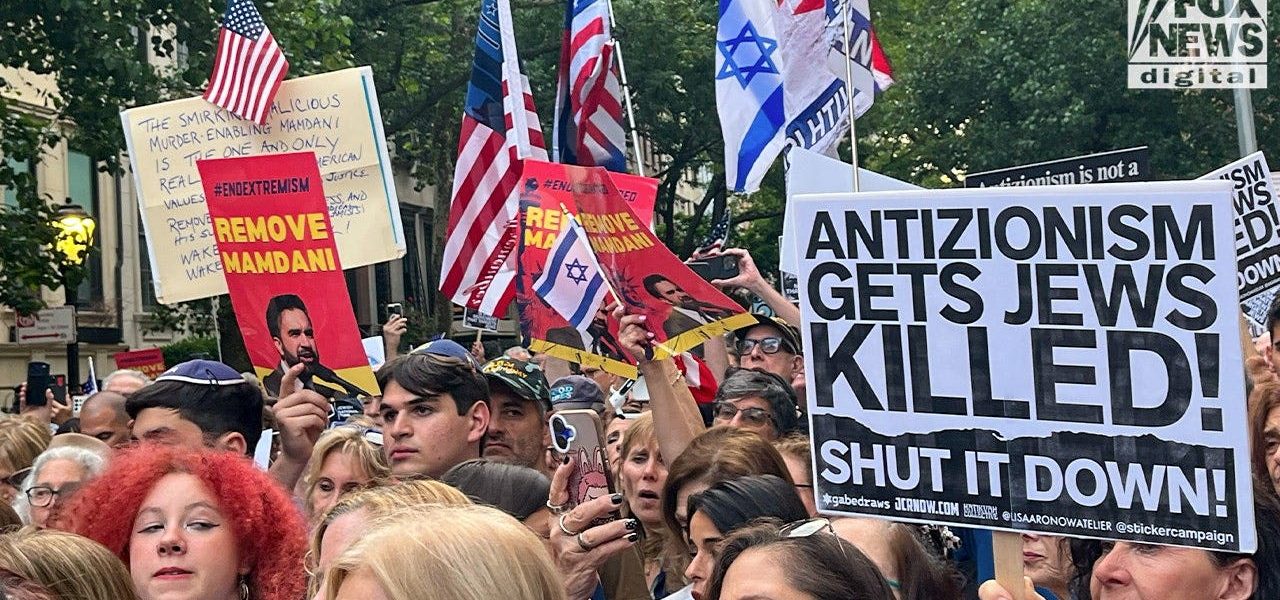
POLICY WIRE — NEW YORK — It wasn’t the usual Monday in Manhattan. Forget the predictable churn of city life, the endless traffic, or the familiar rhythm of commerce. Instead, something far more potent, and frankly, a bit unsettling, simmered just beneath the surface of the asphalt jungle. A convergence of faith—Jewish, Muslim, Christian—rarely seen in such open solidarity, especially not against an academic figure whose ideas, they felt, threatened the delicate fabric of communal peace. It wasn’t a riot; it wasn’t even angry, not really. It was something deeper, a quiet yet firm declaration that certain boundaries, once thought secure, were now permeable.
But how do these distinct communities, often siloed, often with their own simmering geopolitical frustrations, suddenly find a shared grievance strong enough to pull them onto the same street corner? It turns out, when the perceived threat strikes close to home—touching the sanctity of shared public spaces and basic human dignity—those long-standing divisions can, momentarily at least, blur. We’re witnessing something pretty novel here, folks. It’s a snapshot of a city struggling to reconcile academic freedom with community outrage, where intellectual debates bleed into raw, everyday anxieties. It’s not the New York City I knew, someone at the rally quietly observed.
The rallying point, ostensibly, was scholar Mahmood Mamdani. The details around his presence—or influence—have become a lightning rod, drawing criticism from an array of voices across the theological spectrum. The assembly was a stark illustration that New York’s polyglot identity isn’t always harmonious, isn’t always the shining metaphor for diversity we sometimes paint it to be. No, it’s gritty. It’s contested. And occasionally, it boils over into public protest, a visible crack in the often-touted veneer of urban coexistence.
Organizers articulated a distinct worry, expressing fear that the divisive rhetoric would inevitably spill over. One Jewish community leader articulated the deep-seated concern, stating [QUOTE_PLACEHOLDER]. He’d seen this movie before, hadn’t he? A Muslim speaker echoed a similar sentiment, highlighting the universal nature of the anxieties involved, noting [QUOTE_PLACEHOLDER], because when tensions escalate, everybody suffers. And they’re right. History, bless its heart, rarely offers new scenarios, just new actors.
A Christian pastor from Queens, a man whose parish mirrors the borough’s extraordinary diversity, put it plainly: the goal was simply to remind institutions of their responsibility. He shared his observations from years on the ground, stressing that [QUOTE_PLACEHOLDER], suggesting a call for empathy often missing in the colder halls of academia. That’s a fair point. But also, it’s a desperate plea to protect a fragile peace many of them work so hard to cultivate, day in and day out, in communities far from the rarefied air of university lecture halls.
The city’s Muslim population, a significant and increasingly influential demographic—especially those tracing their roots back to South Asia, places like Pakistan and Bangladesh—are acutely aware of the global political reverberations that land squarely on their doorstep. This particular segment often navigates a precarious line, balancing deep religious and cultural ties to their homelands with a fierce loyalty to their adopted home. Their presence at such an interfaith gathering speaks volumes about how locally entrenched even internationally charged debates become. It also hints at a broader yearning for stability, for belonging, beyond the reach of geopolitical proxy battles.
📄 POLICY WIRE WHITEPAPER PUBLISHED: PAKISTAN'S NATIONAL SECURITY POLICY PRIORITIES
👉 READ BY CLICKING HEREIn fact, recent Pew Research Center data (2023) revealed that over 75% of New York City residents consider interfaith dialogue and community-building efforts to be either important or very important for maintaining urban cohesion. So these folks on the street? They’re not just a fringe element. They’re a palpable force reflecting broader civic concern. It’s a city pushing back, demanding more from its institutions than just a stage for academic abstraction.
What This Means
The unexpected interfaith unity observed at this rally, however specific its immediate trigger, signals a broader exhaustion with politicized identity politics. People are tired, plain — and simple, of being pitted against each other. It implies that for a significant portion of New Yorkers—and, let’s be honest, citizens in similar melting pot urban centers globally—the perceived threats to communal harmony now outweigh the divisions of their individual faiths. It’s less about theological agreement and more about practical coexistence; a tactical alliance born of necessity rather than theological consensus.
Economically, persistent internal strife—even the academic kind—can chill local enterprise and deter investment in neighborhoods perceived as unstable. Businesses thrive on predictability, you see. When residents feel unheard, or worse, marginalized by intellectual discourses that seem to fuel antagonism rather than understanding, they’ll inevitably vote with their feet or their wallets. It’s simple market dynamics. On the political front, such coalitions also have the potential to wield considerable, unexpected power, forcing policymakers to reconsider narratives that favor ideological purity over tangible peace. Because when diverse groups, particularly those representing substantial voting blocs, find common ground, politicians, frankly, start paying attention. It could, dare I say it, even influence the tenor of broader national conversations around free speech and social responsibility in public forums.