


NBA’s Shifting Crown: Parity’s Peculiar Reign Challenges Dynastic Assumptions
POLICY WIRE — Washington D.C., USA — In an era often characterized by entrenched power and predictable outcomes, the seemingly frivolous world of professional basketball offers a peculiar...

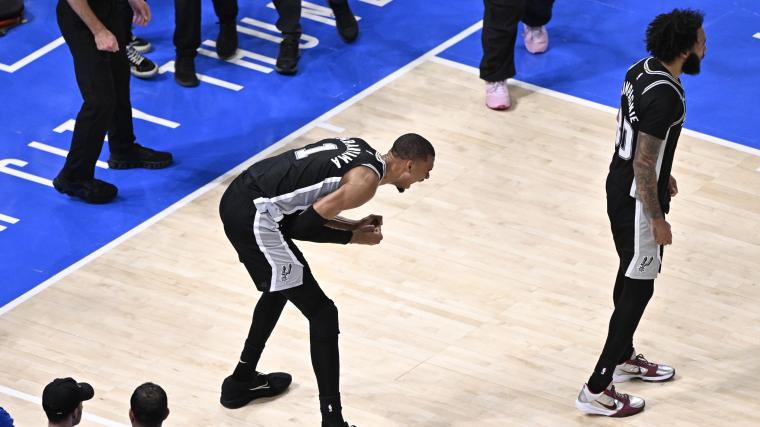
POLICY WIRE — Washington D.C., USA — In an era often characterized by entrenched power and predictable outcomes, the seemingly frivolous world of professional basketball offers a peculiar counter-narrative. Forget the usual talk of dynasties and enduring empires; in the National Basketball Association, the crown’s become something of a hot potato. With the San Antonio Spurs clinching a hard-fought Game 7 victory over the Oklahoma City Thunder in the Western Conference Finals, a new champion is, yet again, guaranteed to lift the Larry O’Brien Trophy come June. This isn’t just a fun tidbit for sports fanatics; it’s an unprecedented eight different winners in eight consecutive seasons, a churn that mirrors, perhaps ironically, a broader global craving for—or discomfort with—distributed power.
It’s a far cry from the LeBron James era, when his presence alone seemed to reserve a spot in the Finals for nearly a decade. And it certainly isn’t the Golden State Warriors of old, a formidable beast that seemed almost unbeatable for years. But the NBA landscape? It’s profoundly altered, morphing into a realm where predictability is a relic. That means a collective sigh of relief for fans whose teams have traditionally been considered also-rans, and a sharp reminder to ownership that perpetual dominance, much like a steady global order, can be awfully fleeting.
“We’ve worked tirelessly to ensure that every franchise has a realistic path to contention,” stated NBA Commissioner Adam Silver recently, his voice betraying a hint of triumph as he spoke to a gathering of league executives. “This isn’t just good for the balance sheets; it’s intrinsically good for the spirit of the game.” Silver’s emphasis reflects a carefully crafted league strategy—one that encourages competitive parity through revenue sharing, salary caps, and draft mechanisms, consciously trying to avoid the perennial winner-take-all scenarios seen in other ventures, sporting or otherwise. Because if only a few ever win, a good chunk of the audience simply disengages. And that’s a direct hit to the bottom line, isn’t it?
But the scramble at the top presents its own set of challenges. “It’s maddening, frankly,” quipped Mark Cuban, outspoken former owner of the Dallas Mavericks, his candor rarely surprising. “You pour hundreds of millions into a team, thinking you’ve built something that can last, only to find the target moves every single year. But, I suppose it’s great theater. Everyone loves an underdog, until their team becomes one again.” This high-stakes carousel isn’t just about who wins next year; it’s fundamentally reshaping how franchises strategize, how player agents negotiate, and crucially, how media rights deals are structured. The ‘super-team’ model? It seems increasingly antiquated, a casualty of a more equitable battlefield.
The numbers don’t lie, either. Since 2019, nearly half—43.3%—of all NBA franchises have punched a ticket to the Finals, according to a recent analysis by the Sports Business Journal. That’s a staggering dispersal of elite opportunity, unparalleled in many other professional leagues globally. It suggests a democratization, if you will, where the path to glory is broader, more accessible. Consider the rapt attention this league commands from audiences stretching far beyond North America. In a place like Pakistan, where cricket reigns supreme but basketball’s global allure steadily grows, the notion of fresh victors year after year isn’t just good entertainment; it’s a subtle reinforcement that the powerful can indeed be unseated, that new stories can be written, that hope isn’t perpetually tethered to the same old names. That resonance, believe it or not, carries weight.
📄 POLICY WIRE WHITEPAPER PUBLISHED: PAKISTAN'S NATIONAL SECURITY POLICY PRIORITIES
👉 READ BY CLICKING HEREWhat This Means
This prolonged era of competitive parity in the NBA signals more than just an exciting few years for basketball enthusiasts. Economically, it represents a healthier, more distributed ecosystem, broadening fan bases and revenue streams across more cities rather than concentrating wealth and interest solely within a handful of perennial contenders. The novelty of new champions fuels broader merchandise sales, stimulates local economies linked to team success, and keeps casual viewers — the demographic crucial for media ratings — engaged year after year. Politically, this sporting trend, while seemingly minor, reflects a quiet, ongoing shift away from established hegemonies that has been a defining feature of the early 21st century. Where one might expect dynasties to form and dominate through sheer capital or established advantage, the NBA has inadvertently (or intentionally, depending on whom you ask) built a model resistant to singular, unwavering power. It’s a microcosm illustrating how distributed power, while sometimes appearing chaotic, can ultimately cultivate greater engagement and perhaps, a more vibrant, if less predictable, future for the entire system.
The lesson here isn’t just for team owners or star players; it’s a compelling case study for any institution battling the gravitational pull of consolidation. The league’s success hinges on maintaining competitive intensity without becoming overly top-heavy—a delicate balancing act that some national economies and geopolitical power blocs might do well to observe. You can’t just rely on the same big players all the time. For deeper insights into similar shifts, check out Policy Wire’s recent report on global economic volatility or our piece on emerging trends in franchise valuations across industries.