


Beijing’s Boardroom Battleground: The Quiet Tactician vs. The Tech Evangelist
POLICY WIRE — Washington, D.C., U.S. — The future of global artificial intelligence, it turns out, might just be decided not solely by compute power, but by the subtle dance of executive personas...

POLICY WIRE — Washington, D.C., U.S. — The future of global artificial intelligence, it turns out, might just be decided not solely by compute power, but by the subtle dance of executive personas within China’s labyrinthine tech ecosystem. You see, while Western boardrooms often value a uniform corporate polish, Beijing’s highly nuanced business landscape tolerates—even rewards—a more varied repertoire. It’s a stage where two semiconductor titans’ chief executives, with styles as disparate as chalk and silicon, command distinct forms of attention.
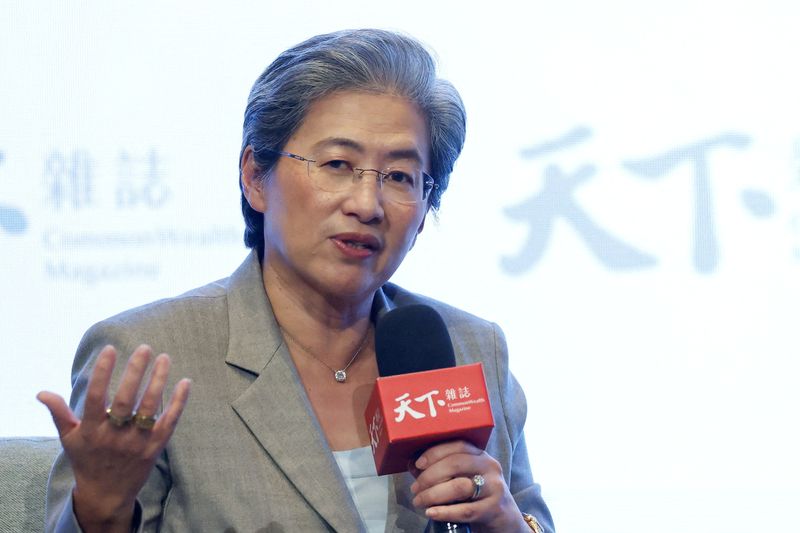
Lisa Su, at the helm of AMD, cultivates an air of focused professionalism. Her visits to Chinese tech hubs don’t typically ignite the digital chatter mills with viral moments or ostentatious pronouncements. Instead, they’re marked by methodical engagements, often behind closed doors—precisely the sort of quiet, substantive groundwork many within the Chinese bureaucracy and its state-backed enterprises often favor. She embodies a steady hand, someone whose pronouncements, when made, are measured, almost engineer-precise. It’s a long game, she knows, one played not with flashy marketing but with dependable product cycles and strategic partnerships. [QUOTE_PLACEHOLDER]
And then there’s Jensen Huang, Nvidia’s ringmaster. He’s quite another creature altogether. Huang, with his signature leather jacket, operates on a completely different frequency. His appearances in China aren’t mere business trips; they’re events. He’ll stride onto stages, address crowds with a rockstar’s confidence, and engage with local tech communities with a theatrical flourish that could frankly make a marketing executive blush. It’s a calculated act, or maybe it isn’t—who can tell with true showmanship? But it certainly leaves an impression, a very loud, very confident impression of a man leading a company that’s become virtually synonymous with the current AI explosion.
But does this theatricality resonate universally? Not always. For many long-term observers, particularly in the more staid corridors of power, such overt displays can sometimes be seen with a certain reserve, even suspicion. Building enduring trust often demands a less ebullient, more consistent demeanor. The tech world here, let’s remember, is heavily entwined with national development strategies. They’re looking for partners, not just product peddlers. Recent market reports from industry analysts suggest that companies emphasizing long-term R&D collaboration and local talent development tend to secure significantly deeper penetration into China’s industrial and governmental sectors, capturing an estimated 15-20% higher market share in critical infrastructure contracts than those focusing predominantly on consumer-facing marketing.
The juxtaposition of these two leadership styles in a market as strategically important as China offers a masterclass in global business diplomacy. Su’s approach appears geared towards fostering deep, often government-to-government (or at least state-enterprise-to-corporation) relationships, appealing to the emphasis on stability and technical competency. Huang, conversely, aims directly for the imagination, creating a fervent ecosystem of developers and enthusiasts, fostering a community that drives demand from the ground up.
📄 POLICY WIRE WHITEPAPER PUBLISHED: PAKISTAN'S NATIONAL SECURITY POLICY PRIORITIES
👉 READ BY CLICKING HEREYou can’t really say one method is inherently superior, not in a place like China, where internal dynamics shift with remarkable velocity. Both have certainly carved out formidable market positions. Yet, the subtle cultural currents shouldn’t be overlooked. A preference for a leader who moves with discretion over one who embraces public spectacle isn’t just about personal taste; it can be about aligning with perceived national virtues of humility and collective effort—values often reiterated in policy dialogues, echoing sentiments sometimes found in Pakistan’s own tech sector, where deference to authority and collaborative long-term visions can be prioritized over aggressive individual branding. This cultural consideration shapes the way business relationships form and, critically, how they endure regulatory shifts and geopolitical pressures. But ultimately, they’re both selling cutting-edge silicon to a market desperate for it.
What This Means
The divergent paths chosen by Lisa Su and Jensen Huang in China aren’t merely corporate theatrics; they carry substantial political and economic implications, reverberating well beyond their quarterly earnings calls. Politically, Su’s understated engagement fits snugly into China’s broader drive for technological self-reliance. Beijing actively courts foreign companies willing to engage in deep-seated, often joint, research and development efforts, sharing knowledge, and committing to local presence, rather than simply importing finished goods. Her quiet approach might signal a willingness for that kind of substantive collaboration, potentially insulating AMD from some of the sharper edges of U.S.-China tech rivalry, positioning it as a more ‘reliable’ long-term partner.
Economically, this dance directly impacts market access — and technological indigenization. Huang’s flamboyant presence, while effective for brand-building and rallying developers, could, in some governmental eyes, be perceived as less aligned with China’s desire to control its own technological destiny. It’s a vision that extends far beyond buying chips; it’s about building foundational capabilities. Both strategies aim for a slice of China’s immense AI pie, a market projected to reach hundreds of billions of dollars within the decade. The choice isn’t just about selling; it’s about influencing the very architecture of China’s future. For Washington, watching these dual approaches unfold offers insights into how Western tech giants can navigate an increasingly complex landscape where geopolitical tensions continually reshape market realities. For Silicon Valley, it’s a living case study in adapting corporate strategy to fit profoundly different cultural and political contexts, proving that sometimes, less flash means more substance—at least to those holding the purse strings.