


The Diamond Diplomacy: College Softball and America’s Soft Power Play in the Global Arena
POLICY WIRE — Oklahoma City, USA — When millions tune into ESPN for a softball game, it’s not just about pitching duels or timely hitting; it’s a quiet testament to the enduring — and sometimes...

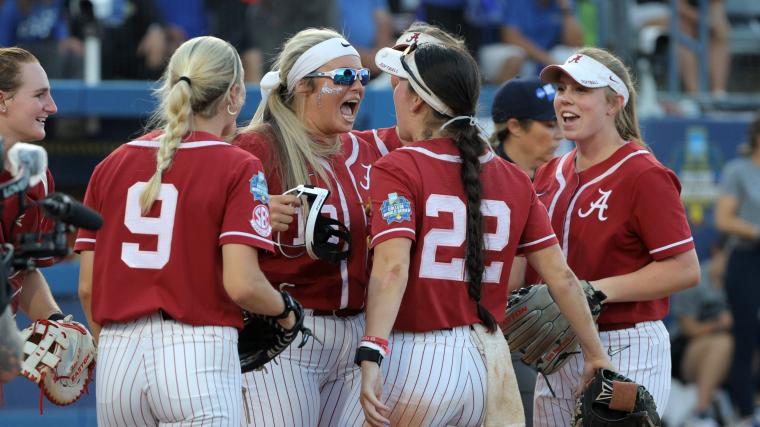
POLICY WIRE — Oklahoma City, USA — When millions tune into ESPN for a softball game, it’s not just about pitching duels or timely hitting; it’s a quiet testament to the enduring — and sometimes perplexing — economics of American culture. This past Saturday night in Oklahoma City wasn’t just another skirmish on the diamond between Nebraska and Alabama; it was a snapshot of a sprawling, self-funded ecosystem that funnels billions into collegiate athletics, a spectacle many outside its borders might struggle to comprehend. The Women’s College World Series (WCWS), at its core, represents a policy triumph—or perhaps, an economic curiosity—of American public life.
It was a showdown with a semifinal berth dangling like bait. Two collegiate titans, each clawing for an advantage. Alabama’s Crimson Tide, a name synonymous with athletic dominance, entered with a historical edge, boasting that ‘Alabama is 3-0 over Nebraska since 2010’. That kind of track record, in any competitive sphere, signals an ingrained institutional capacity. But it isn’t just about the current score. No. 1 Alabama faced off against No. 4 Nebraska, the official box score revealing a definitive 5-1 victory for the Crimson Tide. A 3-0 initial burst in the first inning pretty much settled things, leaving Nebraska to chase ghosts and a solitary run later. [QUOTE_PLACEHOLDER]
And what a chase it was. We’re talking about an enterprise where university departments, often seen as ivory towers, become profit centers. You wouldn’t find quite the same robust, self-sustaining (mostly) infrastructure for women’s sports in many parts of the world, certainly not in the scale and scope of American universities. But here, the energy is palpable, the investment visible. These athletes, many on scholarships that defray costs climbing into the tens of thousands annually, are both students and high-performance individuals, navigating an almost professional landscape.
This event, televised on ESPN, highlights a distinct cultural product the U.S. offers the world. It’s a form of soft power, really. We see a parallel with the burgeoning sports economies in other nations, but with stark differences in development, particularly for women’s athletics. Think about it: a country like Pakistan, for instance, a nation grappling with developing its foundational sports programs for both genders, might look at the NCAA and see something both aspirational and almost otherworldly in its resource allocation and mass engagement. How many Pakistani young women, for instance, get to play at stadiums filled to capacity, with broadcast deals securing national viewership for what’s, ostensibly, an amateur collegiate event?
But the comparison isn’t meant to diminish. Instead, it illuminates the chasm in approach and, yes, available capital. It’s about cultural priorities, deeply embedded in national spending patterns. The spectacle in Oklahoma City represents decades of cultivation, financial backing, and societal encouragement for young women in sports—a pathway not nearly as paved in many parts of South Asia or the broader Muslim world. Here, it’s a cultural given; there, it’s often an uphill battle against tradition, resource scarcity, and sometimes, political will.
Casual observers often miss the intricate web behind such events. It’s not merely athletic prowess; it’s also a demonstration of administrative efficiency, brand management, and the lucrative convergence of education and entertainment. For schools like Alabama, ‘the Crimson Tide will try to advance for its first Women’s College World Series championship since 2012’ becomes a rallying cry for alumni, students, and, critically, potential donors. This generates enormous revenue that — in theory, at least — feeds back into the universities, supporting everything from academic programs to infrastructure.
📄 POLICY WIRE WHITEPAPER PUBLISHED: PAKISTAN'S NATIONAL SECURITY POLICY PRIORITIES
👉 READ BY CLICKING HEREBecause the stakes are always higher than just one game. They’re about institutional pride, recruitment, — and the ever-present bottom line. That financial undercurrent is often a driving force in collegiate sports; money moves these mountains. But it’s also true that in nations with tighter public coffers or differing cultural norms around women’s participation in sport, such extravagant displays of university-sponsored competition remain a distant dream. The broadcast reach, however, changes things a bit. When events like this are beamed across continents, even indirectly through online snippets or news reports, they carry subtle messages about opportunity, freedom, and national character. They’re compelling narratives, no matter your native tongue or local sport.
What This Means
The recent WCWS matchup, like much of America’s collegiate sports industrial complex, illustrates more than athletic competition; it serves as a powerful, if unintended, tool of U.S. soft power and economic projection. While American policymakers contend with international relations through formal diplomatic channels, the global broadcast of collegiate athletic events subtly showcases aspects of American society that might otherwise go unnoticed—namely, the extensive investment in and valorization of women’s sports. This robust system creates not just athletes, but brand ambassadors for the American way of life.
Economically, the WCWS underscores a unique financial model where ‘amateur’ athletics can command significant media rights, merchandising revenue, and alumni donations. This revenue stream supports a vast ecosystem of scholarships, facilities, and personnel, making higher education economically viable for thousands of student-athletes annually. For countries, particularly in regions like South Asia and the Muslim world, where state-sponsored or culturally-driven sports development often lags, especially for women, this model stands in stark contrast. It highlights different priorities in public — and private investment. Where one nation sees sport as a direct state-driven vehicle for national pride and health, the other sees a hybrid, market-driven mechanism, interwoven with higher education. The implicit lesson for developing nations? Investment in sports, particularly women’s sports, requires significant cultural shifts and a diversified financial approach—something often discussed in Pakistani sports circles, for instance, as they work to build competitive international teams across various disciplines. It’s an interesting mirror, wouldn’t you say? Consider how other infrastructures grow, for contrast.