

Champions League’s Shaky Foundations: Arsenal’s Victory Reignites VAR Inferno
POLICY WIRE — Budapest, Hungary — In the high-stakes theatre of European club football, where millions hang on every flick of a boot and every whistle, it wasn’t the perfectly weighted pass or the...

POLICY WIRE — Budapest, Hungary — In the high-stakes theatre of European club football, where millions hang on every flick of a boot and every whistle, it wasn’t the perfectly weighted pass or the thunderous shot that commanded the most chatter. Instead, it was the decidedly less glamorous, far more controversial subject of hands – or rather, their alleged infringement – that ended up stealing the spotlight during Arsenal’s fraught UEFA Champions League victory against Paris Saint-Germain. This wasn’t some minor league scrap; it was a final, brimming with global anticipation, and now, bristling with second-guesses.
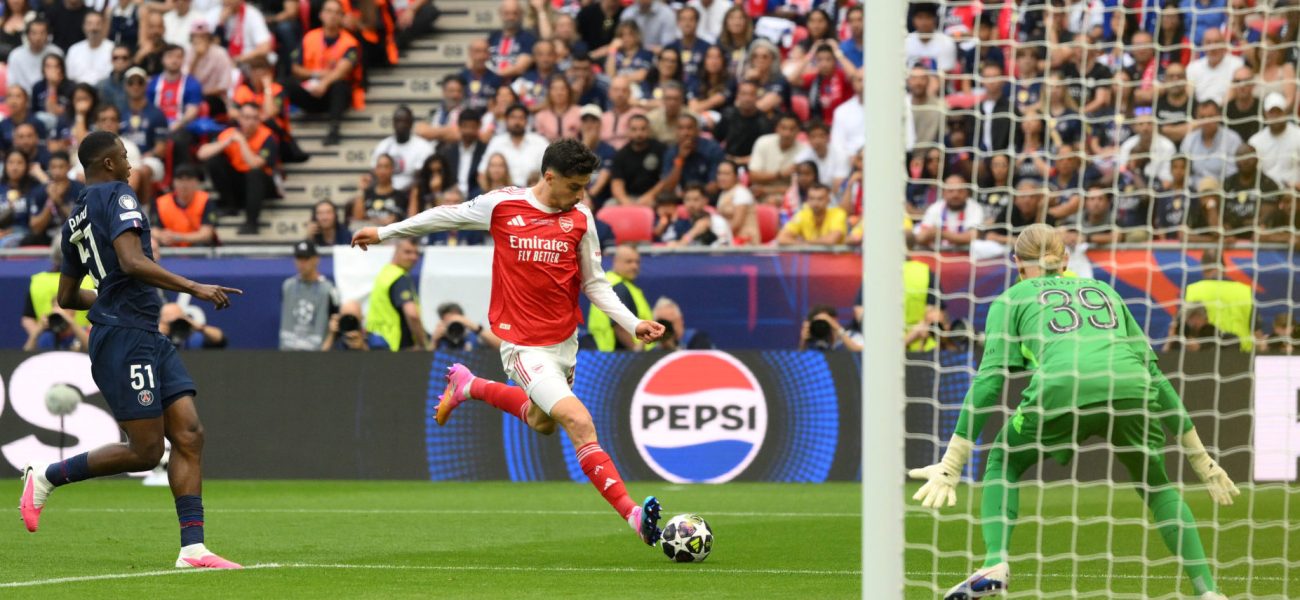
Kai Havertz, bless his boots, got the Gunners rolling early. He netted a cracker, a real ‘hold your breath — and fire’ kind of goal, just six minutes in. The German attacker found himself with only the keeper, Matvey Safonov, to beat after a rather chaotic scramble saw the ball ricochet off teammate Leandro Trossard. He’d done this dance before—famously in the 2021 final for Chelsea, mind you—and, predictably, he nailed it. A clinical finish into the roof of the net, an instant eruption of red in the stands, and just like that, Arsenal had a lead.
But the roar hadn’t fully subsided before the spectral whispers of VAR began. Replays quickly confirmed Trossard had, indeed, contacted the ball with his arm. A split-second, impossible-to-avoid kind of contact, granted. Yet, PSG’s players looked visibly, excruciatingly annoyed. And who wouldn’t be? The referee, Daniel Siebert, saw no reason to disallow it. VAR agreed. No penalty. Carry on, nothing to see here. It set the tone for what was to become a thoroughly exasperating evening for the Parisian outfit.
Because that was only the warm-up act. Just ten minutes later, inside the 16th minute, the drama went up another notch. Bukayo Saka, attempting a clearance from a PSG corner, whiffed. Seriously, he completely missed the ball with his foot. It then cannoned off his arm, then his hand. The appeals from the PSG camp were instantaneous and, frankly, deafening. Every player seemed to be pointing to his own arm, a theatrical chorus of outrage.
But Siebert wasn’t biting. Again, he ruled it accidental. VAR, in its infinite wisdom, or perhaps its perplexing subjectivity, upheld the on-field decision. No spot kick. It’s hard not to wince when considering how many similar instances have resulted in penalties in other games—in this very competition, no less. Arsenal, for their part, just let out a collective sigh of relief. You know, just barely avoided that particular bullet. They somehow managed to shut down PSG’s potent attack for the rest of the half, taking their slender lead into the break.
The tension wasn’t only about the hands. The referee even booked Cristhian Mosquera just 60 seconds into the second half for dilly-dallying with a throw-in. Small beer, you might think, but it underscores the referee’s tightly-wound control. This wasn’t just a game; it was an interrogation, frame by frame, gesture by gesture.
📄 POLICY WIRE WHITEPAPER PUBLISHED: PAKISTAN'S NATIONAL SECURITY POLICY PRIORITIES
👉 READ BY CLICKING HERE“Look, we played our hearts out,” said a triumphant Mikel Arteta, Arsenal’s manager, in the post-match melee. “These decisions, they happen. What matters is the grit, the fight, — and seeing it through against a team like PSG. We earned this moment. We truly did.” But over in the blue corner, you could practically feel the steam rising from PSG’s President, Nasser Al-Khelaifi. “The game’s evolving, sure,” Al-Khelaifi reportedly told a trusted confidant later, his voice barely concealed with frustration. “But when outcomes hinge on split-second, subjective interpretations of intent… it leaves a bitter taste. We invest, the fans expect, — and consistency should be paramount. The officiating body, they’ve got to take a long, hard look.”
This type of subjective VAR call has become a global talking point, mind you. Even in far-flung Karachi, where the passion for European football burns as brightly as any stadium floodlight, these refereeing calls spark fiery debates. Fans there, much like their counterparts in Budapest or London, track every pixelated replay, often viewing such contentious moments through the prism of global sports fairness – a fairness they sometimes feel is in short supply in other international arenas. It’s a collective exasperation, connecting diverse fan bases in a shared frustration over what feels like arbitrary rule application.
And these ‘gray area’ rulings, they aren’t an anomaly. A 2023 CIES Football Observatory report highlighted a sobering fact: VAR interventions in Europe’s top leagues increased by over 20% since its introduction, with many of those calls centering on the nebulous concept of ‘deliberate’ handball. The data suggests the technology is adding, rather than reducing, controversy. It’s supposed to clear things up, right?
What This Means
This isn’t merely about Arsenal’s latest piece of silverware. It’s a magnifying glass held up to the increasingly tenuous relationship between modern football’s commercial leviathan and the human element at its core. Economically, a Champions League win for a club like Arsenal translates into colossal sums – increased prize money, sponsor bonuses, and enhanced global brand value. Those ‘iffy’ decisions, therefore, carry a weight far beyond the pitch. For state-backed entities like PSG’s Qatar Sports Investments, billions have been poured into establishing a European football dynasty, and perceived injustices, especially in a final, dent their soft power ambitions and global sporting credibility. It’s not just a game; it’s international politics played out in ninety minutes. When fans, from Manchester to Makkah, perceive the officiating as biased or inconsistent, it chips away at the perceived integrity of the sport itself. But football’s authorities? They’re often slow to adapt, — and even slower to admit when the game’s systems aren’t quite up to scratch. It’s a high-stakes game of shifting lines and interpretation, where every ‘accidental’ touch of a hand can shake the very foundations of billion-dollar enterprises. The integrity of the referee, — and the VAR team, stands as the ultimate, often unseen, battleground. Because, ultimately, trust is fragile, especially when there’s so much money – and pride – on the line.