


Automakers’ Curious Calculus: Flat Sales, Fat Profits, Global Echoes
POLICY WIRE — Washington D.C., USA — Forget the frantic factory floors humming with orders, because the global car market’s new tune is less about quantity and more about scarcity, price tags,...

POLICY WIRE — Washington D.C., USA — Forget the frantic factory floors humming with orders, because the global car market’s new tune is less about quantity and more about scarcity, price tags, and—oddly enough—bumper profits. You’d think a dip in sales would spell trouble for sprawling auto behemoths. But nope. Turns out, fewer units flying off lots doesn’t necessarily mean less cash stuffing the corporate coffers.
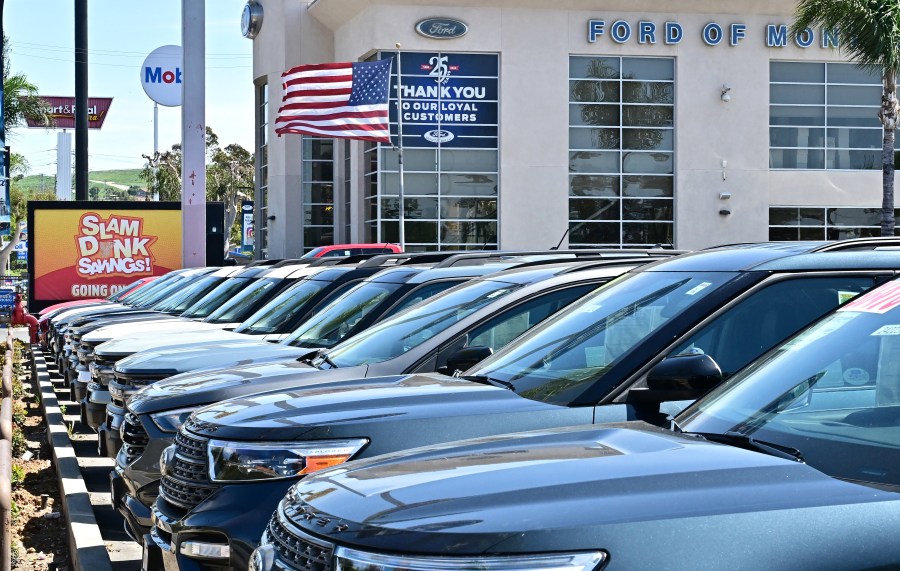
It’s a curious state of affairs, isn’t it? Car dealerships across developed markets aren’t seeing the same steady stream of fresh faces, the kind that used to drive volumes. Inventory shortages, born from supply chain snarls earlier in the pandemic’s wake, trained buyers—or forced them, really—to accept fewer choices and higher sticker prices. And the manufacturers, they learned quickly. They’ve perfected the art of supply-side constraint, maintaining a tight leash on production, ensuring demand consistently outstrips what’s available. [QUOTE_PLACEHOLDER]
Because of this calculated strategy, and a general consumer willingness to pay more for immediate availability (or perhaps, a quiet acceptance of inflationary trends), profits per vehicle have soared. It’s a bit like a high-end restaurant cutting half its tables but doubling its prices for the remaining patrons. Less work, more earnings—if you can get away with it. And automakers, they’re certainly getting away with it.
Look at the numbers. According to an industry analysis published by Cox Automotive in October 2023, average new car transaction prices across the U.S. in Q3 of 2023 hit a staggering $48,275, representing a 2% increase from the prior year — and maintaining historic highs. Sales volumes might’ve flatlined or even ticked down in some segments, but the revenue? It’s kept climbing.
This whole situation is a masterclass in modern corporate agility (or perhaps, opportunism). They’ve managed to turn what initially looked like a weakness—those nagging chip shortages, the logistical bottlenecks—into a strength. Production is scaled back just enough to create that delightful scarcity effect. Consumers, desperate for new wheels, have little leverage. You want it, you pay the asking price, or you wait—often months. And nobody wants to wait. Or do they?
It isn’t just about global supply chains, though that plays a massive part. It’s also about a subtle shift in what car buyers expect, particularly as economic uncertainty lingers. Maybe it’s delaying a purchase for a year or two, opting for a longer finance term, or leaning harder into the used car market (which itself is seeing wild price swings). It’s a nuanced dance, complicated by varying interest rates — and lingering inflation that just won’t quit. And that makes for tricky budgeting for the average family, plain — and simple.
This dynamic—reduced volume, elevated pricing, and sustained profits—has rippled far beyond Detroit and Stuttgart. Consider the bustling auto markets of South Asia, specifically Pakistan. Car manufacturing in Pakistan relies heavily on imported parts, making the local industry hyper-sensitive to global supply chain disruptions and exchange rate volatility. As global automakers constrain production for richer Western markets, the availability of semi-knocked-down (SKD) and completely knocked-down (CKD) kits for local assembly lines in places like Karachi becomes unpredictable.
📄 POLICY WIRE WHITEPAPER PUBLISHED: PAKISTAN'S NATIONAL SECURITY POLICY PRIORITIES
👉 READ BY CLICKING HEREAnd because the global parent companies are focused on maximizing profit margins elsewhere, they’ve got less incentive to rush components to markets where margins are typically thinner, or where local currency devaluation makes pricing a constant headache. That means even higher prices for Pakistani consumers, longer waiting times for popular models, — and limited options. It’s an economy under duress, where the consumer often bears the brunt of global industry recalibrations. Policy interventions in Islamabad have tried to mitigate this, encouraging local part manufacturing, but the global trends are relentless, aren’t they?
Ultimately, it shows that the old rules of supply and demand are always in play, but the players have gotten awfully good at manipulating them. It’s not always about selling more. Sometimes, it’s just about selling smarter, extracting every possible cent from fewer transactions. But, you know, at what cost to the ordinary consumer struggling to navigate life’s ever-rising costs?
What This Means
This isn’t just an automotive industry footnote; it’s a telling barometer of contemporary capitalism. We’re seeing powerful corporations leveraging a tightrope walk between managed scarcity and inflated pricing to secure financial gains even amidst wider economic deceleration. This strategy has direct and profound implications for inflation, consumer choice, and purchasing power across the globe. For developing nations, especially in the Muslim world and South Asia, this trend can exacerbate economic challenges. Higher import costs for vehicles and parts, coupled with limited supply, mean domestic industries struggle to meet demand, contributing to local inflation and limiting mobility options for a growing middle class.
Governments may find themselves under pressure to intervene, either through protectionist tariffs or subsidies, risking trade disputes and market distortions. The shift away from volume-centric sales means less focus on affordable, mass-market vehicles—a policy preference with consequences. But it’s also a clear signal that companies have adapted; they’ve learned to thrive not just despite headwinds but, in a twisted sense, *because* of them. For shareholders, it’s golden. For everyone else, it’s another rung up the ever-steeper economic ladder. It begs the question: is this newfound pricing power a temporary pandemic hangover, or the new normal for industries adept at navigating disruption?