


Silent Harbingers: Congo’s Ebola Outbreak Whispers a Global Warning
POLICY WIRE — Kinshasa, DRC — When the global news cycle spins its incessant reels, it often paints crises in broad, digestible strokes. We hear of numbers, outbreaks, and distant geographies—all...

POLICY WIRE — Kinshasa, DRC — When the global news cycle spins its incessant reels, it often paints crises in broad, digestible strokes. We hear of numbers, outbreaks, and distant geographies—all neatly compartmentalized. But tucked away in the dense, emerald heart of the Democratic Republic of Congo, a new Ebola scare isn’t just about a virus. It’s about a struggle for existence, a clash between ancestral practice and modern pathology, and frankly, a policy headache that keeps re-infecting itself.
It’s not just another medical emergency unfolding in a remote region. No, it’s a stark reminder that globalization doesn’t just spread prosperity; it ensures that a bat caught for supper in Équateur province can have far-reaching economic reverberations, impacting global trade forecasts and even tourism industries thousands of miles away. It’s an uncomfortable truth: our fates, they’re inextricably tangled. [QUOTE_PLACEHOLDER]
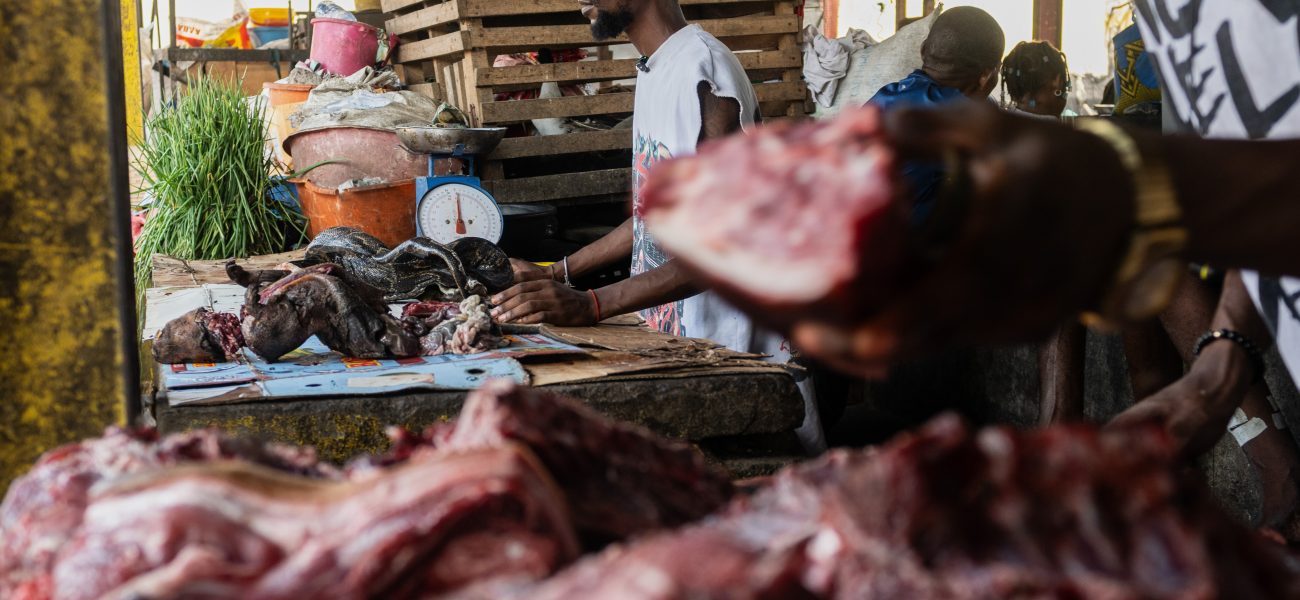
The latest iteration of the hemorrhagic fever in Congo has put health authorities, already stretched thin, back on high alert. You see, the connection between zoonotic diseases and the consumption of so-called wild meat isn’t some academic abstraction—it’s a brutal reality that keeps punching holes in public health efforts. People aren’t eating bushmeat for sport, you know. They’re doing it because, for millions in that part of the world, protein is hard to come by. The struggle is palpable; folks are making impossible choices daily.
And let’s be blunt: telling someone to stop a dietary practice that has sustained generations without offering viable, accessible, and affordable alternatives? That’s just a recipe for resentment. The experts keep warning. They’ve been warning for years. It’s like shouting into a storm when the people you’re trying to reach are just trying to feed their kids.
The grim statistics often fade into background noise, but they’re loud if you listen closely. According to a 2021 UNICEF report, roughly 69 percent of Congo’s population lives on less than $1.90 a day, pushing countless households toward subsistence foraging and traditional protein sources. That’s a staggering figure, putting the ‘why’ behind ‘wild meat’ into sharp relief. It isn’t a cultural quirk; it’s economic desperation manifesting as a public health threat.
But this isn’t just a Congolese problem. The shadows of these outbreaks extend. Consider the parallels: other regions, say parts of Southeast Asia or even some remote areas of Pakistan and Bangladesh, face their own zoonotic risks. Poverty, encroaching urbanization, — and traditional diets can all create similar flashpoints. The lack of infrastructure, especially cold chain logistics, in remote villages across vast parts of the Muslim world—stretching from North Africa to Indonesia—means protein preservation is a luxury. If a source of sustenance walks, flies, or crawls through the jungle, it becomes fair game. It’s a shared predicament, underscoring global health’s fractured state.
There’s a subtle irony, too, in the Western gaze on these distant perils. We fret over border security and travel restrictions, often ignoring the very conditions—instability, resource exploitation, lack of development—that fuel such health crises. It’s a closed-loop system, or it should be; we pull resources, create vulnerability, then act surprised when the chickens come home to roost, or in this case, the fruit bats bring the virus.
📄 POLICY WIRE WHITEPAPER PUBLISHED: PAKISTAN'S NATIONAL SECURITY POLICY PRIORITIES
👉 READ BY CLICKING HEREThis Ebola scare is, at its heart, a crisis of governance. It highlights profound trust deficits between populations — and often-distant central authorities. When public health advisories conflict with daily survival, survival usually wins. And when public health campaigns come wrapped in foreign expertise without genuine local integration—well, you can guess how that goes down. It builds barriers faster than it cures disease. There’s no escaping the reality that local communities have to be partners, not just recipients, in these efforts. If we want global health stability, we’ve got to confront global inequality head-on, or we’ll just be fighting the same battles, just different viruses.
These outbreaks don’t respect international boundaries; they make a mockery of them. We’re talking about fundamental systemic flaws that let preventable diseases become recurrent global anxieties. Maybe it’s time we stopped reacting to each outbreak like it’s an isolated incident and started addressing the root causes. It’s high time for it.
What This Means
The resurgence of Ebola, particularly with links to bushmeat consumption, isn’t merely a health event; it’s a stark indicator of policy failures with deep political and economic implications. Politically, it exposes the brittle nature of state authority and public trust in regions where governments struggle to provide basic services or enforce health regulations. It showcases how economic hardship directly translates into increased health risks, challenging democratic stability and enabling cycles of violence and displacement.
Economically, persistent outbreaks drain national resources already insufficient for development, diverting funds from education or infrastructure to emergency response. It scares off foreign investment—investors don’t much fancy regions battling highly contagious, deadly diseases. And the global economy takes a hit, however subtle, through disruptions to supply chains or potential travel advisories. the lack of viable economic alternatives for rural populations locks them into high-risk practices, creating a vicious cycle of poverty and disease. This isn’t just about saving lives; it’s about recalibrating geopolitical priorities. The crisis demonstrates that ignoring poverty and governance deficits in one region creates a biological risk that can quickly transcend borders, proving that global public health isn’t a humanitarian add-on, but a core pillar of international security and stability. The world’s health—and its economic resilience—hinges on addressing these underlying fragilities with real policy solutions, not just reactive measures.