


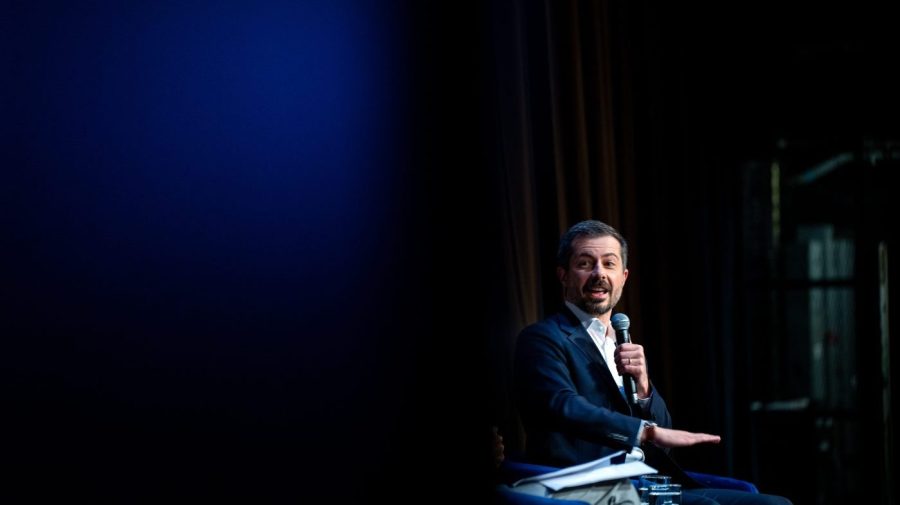
Shadow Boxing for 2028: Buttigieg Emerges from the Perpetual Democratic Limbo
POLICY WIRE — Washington D.C., USA — The peculiar American compulsion for plotting political futures years before they become present reality continues unabated. It’s a national pastime, this...

POLICY WIRE — Washington D.C., USA — The peculiar American compulsion for plotting political futures years before they become present reality continues unabated. It’s a national pastime, this premature coronation, where would-be presidents are pitted against phantoms long before any real battle lines are drawn. And right now, in the murky, speculative waters of a still-distant 2028 Democratic primary—when one considers how quickly the landscape can transform, you’ve got to admit, it’s pretty wild—it appears Pete Buttigieg is managing to keep his head above water, at least according to the latest whispers from the polling world.
It’s an almost farcical exercise, painting a picture of a crowded Democratic field—a veritable bazaar of ambition and earnest smiles—four years before any ballots get cast. But politics, especially here in Washington, just can’t resist a good horse race, even if the horses are still in different stables. The fact that any candidate can, at this juncture, be pegged as a frontrunner speaks volumes about a certain kind of political stasis—or perhaps, a quiet hunger for a familiar face among a restless electorate.
Buttigieg, a former mayor — and current Cabinet Secretary, isn’t new to the grand stage. He’s been here, done that—just not quite yet. His perceived lead in a hypothetical 2028 matchup, as indicated by a [QUOTE_PLACEHOLDER] poll of potential primary voters, probably shouldn’t surprise many. He’s articulate, media-savvy, — and fits a mold of moderate pragmatism many party elders still prize. But that lead—let’s be brutally honest—is as solid as cotton candy in a summer rain. Four years? Anything can happen, folks.
This perpetual cycle of electioneering contrasts sharply with how political trajectories often play out in other parts of the world, especially in developing democracies. Consider Pakistan, for instance, where political succession can often be less about long-term polling narratives and more about seismic, unpredictable shifts, whether through electoral upheavals, judicial interventions, or the less subtle maneuvers of deep state machinations. While we debate the implications of a hypothetical poll for a US candidate, nations like Pakistan grapple with foundational questions of governance, stability, and what even constitutes a fair electoral process, often on much shorter, far more volatile timelines. The very luxury of a four-year political prognosis here is, itself, a symptom of a deeply entrenched (and sometimes sclerotic) political system.
Early polls, I mean, they’re really just measuring name recognition — and a baseline favorability, nothing more. A snapshot of sentiment. But these things have a way of morphing into self-fulfilling prophecies, creating buzz, driving media narratives, and even impacting donor enthusiasm. And you can bet your bottom dollar—that’s where the real power lies early on—that campaigns are already trying to leverage this ‘lead,’ however ephemeral, for fundraising rounds and key endorsements. It’s the original sin of the modern American campaign cycle: the endless beginning. You’ve got to play the game, don’t you?
The Democratic party, still licking wounds from recent cycles, finds itself in a peculiar position. The field isn’t just crowded; it’s… an acquired taste. From Vice Presidents navigating a minefield of expectation to governors carving out their own regional fiefdoms, everyone’s positioning. This Buttigieg moment, however fleeting, highlights an ongoing ideological tussle within the party: does it veer left to energize the base, or does it try to capture the elusive middle? It’s a debate that’ll rage, probably getting hotter the closer we actually get to 2028. And we’re not close.
📄 POLICY WIRE WHITEPAPER PUBLISHED: PAKISTAN'S NATIONAL SECURITY POLICY PRIORITIES
👉 READ BY CLICKING HEREOne striking trend—one that’s worth actual consideration—is the consistent appeal of candidates who present themselves as managerial and technocratic, particularly among college-educated voters. Data from a recent study by the Pew Research Center indicated that nearly 68% of Democratic-leaning independents prioritize executive experience over ideological purity when evaluating presidential contenders. This preference could, conceivably, be contributing to Buttigieg’s early, albeit preliminary, showing. He embodies that image: smart, composed, policy-focused. It’s what the consultant class wants, anyway. What actual voters want? That’s a different animal entirely. History has taught us that.
The problem is, this far out, you’re not actually engaging with pressing national concerns. You’re talking about optics. You’re trying on different hats. It doesn’t mean much of anything for the actual governance of the country. It just keeps the political press corps employed, myself included. It provides fodder for the talking heads, fodder for the cable news cycle, which demands perpetual novelty. But for the people watching this circus unfold, particularly those outside Washington’s echo chambers, it must feel like watching a sports team try to build a dynasty when they haven’t even made the playoffs yet.
What This Means
This early polling snapshot, despite its inherent flimsiness, functions as an early warning system for the Democratic establishment. Buttigieg’s lead suggests that the party’s moderate wing retains significant influence in the initial speculative phases, capable of galvanizing attention and resources. It means that while progressive voices will no doubt push their agendas hard, the prevailing narrative, for now, appears to favor candidates who promise a return to a more traditional, perhaps less disruptive, brand of leadership.
Economically, this early signaling can also have subtle effects. Political stability, or at least the perception of it, can impact investor confidence. A potential candidate like Buttigieg, often seen as pro-business and fiscally prudent (in Democratic terms), might offer a sense of continuity. Conversely, it hints at the massive expenditure to come. Fundraising for 2028 has, essentially, begun today, redirecting capital into political campaigns rather than productive economic ventures, something that never truly ends once it starts. For a news wire like Policy Wire, it just means more endless political grist for the mill. There’s always another election, and always another ‘frontrunner’ waiting in the wings to dominate headlines for a while—until they don’t.