
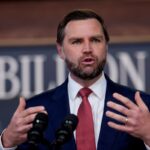


Silent Toll: Language Barrier Stirs Storm After Fatal Virginia Bus Crash
POLICY WIRE — Washington, D.C. — Not every calamity announces itself with a bang; some seep into the national consciousness as a quiet drip, drip, drip of unsettling implications. Such is the...

POLICY WIRE — Washington, D.C. — Not every calamity announces itself with a bang; some seep into the national consciousness as a quiet drip, drip, drip of unsettling implications. Such is the unfolding narrative following a recent, tragic bus accident in Virginia, an incident that, even weeks on, continues to send uncomfortable tremors through the body politic. What began as a local tragedy involving five lost lives—a stark, grim fact in its own right—has quietly transformed into a potent flashpoint for broader anxieties about immigration, labor standards, and America’s operational linguistics.
It’s rarely just about the immediate mechanics of a crash, is it? Always the unseen forces. In this instance, those forces gained voice through Sean Duffy, who reportedly pointed to an extraordinary detail: the driver’s inability to speak English. This singular observation, apparently, isn’t just background color; it’s being framed by some quarters as a symptom of a larger systemic fracture. You can almost hear the gears grinding, right? [QUOTE_PLACEHOLDER]
But let’s be real here. The accident itself was horrific. A passenger bus—filled with lives, full of promise—ended its journey in absolute devastation. Five people gone, — and a community left reeling, grappling with the sudden, sharp reality of grief. When Representative Duffy asserted that the driver of the Virginia bus crash that killed five involved a driver who doesn’t speak English, it injected a stark, almost accusatory, element into an already raw wound. It wasn’t merely a factual statement; it was an opener, a political volley lobbed directly into a perennial, hotly contested national discussion.
Think about it for a second. We’ve become accustomed to the intricate layers of our globalized workforce, a complex quilt stitched together from every corner of the planet. Commercial drivers, those silent navigators of America’s arteries, often come from diverse backgrounds, their routes etching the very fabric of our commerce. And sometimes—maybe too often, some argue—their journeys are not just across state lines but across vast linguistic divides.
It’s an operational reality few contemplate until a headline forces their hand. The Federal Motor Carrier Safety Administration (FMCSA) currently stipulates that a commercial driver must be able to read and speak English sufficiently to converse with the public, understand traffic signs and signals, respond to official inquiries, and make entries on reports and records. It’s a requirement you’d think would prevent such situations. Yet, we stand here, with this specific claim about the Virginia incident, wondering about the enforcement, the loopholes, or perhaps the sheer audacity of circumvention. The specifics, it seems, are a matter of investigation, but the policy implications, they’re already crystal clear. Or muddy, depending on your perspective, really.
Consider the international parallels. Nations like Pakistan, where a significant portion of its diaspora often seeks livelihoods abroad, place immense emphasis on workers meeting destination country standards. The Pakistani government, for example, maintains rigorous training and certification programs for its overseas labor force, including language proficiency for specific roles. Because they know full well the potential diplomatic and human cost when their citizens fall short of international mandates, or when host nations don’t adequately verify credentials. It’s a pragmatic necessity, not just a nicety. Their Ministry of Overseas Pakistanis and Human Resource Development works with labor attaches globally, striving to ensure their expatriate workers are, for the most part, capable and compliant. This incident in Virginia? It’s a reminder of what happens when those checks, whether internal or external, appear to fail.
What This Means
📄 POLICY WIRE WHITEPAPER PUBLISHED: PAKISTAN'S NATIONAL SECURITY POLICY PRIORITIES
👉 READ BY CLICKING HEREThis event isn’t just about a driver — and a crash; it’s a policy dog whistle of the highest order. The claim that a non-English speaking driver was involved—true or not, its very assertion in the public discourse—provides potent ammunition for restrictionist immigration narratives. It frames foreign labor, fairly or unfairly, as inherently less safe or more problematic. Expect legislative efforts or at least fervent calls for tighter scrutiny on commercial driver licensing, particularly concerning foreign-born individuals and their language skills. You’ll hear debates about how comprehensive are the testing procedures, if interpretation services during licensing exams create unacceptable ambiguities, or if current enforcement mechanisms are a bureaucratic joke. The implications extend to industries heavily reliant on immigrant labor, from agriculture to logistics, potentially slowing down critical supply chains and making goods dearer.
Economically, if these conversations lead to more stringent, bureaucratic hurdles for obtaining commercial driving licenses, it could exacerbate an existing driver shortage in the US, driving up wages and, ultimately, consumer costs. Small businesses, especially those in the trucking sector, often operating on thin margins, would bear the brunt of any new compliance expenses. it stirs the pot for diplomatic discussions, particularly with countries that are major sources of the United States’ labor force. Imagine the quiet whispers from Islamabad or Delhi about fairness and integration—the kind that don’t make headlines but shape the background hum of international relations. A 2022 survey by the American Trucking Associations indicated a record shortage of 80,000 truck drivers, a figure expected to surpass 160,000 by 2030, underscoring the industry’s reliance on a diverse workforce. Any moves perceived as targeting a specific demographic could have cascading effects, turning a localized tragic error into a national economic headache. And that’s something nobody wants, even if they pretend otherwise when the cameras are on.
Politically, the crash becomes a rhetorical weapon. Opponents of current immigration policies will seize upon Representative Duffy’s remark to amplify their arguments for stronger border controls and a more insular approach to labor markets. It isn’t a fresh argument, but it gains renewed traction precisely because of the human cost associated with the incident. Advocates for immigration, on the other hand, will point to systemic issues—perhaps inadequate training, corporate negligence, or simply isolated incidents—and argue against broad generalizations or discriminatory policies. The reality, as ever, is probably far more complicated, a nasty, tangled knot of individual failure, regulatory gaps, and a fierce, insatiable demand for labor. It’s messy. It’s always messy. But in this specific instance, a truly terrible day on a Virginia road has just made America’s already simmering immigration debate a whole lot hotter. Expect some truly contentious discussions, particularly as the next election cycle looms large. Because every incident like this has geopolitical reverberations, right down to how local policies influence global perceptions of opportunity and safety.
This Virginia bus crash—with its alleged language barrier—isn’t just a grim statistic. It’s a stark, public question mark over the practicalities of modern labor, the limits of regulatory oversight, and whether we, as a society, are truly ready for the full implications of a globalized workforce operating on our home soil. The easy answers aren’t just scarce; they don’t exist. Not yet, anyway.