


Texas Take-Down: Federal Officer Nabbed After Minneapolis Shooting Flouts Rule of Law
POLICY WIRE — Washington, D.C. — Not every day does a federal agent become a fugitive, let alone get collared for an alleged shooting incident that local prosecutors contend was both criminal and —...

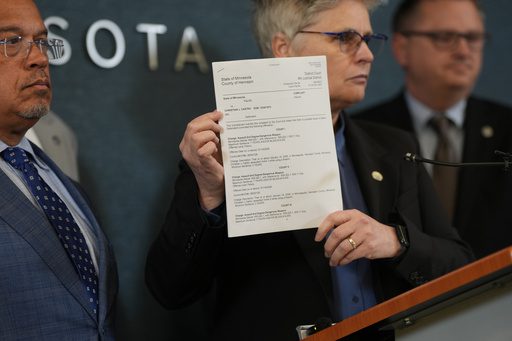
POLICY WIRE — Washington, D.C. — Not every day does a federal agent become a fugitive, let alone get collared for an alleged shooting incident that local prosecutors contend was both criminal and — adding insult to injury — subject to a bald-faced lie about its circumstances. Yet, that’s precisely the messy, inconvenient truth now trailing Christian Castro, a U.S. Immigration — and Customs Enforcement (ICE) officer. Castro found himself under arrest in Texas just eleven days after Minneapolis charged him for the nonfatal shooting of Julio Cesar Sosa-Celis during the Trump administration’s heavy-handed [QUOTE_PLACEHOLDER]
It’s a drama that unfolds like a bad play: A federal agency, ICE, spearheads a controversial immigration sweep. Locals object. A shooting occurs. Federal authorities initially blame the victims, but then — gasp! — the narrative flips. Prosecutors step in, challenging the established order. The whole affair underscores a deeply ingrained tension between local and federal authorities, a recurring theme that keeps America guessing about who truly holds the reins of justice, particularly when it comes to the vast and often opaque machinery of immigration enforcement.
Castro’s apprehension in Cameron County, Texas, by the state’s Bureau of Criminal Apprehension, assisted by Texas Rangers, wasn’t without its own bureaucratic spat. Hennepin County, Minnesota prosecutors initially credited the Department of Homeland Security’s Office of Inspector General (DHS OIG) with aiding the arrest. But then the OIG, playing a delicate bureaucratic dance, flatly denied any involvement. [QUOTE_PLACEHOLDER] in a statement: “Any characterization that DHS OIG agents participated in or led the arrest operation is inaccurate,” They weren’t there, they didn’t do it, they said — a precise clarification that hints at internal rivalries or, perhaps, a strategic distancing act when things get hot.
Castro’s alleged actions trace back to January 14, when he and another agent pursued Alfredo Alejandro Aljorna to an apartment duplex where Sosa-Celis also resided. According to prosecutors, Castro fired through the home’s front door, striking Sosa-Celis in the thigh. Both Sosa-Celis — and Aljorna, it turns out, were legally present in the U.S. This small but significant detail utterly demolishes the pretense of certain federal operations often framed as targeting the unlawfully present. Initially, federal authorities accused Sosa-Celis and Aljorna of beating an officer with a broom handle and a snow shovel—a claim that quickly unraveled. A federal judge later dismissed the charges, sparking investigations by ICE and the Justice Department into whether their own officers had lied.
Minneapolis officials have since released a city security camera video that seems to challenge the initial federal account. The footage appears to show someone with a shovel, yes, but tossing it into a yard as another person (presumably Aljorna) is chased, falls, and then scuffles with agents near the steps. The exact moment of the shot remains ambiguous in the public footage, but the optics aren’t great. And that’s putting it mildly. ICE, meanwhile, has dubbed the Hennepin County attorney’s actions [QUOTE_PLACEHOLDER] suggesting that even in the face of criminal charges, the federal government isn’t above crying foul play. But Hennepin County Attorney Mary Moriarty clearly doesn’t see it that way, heralding the arrest as “a critical step forward in our prosecution of Mr. Castro.”
This isn’t an isolated incident in Minnesota. Castro is the second federal agent charged over conduct during Operation Metro Surge. Agent Gregory Donnell Morgan Jr. faces assault charges for allegedly pointing a gun at people. The county is also looking into the shooting deaths of U.S. citizens Renee Good — and Alex Pretti, both at the hands of federal officers during this tumultuous period. They’ve even sued the Trump administration to get access to evidence, demonstrating a persistent, almost dogged, pursuit of accountability that contrasts sharply with the federal reluctance to self-police.
What This Means
The arrest of Christian Castro, particularly on local charges against a federal officer, illuminates a volatile fissure in America’s justice system. It’s a clear signal that some local jurisdictions, like Hennepin County, are prepared to challenge federal overreach, even when it involves agencies historically perceived as untouchable. This isn’t merely about one officer; it’s about the larger political economy of immigration enforcement, which often prioritizes numerical targets and optics over individual rights and accountability. Economically, such high-profile clashes waste taxpayer money on litigation and inter-agency bickering, while eroding public trust. But there’s also an international dimension. For countries grappling with their own issues of police accountability and human rights, particularly those in the Global South and the Muslim world, like Pakistan, incidents of alleged extra-legal actions by law enforcement in a developed nation like the U.S. offer a troubling reflection. It undermines the moral authority America seeks to project globally, complicating its diplomatic efforts to advocate for rule of law and human rights abroad. And, frankly, it plays into narratives that question the fundamental fairness and consistency of Western judicial systems. How can you credibly preach governance overseas when your own agents are alleged to lie, shoot, and then have internal federal entities point fingers about their arrest? It’s not just an American problem; it’s an American dilemma on the global stage. Such events cast long shadows.