


Legal Tangle Snags Trump’s Monumental Ambitions for Kennedy Center
POLICY WIRE — Washington, D.C. — Imagine, if you will, the venerable National Gallery, or perhaps the Library of Congress, suddenly bearing the moniker of a sitting president. It’s an almost comical...

POLICY WIRE — Washington, D.C. — Imagine, if you will, the venerable National Gallery, or perhaps the Library of Congress, suddenly bearing the moniker of a sitting president. It’s an almost comical notion in Washington, D.C., where tradition and a certain stubborn sense of permanence usually triumph over the whims of fleeting administrations. But for a stretch, the John F. Kennedy Center for the Performing Arts, an institution begun in 1965 and dedicated to a fallen president, apparently became fair game. And then, a federal judge had his say.
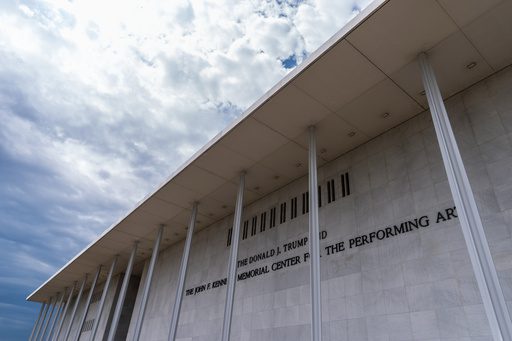
It turns out some things, blessedly, aren’t so easily remade in a leader’s image. A U.S. District Judge in Washington, D.C., Christopher Cooper, landed a decisive blow last Friday against the audacity, ruling that the addition of former President Trump’s name to the Kennedy Center was, bluntly, illegal. More than that, the judge also halted what was slated to be a significant closure for renovations—a decision the center’s board had deemed an absolute necessity.
The core of the issue? Cooper concluded that the board had overstepped its statutory bounds. Only Congress, not a presidentially appointed board, has the authority to rename an institution given its name by congressional act. “May the John F. Kennedy Center for the Performing Arts be renamed absent Congressional authorization? The answer, plain from the face of the statute, is no. Nor can any other individual be memorialized on the front portico of the building,” the judge wrote, laying bare the simple, undeniable fact. He’s ordered the removal of Trump’s name from the facility’s façade — and all official materials within two weeks. The board’s March 16 vote to shutter the venue for two years, intended to start in July, was similarly torched, described by Cooper as “ill-informed and seemingly preordained” with no regard for its legal obligations. “The trustees might have assessed the propriety of closure in a number of prudent ways. This was not one,” he dryly observed. Not exactly a ringing endorsement of their due diligence, was it?
Trump, never one for a quiet retreat, didn’t miss a beat. He shot back on his Truth Social platform, accusing the judge of shame, then announced he was pulling his support from the project, stating he would return control of the institution to Congress. His reason? [QUOTE_PLACEHOLDER] he posted. You see the pattern here—either it’s his way, or it’s no way at all.
But the political establishment isn’t quite so pliable. Rep. Joyce Beatty, an Ohio Democrat — and an ex officio member of the Kennedy Center’s board, was one of the plaintiffs. She’d called the decision a win for the arts. “Now hopefully people can come back to work, we can continue to be the Kennedy Center that we were intended to be,” she remarked. Meanwhile, Roma Daravi, the Kennedy Center’s vice president of public relations, countered with a carefully worded statement, expressing confidence that “on appeal the court will uphold the Board’s will to recognize President Trump’s historic contributions to our nation’s cultural center.” She stressed the facility’s dire need for renovation. The board, Daravi maintained, secured $257 million, approved by Congress, for this very purpose. That’s a significant chunk of change.
Trump’s foray into the Kennedy Center wasn’t an isolated incident. Since his return to the White House last year, he’s shown a keen, often controversial, interest in leaving his personal indelible mark on the capital’s landscape. We’re talking everything from his handpicked board at the Kennedy Center—where he even named himself chairman—to past endeavors like demolishing the East Wing of the White House to build a ballroom, or pushing for a triumphal arch overlooking the Potomac. It’s a pattern familiar in nations worldwide, from fledgling democracies in the Global South to long-established powers, where leaders often try to cement their legacy by physically reshaping the national narrative, sometimes to the dismay of historians and preservationists. Justice Department attorneys had argued the planned renovations were limited in scope, well within the board’s purview. Yet, others raised alarms, pointing to Trump’s previous statements about [QUOTE_PLACEHOLDER] the building’s steel skeleton, sparking fears of significant, unsupervised changes.
What This Means
This ruling isn’t just about a name on a building or a renovation delay; it’s a robust reassertion of congressional authority over national institutions and a sharp check on executive overreach. For anyone observing American governance, it’s a stark reminder that even in an era of deep partisan divides, certain fundamental checks and balances, and specific legal frameworks, still hold sway—or at least they try to. The executive branch isn’t a kingdom to be sculpted at will. The symbolism of D.C.’s monuments, their names, and their very existence, represent collective history, not personal brands. In some South Asian political climates, for example, the concept of a powerful figure pushing through changes to national institutions for personal glory, bypassing established legal and democratic norms, isn’t unfamiliar. But America, it seems, has institutions, — and crucially, judges, still willing to draw lines in the sand. This verdict sets a precedent that politicians, regardless of their ambitions, can’t unilaterally rewrite history or alter public spaces intended for all citizens, without following due process. Expect more legal skirmishes, because appeal is all but guaranteed, — and this particular show is far from over.