


Diamond Diplomacy: Dodgers’ Injury Report Offers Glancing Look at Global Labor Dynamics
POLICY WIRE — Los Angeles, USA — A baseball player in America, a hamstrung athlete of significant financial value, might seem a curious prism through which to view geopolitical undercurrents. But...

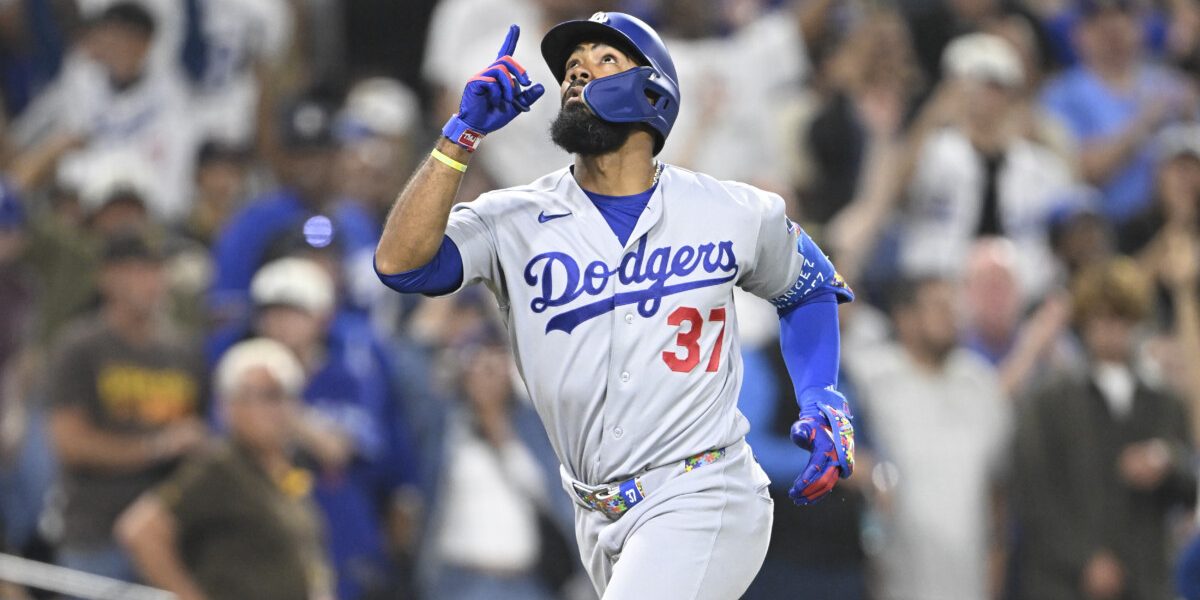
POLICY WIRE — Los Angeles, USA — A baseball player in America, a hamstrung athlete of significant financial value, might seem a curious prism through which to view geopolitical undercurrents. But pull back just a bit on the lens, and the injury of Teoscar Hernandez — a Dodgers slugger temporarily sidelined — illuminates surprisingly sharp distinctions in how societies value labor, even the highly specialized, and what it really means for individuals to be economically ‘lucky.’
It wasn’t a season-ending catastrophe, mind you, nor was it even an affair of national strategic interest, not directly. It happened on a Wednesday, May 27, against the Colorado Rockies. Hernandez was booking it down to first base when his left hamstring barked at him. You could almost feel it, that tell-tale grab at the back of the leg. He slammed his helmet in pain—a fleeting burst of human frustration, instantly relatable—and headed to the locker room. But here’s the thing: it wasn’t the absolute worst, which is what the front office, and certainly the fan base, was sweating over after Kike Hernandez had already hurt his oblique. They’d had a bit of a scare. [QUOTE_PLACEHOLDER]
This particular episode in the brutal arithmetic of professional sports isn’t just about a star taking a brief hiatus, though that’s certainly part of it for the fans. It speaks volumes about the ephemeral nature of employment in high-stakes fields. One minute, you’re the engine; the next, you’re a line item on the injured list, waiting for the healing to commence, waiting for a replacement to step into your meticulously defined role. It’s a temporary precarity, granted, with lavish contracts, but it’s precarity nonetheless. This scenario echoes, in a bizarrely twisted sense, the global market for highly skilled but transient workers who often find their value measured by immediate output and an almost Darwinian fitness to remain productive.
According to team management, the diagnostic assessment landed squarely on a Grade 1 hamstring strain. That’s physician-speak for minor. But it’s also a designation with real-world implications, promising a recovery timeline of only 1 to 3 weeks, per Physiopedia, a detail that allowed the club to put him on the 10-day injured list. It meant he wasn’t destined for the purgatory of a rehabilitation assignment, a detour that can often feel like banishment for players used to the spotlight. And this is where the Dodgers truly got a break. Teoscar’s been a standout, a real dugout sparkplug who emerged from a down period. Losing him for longer would’ve been a bigger gut punch. Manager Dave Roberts didn’t mince words, describing it as `Disappointing` to lose a player who `He’s been playing so well, and he’s a big part of what we’re doing. So to lose him for any length of time is not great.` But then, isn’t that just a blunt acknowledgment of the inherent disposability? Your value’s intrinsically tied to your physical state — and immediate contribution.
But the team, ever the finely-tuned corporation, had a contingency. Ryan Ward, a long-time minor leaguer, got the call. This kid can really slug. And he deserves an extended look in the majors. His moment arrived, not quite like an auspicious prophecy but as the direct result of a teammate’s body giving way under strain. He’d actually debuted last month when Freddie Freeman was on paternity leave; now he’s getting another shot to play for the Dodgers faithful. It’s a reminder, too, that the trade deadline looms. Ward might even be auditioning for another team as he plays. You’ve got to wonder if this American baseball ecosystem, with its relentless churning of human capital, its stark appraisal of a player’s worth by their health and performance metrics, is merely a magnified reflection of the broader, often less forgiving, global employment landscape. Take a moment to read about American Football’s roster juggernaut; it’s quite a comparison.
What This Means
This injury, a momentary blip in a long baseball season, serves as a micro-study in macroeconomics, particularly in labor markets driven by performance and temporary contracts. The swift replacement of a valuable asset, even for a short duration, highlights a systemic demand for immediate productivity. We see this dynamic at play not only in American sports but globally, perhaps nowhere more acutely than in regions like Pakistan, where transient labor — often highly skilled — moves across borders to meet demands in industries from construction to information technology. Here, the ‘injured list’ isn’t just a brief stint on the bench but can mean economic catastrophe for families relying on remittances. For instance, the Gulf region’s construction boom frequently relies on Pakistani engineers and laborers; any interruption to their work due to illness or injury can have cascading effects. They don’t often have the luxury of a cushioned ‘injured list’ with continued salary and benefits like a high-earning Dodger. Instead, their precarity is raw, their contingency plans often non-existent. And that difference—between a multimillion-dollar contract and a migrant worker’s daily wage—really puts this Dodgers saga into perspective. Both are valued for their output, but the safety nets are miles apart. Pakistan’s nascent professional sports leagues, burgeoning in cricket and even some smaller regional football clubs, are starting to grapple with these labor economics themselves, albeit on a far smaller scale. They’re beginning to recognize that player well-being, while costly, is ultimately a key investment for long-term viability. It’s an issue of human capital, plain — and simple.
It’s all a delicate balance, this entire system, built on high performance and swift recovery, underpinned by vast economic resources. It’s about how a single strained muscle, far removed from the headlines of statecraft or finance, can, in fact, reveal the deep, unforgiving currents of global labor economics. Just ask any day laborer or, for that matter, any multi-million dollar slugger. The rules are different, sure, but the fundamental calculation of value? It isn’t so far apart. Another angle worth considering is how baseball reflects labor precarity in general.