

Denial on the Danube: Moscow’s Latest Diplomatic Evasion Rattles NATO’s Edge
POLICY WIRE — Bucharest, Romania — In the grand theater of international diplomacy, sometimes the loudest statements aren’t said at all—they’re implicitly denied. And sometimes, what goes...

POLICY WIRE — Bucharest, Romania — In the grand theater of international diplomacy, sometimes the loudest statements aren’t said at all—they’re implicitly denied. And sometimes, what goes unsaid or ambiguously attributed can speak volumes louder than any bombastic declaration.
It’s this strange dynamic that now permeates the air above the Danube, where the shattered remains of an unidentified aerial drone recently became a stark reminder of Europe’s raw geopolitical nerves. No, the story doesn’t begin with a missile, or even a direct military engagement. It begins with the seemingly casual shrug from the Kremlin over a rather inconvenient piece of fallen hardware.
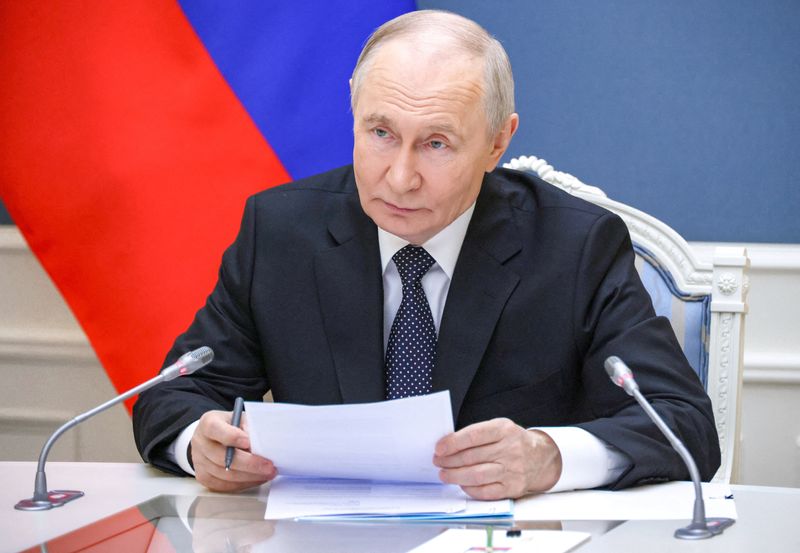
Vladimir Putin’s guarded remarks, implying uncertainty regarding the provenance of a drone that seemingly tumbled into Romanian territory—a NATO member, mind you—reflect less about actual investigative uncertainty and more about a well-practiced art of strategic ambiguity. The suggestion that it’s [QUOTE_PLACEHOLDER] to assign blame to Russia for the drone that landed in Romania isn’t just a deflection; it’s a deliberate act of political theater designed to test boundaries and sow doubt. But it’s also an act that leaves neighbors—and partners further afield—shaking their heads.
Because, let’s face it, drones don’t usually just ‘stray’ with such specific intent near an active warzone’s border. And they certainly don’t typically belong to peace-loving ornithological societies in their spare time. Bucharest confirmed drone parts were found on its territory after Moscow’s continued assaults on Ukrainian Danube ports across the border, ratcheting up pressure on a long-established, if fragile, equilibrium. The message is clear, even if the delivery mechanism is literally shattered and strewn across a farmer’s field: ‘We’re here. We can be anywhere.’
The incident casts a long shadow, not just over NATO’s eastern flank but far beyond. Consider for a moment the ramifications for states grappling with their own delicate regional balances. Nations like Pakistan, navigating complex relationships with global powers and internal security challenges, watch these skirmishes closely. Every instance of an external power flouting international norms or encroaching on sovereign territory, even inadvertently, reinforces an unsettling precedent. It impacts trust, strengthens hardliners, — and generally makes for a very, very jumpy world. It also makes for interesting—or terrifying—dinner table conversation among security analysts in Islamabad, wondering how such events might inspire less scrupulous actors closer to home.
This isn’t a new playbook, but its current iteration is particularly brazen. The International Centre for Defense and Security noted a 60% increase in detected (and often denied) airspace violations across NATO’s borders since the full-scale invasion of Ukraine, indicating a clear pattern of probing and intimidation. And it’s not just planes, but sea and cyber activity too—a multi-front campaign of low-stakes, high-impact provocations.
But when a fragment of military hardware undeniably belonging to *someone’s* armed forces ends up in *someone else’s* sovereign air space, it’s not a misunderstanding. It’s a calculated ambiguity, or perhaps, a ‘test’ that Romania failed by confirming what it found. It leaves governments grappling with what to do when an aggressor feigns ignorance. The West has to walk a fine line, you see, between showing resolve — and avoiding a direct escalation. It’s a chess match, only one side keeps knocking pieces off the board — and then saying ‘Who, me?’
It’s tempting to see this as isolated, but it isn’t. It’s part of a much larger, more corrosive strategy of deniability that chips away at the international rule of law. It’s what allows a nation to accuse another of bioweapon labs — and then look surprised when chemical weapons pop up. It’s an information war, — and fallen drone parts are just another volley.
What This Means
The ‘oopsie drone’ isn’t just a story about a metallic mishap; it’s a microcosm of the geopolitical morass Russia has engineered in its bid to reshape the regional order. Economically, this heightens risk premiums across Eastern Europe. Foreign direct investment, already cautious due to the Ukraine war, now faces increased uncertainty in NATO frontier states. Businesses, especially in logistics and infrastructure, factor in potential disruptions from continued border incidents. For Romania, a country still building its post-Communist economy, these events divert resources toward defense and away from development, an economic drag the Kremlin seems content to inflict. We’re talking millions, perhaps billions, shifted from roads and schools to air defenses—it’s money not creating wealth.
Politically, the incident puts NATO’s collective defense principle, Article 5, under the microscope once more. While stray drone parts don’t automatically trigger a full-blown military response, the pattern of Russian aggression and deniability tests the alliance’s unity and resolve. Member states must decide how to respond to constant, low-level provocations. Too weak a response, — and Russia might be emboldened; too strong, and escalation risks skyrocket. This delicate dance underscores the fragility of security arrangements established decades ago and shows the need for adaptive diplomacy, not just among NATO members, but among their global allies, too. The international community, from Washington to Warsaw and from Beijing to Baghdad, is paying attention to these boundary-pushing maneuvers.
Russia’s continued operations near Ukrainian ports threaten global food security, specifically grain exports crucial for many nations, including those in the Muslim world like Egypt, Pakistan, and others in North Africa and the Middle East, already grappling with inflation and economic instability. Disruption to Black Sea routes could reignite a crisis. But then, for Russia, disrupting stability seems to be the point. Just consider the opaque nature of ‘silent strikes’; it shows that deniability and uncertainty are often weapons in themselves. And that drone, whether Russian or not (wink, wink), served its purpose beautifully.